
Guillermo del Toro‘s deep fascination with monsters began at a very young age, shaping his creative vision throughout his career. From early childhood experiences in Mexico, through a distinguished career in Hollywood, del Toro has crafted some of the most memorable creatures in cinema history. His latest work, Guillermo del Toro Frankenstein, brings to life Mary Shelley’s iconic Creature, starring Oscar Isaac and Jacob Elordi in a highly anticipated adaptation of the classic novel.
Del Toro recalls his intense early encounter with horror: when he was only two years old, watching an episode of the TV series The Outer Limits, he said,
“
I got scared so bad that I started dreaming of monsters in a lucid way,
”
and that he would,
“
wake up in my room and there would be creatures that were not real… I offered to become their friend if they let me climb out of the crib to go to the bathroom.
”
From Childhood Inspirations to Career-Long Obsession with Frankenstein
Del Toro first read Mary Shelley’s Frankenstein at age eleven from a Spanish-language edition he purchased in a supermarket, a copy he still treasures. However, his obsession with the story and its monster began years earlier—at seven years old—when he saw Boris Karloff’s portrayal of Frankenstein’s monster in James Whale’s 1931 film. He describes the moment as a transformative, spiritual experience:
“
I went into some sort of seizure of joy,
”
he said during the premiere of his new film at the Venice Film Festival.
Now 61, del Toro remarks that he dreamed of bringing this story to the screen his entire life, even before he knew what a camera was. He explains,
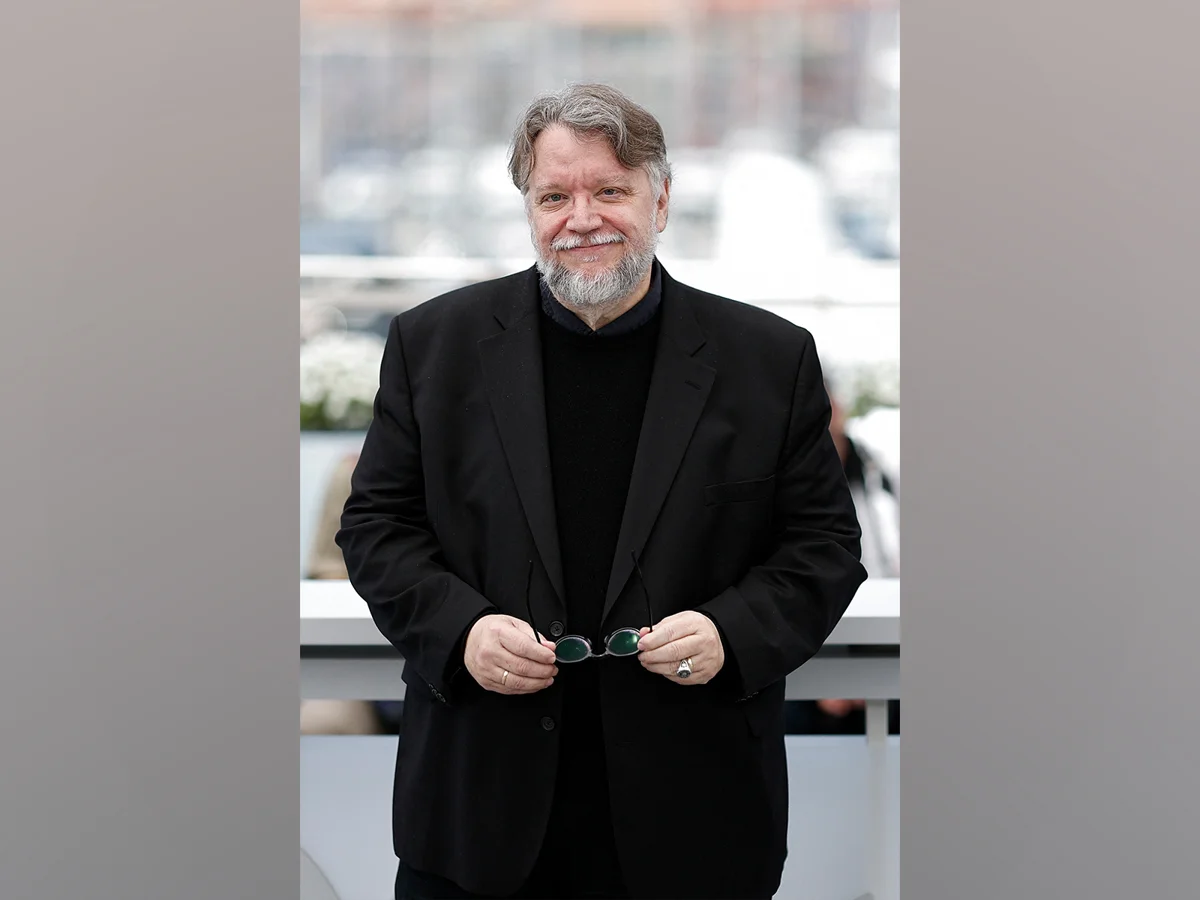
“
I wanted to make this movie before I had a camera, before I knew what a camera was,
”
and cites iconic figures from his childhood—including the Creature from the Black Lagoon, Phantom of the Opera, Dr. Frankenstein, the Hunchback, and Pinocchio—who have deeply influenced his creative identity. He adds,
“
You take pieces of self from the world and create a composite.
”
Jacob Elordi as the Ideal Creature
Del Toro’s film stays remarkably faithful to Shelley’s original book. Oscar Isaac plays the egomaniacal Dr. Victor Frankenstein, while Jacob Elordi embodies the Creature. Standing 6 feet 5 inches tall, Elordi’s physical presence perfectly captures the imposing yet innocent wonder of the Creature experiencing the world anew. For del Toro, the casting decision was clear early on. He explains,
“
When I saw them, I said, ‘This is the Creature. No doubt about it.’
”
The Creature in del Toro’s adaptation is not merely a victim but a complex being who can be both protagonist and antagonist, challenging traditional narrative roles. Del Toro reflects on the evolution of his monsters, noting that his earlier works tended to portray monsters as good and humans as bad. However, his 2021 film Nightmare Alley marked a change, prompting him to explore whether the protagonist could also be the antagonist—and this duality plays out deeply in Frankenstein.
The Role of Personal History and Artistic Influences
Raised in Guadalajara in a privileged household, partly thanks to his father Federico’s lottery win, del Toro gained access to experiences that shaped his artistic development. He recalls the annual family trips to Disneyland and how his father was encouraged to build a home library. Despite not reading the books himself, Federico’s purchases left a lasting impact on del Toro, who devoured encyclopedias on art and anatomy. This foundation became essential for his portrayal of Frankenstein’s story, exploring themes of creation and corporeal science.
Del Toro has long collected Frankenstein memorabilia, including a life-sized sculpture of Karloff’s monster by Mike Hill, the original creature designer. He displays these items in his home, humorously noting,
“
I call that area the living room. When you go to a Catholic home, you see Virgin Marys. You see crucifixions on the walls. They’re the same in my house, but for monsters.
”
This blending of horror and reverence reveals how deeply his Catholic upbringing and his artistic passion intertwine.
Challenges Behind the Scenes and Career Resilience
Del Toro’s career has been marked by significant challenges, including financial struggles and personal trauma. In 1998, his father was kidnapped, and a $1 million ransom was demanded. Del Toro’s finances were strained after investing heavily in his 1997 film Mimic and the loss on his earlier movie Cronos. Fortunately, Titanic director James Cameron lent him the funds to hire a hostage negotiator, which ultimately secured his father’s release after 72 days. Reflecting on this dark period, del Toro shares,
“
Since my father was kidnapped I simply have an amount of PTSD that I cannot really handle, because it’s on a visceral level.
”
Even his return visits to Mexico come with anxiety, stating,
“
I go back, I go back, and I love going back, but very soon I feel shortness of breath, or I feel agitation, and then I leave.
”
While this kidnapping was traumatic, del Toro also describes the intense difficulties he faced with producer Harvey Weinstein during Mimic, calling it part of his “catalogue of pain.”
Balancing Big Budget Films and Personal Projects
After these early setbacks, del Toro steadily built his reputation, alternating between high-profile studio movies like Blade II and Pacific Rim and more intimate, gothic projects such as The Devil’s Backbone and his 2015 film Crimson Peak, which many view as a stylistic forerunner to Frankenstein. Despite disappointments like withdrawing from The Hobbit in 2010, he remains one of the few directors capable of merging personal vision with large-scale productions.
Describing the filmmaking process, del Toro says,
“
You have to be a mixture of a poet and a boxer and a pusher. What I hate is when people say ‘visionary’. It’s like you’re on ayahuasca on a chaise longue! You’re not. You’re crossing the jungle with a machete.
”
He likens film directing to a physical sport and laughs about his own bulky physique, yet the analogy captures the endurance required to realize his creative ambitions.
New Partnerships and Embracing Modern Viewing Habits
Since 2022, del Toro has collaborated extensively with Netflix, writing and directing projects like Pinocchio, the anthology series Cabinet of Curiosities, and now Frankenstein. While the film will have a limited cinematic release, del Toro accepts the reality that many viewers will experience it at home on smaller screens.
“
I saw 90 per cent of my Universal monster movies as a kid on TV,
”
he explains, emphasizing that the quality of the ideas should never be compromised by the medium:
“
What you don’t sacrifice is the size of the ideas.
”
The Enduring Importance of Horror in Storytelling
Del Toro believes horror remains essential to understanding the world, as it offers a liberating alternative to beauty, which he finds can be restrictive. He states,
“
I think that we need horror to understand the world, because beauty can be pretty oppressive,
”
shaping horror as a crucial means to explore complex philosophical, social, and emotional themes. Through the genre, he praises the diverse voices and approaches, highlighting figures like David Cronenberg for philosophical horror, Jordan Peele for social commentary, and Zach Cregger for pure scare tactics.
Looking Forward: What’s Next for Guillermo del Toro?
With Frankenstein finally realized, del Toro reflects on a mixture of loss and achievement. He recounts advice from director David Cronenberg, a nearly 30-year friend:
“
The only way to stay alive as a director is to try something that is different and that scares you into being someone else.
”
Embracing this challenge, del Toro is preparing to direct a violent thriller titled Fury, again starring Oscar Isaac, potentially exploring new facets of inner and outer monstrosity.
