
Director Jon M. Chu is set to return later this month with the second installment of the Wicked musical adaptation, titled Wicked: For Good. Following the success of the first film, which starred Ariana Grande and Cynthia Erivo and premiered last fall, this new chapter continues the story of Elphaba, Glinda, and the land of Oz, promising to bring fresh music and deeper character exploration to audiences worldwide. The film’s release marks another monumental step in translating the beloved Broadway production into a cinematic event, with Jon M Chu Wicked Music playing a central role in shaping the project.
Challenges in Splitting the Story and Crafting New Songs
Adapting a beloved stage musical into a film is inherently complex, but the decision to divide Wicked into two parts added new creative challenges. Chu and his team, including supervising music editor Jack Dolman and composer Stephen Schwartz, worked intensely to ensure the sequel could stand alone while remaining true to the original musical’s heart. To enrich the story’s second half, they introduced two new songs: The Girl in the Bubble, performed by Ariana Grande, and No Place Like Home, sung by Cynthia Erivo. These additions helped explore the emotional depths of the characters, especially Elphaba and Glinda, illuminating their struggles beyond what the stage show covers.
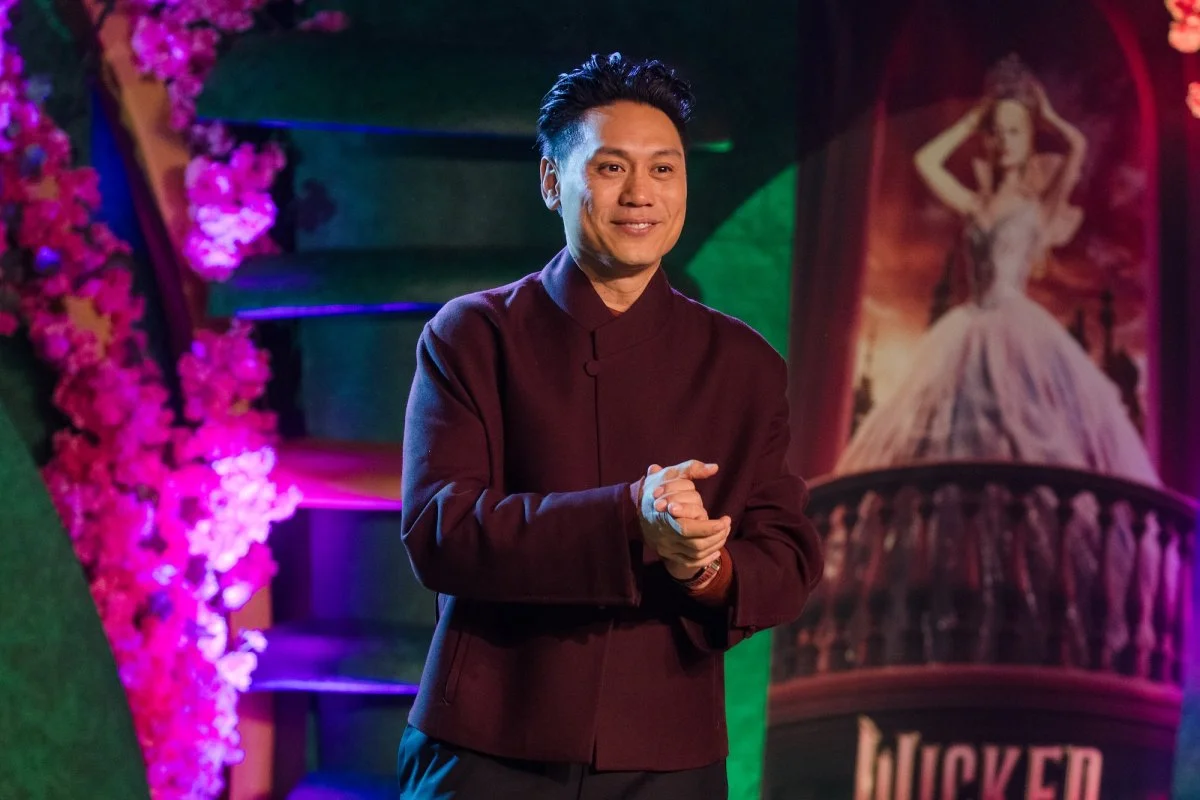
Embracing Live Singing to Capture Authenticity
One of the distinctive features of this adaptation is that all the songs were performed live during filming, a bold choice that demanded technical precision and innovation. Chu’s team faced numerous hurdles in capturing and editing live vocals, especially during large ensemble numbers that involved intricate choreography and elaborate sets. This approach brought a raw and immediate quality to the performances, but also required an extraordinary balancing act in post-production.
Chu’s previous work with music-centered films—such as Lin Manuel Miranda’s In the Heights, the Step Up franchise, and Justin Bieber’s Never Say Never—gave him the expertise to manage these complexities with confidence and creativity.
Inside the Creative Collaboration with Stephen Schwartz
Chu emphasized that Stephen Schwartz’s openness was crucial to integrating new songs authentically into the Wicked universe. Schwartz’s willingness to embrace fresh themes enabled the team to explore emotional stakes that hadn’t been addressed in the original production. Chu explained how splitting the story called for addressing the personal consequences faced by the characters after pivotal moments like “Defying Gravity.”
The new songs were designed to reveal what it truly means for Elphaba and Glinda to choose different paths and face loneliness and courage in isolation. Chu shared that when he proposed adding moments for these internal struggles, Schwartz responded quickly and creatively:
“It’s a song. I know what it is. Give me 48 hours.”
– Jon M. Chu, Director
Schwartz immediately began sending voice memos, demonstrating his skill as both a composer and storyteller. Chu praised Schwartz’s focus on narrative over melody alone:
“…he also prioritizes storytelling and character before anything else. It’s not about necessarily the melody for him, it’s about is this telling the story, the feeling that you need for this story. And I love that about him.”
– Jon M. Chu, Director
The Challenge and Rewards of Editing Live Vocal Performances
The editing process involved making difficult choices between vocal performances and visual takes. Jack Dolman, who served as music editor, recalled the abundance of options they had from the live recordings:
“There’s very little of that kind of pickup material at all. It was like being in a candy store all the time. You have these vocals and you have alternate visual takes… how do you even begin to choose? Working with singers at the caliber of Cynthia and Ariana is something that I don’t know if I’ll ever have the chance to be able to do again. And it just meant that you had this embarrassment of riches.”
– Jack Dolman, Supervising Music Editor
Dolman noted that even the smallest changes, like swapping a single vowel sound, could heighten the emotional impact of a moment, showcasing the precision and care that went into the film’s sound design.
Chu reflected on the give-and-take nature of selecting between the best singing and the best visuals:
“It was always a give and take, but when you have the best singers in the world you have a lot of control because when I’m on set I’m not worrying about if they are a little sharp or flat, they are always on. It was great and freeing to let them be live and it is something that we didn’t necessarily expect in the beginning.”
– Jon M. Chu, Director
He elaborated on the philosophy behind their approach to musical films, aiming for authenticity over polished perfection:
“How do you make it feel like it is emerging from the character just as naturally as dialog?”
– Jon M. Chu, Director
Chu acknowledged that this sometimes meant embracing imperfections and ambient noises, like a chair moving, if they contributed to the emotional truth of the performance.
Insights from Collaborations with Top Musicians
Having worked with a range of notable artists, Chu shared what he learned from these experiences. Discussing Lin-Manuel Miranda, he highlighted the importance of lyrics and storytelling:
“When I think about Lin-Manuel Miranda, I don’t believe in genius… However, Lin is pretty as close as you can get… He has great understanding of language.”
Chu recognized that Miranda taught him how to make room for lyrics in musical films, which often emphasize movement and dance over words.
He also recounted early impressions of Justin Bieber’s dedication as a young musician:
“I knew very early, ‘Oh, this kid is, like, the real deal. He loves music. He’s going to do this for the rest of his life. This is not a performance. This is just what he does.”
– Jon M. Chu, Director
Additionally, Chu praised Ariana Grande’s technical savvy and eagerness to engage with music production tools, as well as Cynthia Erivo’s strong artistic taste:
“What I love about someone like Ariana is she’s also like a tech nerd… she wanted to talk about craft with me and in the tech of it all… And Cynthia obviously knows her stuff inside and out. She has such great taste and opinions about how her voice is.”
According to Chu, all of these artists prioritize their craft above celebrity, focused on music in its purest form.
The Story and Themes Behind ‘No Place Like Home’
The new song No Place Like Home explores Elphaba’s internal conflict about belonging and identity. Chu described how Stephen Schwartz connected the song’s themes to the original L. Frank Baum books:
“You know what happens when you start to question the thing that you’ve been fighting for? What happens when your home doesn’t even want you alive? Is home a place or is it an idea? And if it’s an idea, why do you need to be here for it? Should we just leave?”
– Jon M. Chu, Director
These questions deepen Elphaba’s character, revealing the loneliness and doubt she faces despite her courage and convictions.
First Reactions to the New Songs
Chu recalled the emotional moment when Cynthia Erivo and Ariana Grande first heard the new songs together during a gathering at his house. This event occurred near the end of the COVID-19 lockdown, a time when the cast had not yet met in person or done chemistry readings:
Stephen Schwartz, Winnie Holzman, and the two lead actresses were in attendance. Schwartz played the new songs on a piano, creating an unexpectedly powerful and moving experience.
“You better watch this thing right now. This is history.”
– Jon M. Chu, Director
He described watching the actresses sing the songs for the first time as a revelation, sensing the impact the music would have on audiences.
Writing Songs Tailored to the Lead Performers
Stephen Schwartz wrote the new songs after Ariana Grande and Cynthia Erivo had been cast, but before they had heard the material. Chu explained that the songs and visuals evolved over time, noting that their initial meeting was packed with creative details to set the tone of the film:
“Everything would evolve though. The songs and images would evolve over time, but this was a starting point to get us there.”
Wicked’s Enduring Appeal and Cinematic Future
With Wicked now split into two cinematic chapters, Jon M. Chu and his collaborators have expanded the story’s emotional complexity and musical landscape, offering fans a fresh perspective on a cherished tale. By embracing live singing and crafting new songs in collaboration with Stephen Schwartz, the film captures the intensity and vulnerability of Elphaba and Glinda’s journeys in a way that honors the original production while opening new creative doors.
As the release approaches, anticipation is high for how audiences will respond to this ambitious adaptation. The film’s approach to music and storytelling could influence future musical films, highlighting the value of authenticity and emotional depth. With Jon M Chu Wicked Music at the heart of the project, the Wicked saga is poised to enchant a new generation, while leaving a lasting mark on musical cinema.
