
Gwyneth Paltrow recently revealed personal details about her ongoing mental health journey, specifically addressing her experiences with anxiety for the first time in her life. On a November episode of her goop podcast, the Oscar-winning actress discussed the challenges she faces, describing sleepless nights and daily struggles that have made her more aware of her emotional health. Her openness brings attention to the topic of anxiety and its impact, especially on those living in the public eye. The “Gwyneth Paltrow anxiety struggle” has become a talking point for broader conversations about mental health.
Paltrow, now 53, outlined the ways anxiety has affected her routine and well-being. She shared that she often feels exhausted, yet her mind races as she tries to fall asleep, experiencing intrusive thoughts that she had never encountered before.
“I have a lot of anxiety for the first time in my life,”
she admitted, describing symptoms such as a rapid heartbeat and persistent worry at night. These feelings of dread also appear first thing in the morning, despite her sleep generally remaining “pretty OK.”
Her anxiety has influenced her work, with distractions and emotional reactions making daily tasks harder to manage. She noted,
“I think I have a bit of ADD and I can really get sort of pulled in lots of directions.”
Even minor work issues can feel overwhelming, leading her to seek ways to better process negative news.
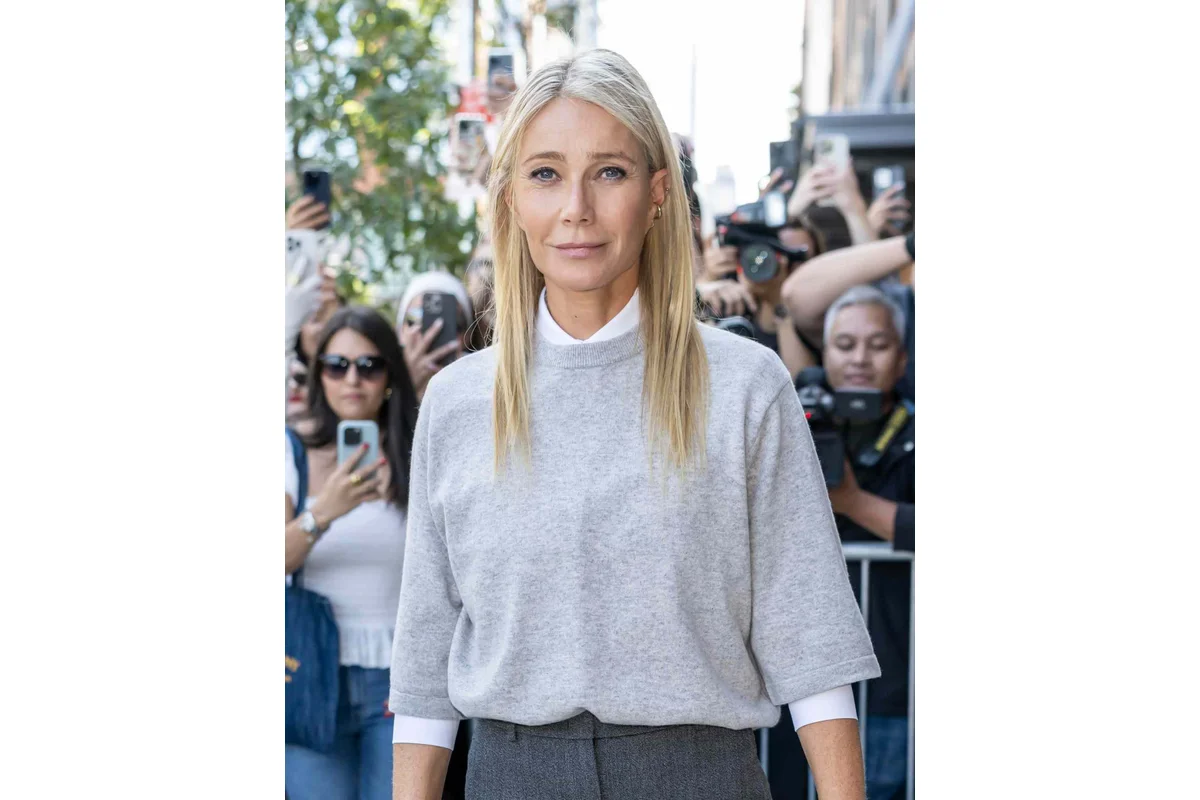
Paltrow cited multiple contributing factors to her anxiety, acknowledging physiological, psychological, and emotional components, as well as the pressures of fame. Reflecting on her experience, she said,
“I lived a very intense life in the public eye for a really, really long time.”
This constant exposure amplifies her sensitivity to opinions and criticism, contributing to the fraying of her nervous system. The current cultural climate also leaves her unsettled, further complicating her mental health journey.
To cope with these challenges, Paltrow has engaged with two therapists, including a specialist focused on the nervous system, and relies on support from her blended family. She emphasized the healing she finds in being together with her children and husband Brad Falchuk, noting that her sense of calm increases when they are all under one roof.
A Growing Conversation Among Public Figures
Paltrow’s admission places her among a growing list of celebrities who have candidly discussed their own mental health struggles. These public disclosures help normalize conversations around anxiety, depression, and related conditions, encouraging others to seek help and reducing stigma.
Gucci Mane Reflects on Mental Health Diagnosis
Rapper Gucci Mane, whose real name is Radric Davis, has shared his own experiences through his book and public appearances. He revealed being diagnosed with schizophrenia and bipolar disorder after a significant mental health episode in 2020.
“After that, I was like, ‘Man, I got to really just hold myself accountable and take care of my health,’”
said Gucci Mane, expressing his commitment to ongoing therapy and, if recommended, medication.
His family, particularly his children with wife Keyshia Ka’Oir, served as motivation during his recovery.
“My wife was pregnant with my little boy,”
he explained.
“I don’t want to raise a family and then my mental health [is] gone. What if I have an episode I can’t come back from? So, I just started doing the work and started seeking help.”
Penn Badgley Discusses Body Dysmorphia
Actor Penn Badgley recounted his battles with body dysmorphia that began during his youth as a child actor.
“I know that I hated my body,”
he told The Guardian, emphasizing a period in his life when self-worth was closely tied to appearance. He described the transition that followed his parents’ divorce and the pressures associated with conventional standards of beauty and success. Badgley credits his spirituality for helping him persevere, stating,
“That is what allowed me to persevere through the disillusionment, all the things I’d been grappling with, and then come back to it all, but with hopefully some kind of inner transformation.”
Eliza Coupe on Her Relationship with Food
Eliza Coupe, known for her roles in television comedies, openly discussed her history with disordered eating.
“Some may call it an eating disorder, I just call it my life. My drug of choice was always food. I did crazy s–t with it,”
said Coupe on The Funny Thing Is podcast. She described a pattern of over-exercising and bulimia, but also highlighted the positive lifestyle changes she made at age 23, including abandoning sugar and alcohol, and adopting yoga and other healthy habits. Coupe continues to work on healing her relationship with food and body image.
Candace Cameron Bure Speaks About Depression
Actress Candace Cameron Bure shed light on her own experiences with depression. She shared that even discussing her struggles is challenging, despite having a trusted support network.
“It’s very difficult to speak out about it, even to your most trusted people,”
she admitted, revealing her internal conflict between feeling weak and the desire to overcome mental health issues independently.
“At least for me, I feel like I should be strong enough to overcome that and then it feels so weak.”
Billie Eilish Shares Advice for Mental Health Struggles
Grammy winner Billie Eilish has openly documented her efforts to maintain mental health by avoiding negative influences and seeking to keep her energy positive. She offered advice for those in need:
“When people ask me what I’d say to somebody looking for advice on mental health, the only thing I can say is patience. I had patience with myself. I didn’t take that last step. I waited. Things fade.”
Katy Perry Describes Pandemic-Related Stress
Pop star Katy Perry discussed the difficulties of managing stress during the COVID-19 pandemic.
“Sometimes I don’t know what’s worse trying to avoid the virus or the waves of depression that come with this new norm,”
she shared on social media. Perry described using her car as a private retreat when life became overwhelming:
“There is not really anywhere to go besides my car. So I go to my car a lot. That is my safe space.”
Kendall Jenner Raises Awareness About Anxiety
Supermodel Kendall Jenner spoke about her experiences with panic attacks and anxiety, especially in the context of her advocacy with Kenneth Cole for The Mental Health Coalition. She discussed the variability of her symptoms:
“For me, I have good days and I have some really anxious days, so I’m really off and on.”
Jenner hopes her openness helps others feel less isolated, stating,
“What I hope to accomplish is for people to not feel as alone.”
Dwayne Johnson Addresses Men’s Mental Health
Actor Dwayne Johnson, widely recognized for his roles in the wrestling ring and screen, opened up about his struggles with depression, particularly the societal reluctance among men to discuss their feelings.
“We all go thru the sludge/shit and depression never discriminates. Took me a long time to realize it but the key is to not be afraid to open up,”
he advised, adding that men often feel pressured to keep their emotions inside.
“Especially us dudes have a tendency to keep it in. You’re not alone.”
Prince Harry on the Importance of Conversation
The Duke of Sussex, Prince Harry, has addressed the stigma around seeking therapy, recounting his own path with professional support.
“The experience I have had is that once you start talking about it, you realize that actually you’re part of quite a big club.”
Taraji P. Henson Advocates for Professional Support
Actress Taraji P. Henson has highlighted the value of therapy, both in her personal journey and through her work with The Boris Lawrence Henson Foundation. She described her regular sessions as essential for managing depression:
“I have a therapist that I speak to. That’s the only way I can get through it.”
Lorde on Healing Through Therapy and Music
Musician Lorde has described how addressing an eating disorder and stage fright led her to seek innovative therapies, including MDMA and psilocybin treatment. Touring without stage fright allowed her to reconfirm her passion for performance:
“I was touring without stage fright for the first time. There was a hook around my guts and everyone in the room was having the same feeling, [like] there’d been a huge pressure change. It made me realize how much I love and kind of need that very deep, visceral response to feel my music.”
Lorde also shared how stopping birth control impacted her understanding of gender identity:
“I felt like stopping taking my birth control, I had cut some sort of cord between myself and this regulated femininity. It sounds crazy, but I felt that all of a sudden, I was off the map of femininity. And I totally believed that that allowed things to open up.”
Lili Reinhart on Receiving Critical Help
Actress Lili Reinhart spoke about the importance of both family and professional help in overcoming her own anxiety and depression during her school years.
“When I was in middle school, I was struggling with severe anxiety and depression and the help and support I received from my family and a therapist saved my life. Asking for help is the first step. You are more precious to this world than you’ll ever know.”
Carly Pearce Details the Roots of Her Anxiety and OCD
Country singer Carly Pearce described a long-standing battle with anxiety and obsessive-compulsive disorder, initially believing her anxiety began during her divorce in the COVID pandemic. In reality, as therapy revealed, her OCD dated back to early childhood.
“I would have told you three years ago my anxiety started during my divorce in Covid. But I’ve had crippling OCD since I was a child,”
she said. She emphasized recognizing and addressing underlying issues through therapy:
“I got really conditioned over the last 10 years to just zip it up and deal with it, and it just kind of got to a place where a couple years ago I just had to really start back into therapy, start really, like, trying to figure out all of these different things. Like, recognizing OCD was something—no, that didn’t come in 2020, that’s been there since I was 6 or 7.”
Kristen Bell Shares Her Coping Strategies
Actress Kristen Bell has advocated for finding individual approaches to managing mental health, speaking publicly about her use of medication, exercise, and listing positive things in her life, among other strategies.
Chrissy Teigen Opens Up About Postpartum Depression
Chrissy Teigen, who is both a cookbook author and a mother of four, has written about her experience with postpartum depression, acknowledging the difficulty many mothers face in expressing these feelings. She said,
“It got easier and easier to say it aloud every time. I want people to know it can happen to anybody and I don’t want people who have it to feel embarrassed or to feel alone.”
Cara Delevingne Discusses Teen Struggles with Depression
Model and actress Cara Delevingne shared her experiences with depression and suicidal thoughts in her teen years. She recognized a reliance on others for her happiness, which she learned to overcome:
“I relied too much on love, too much on other people to make me happy, and I needed to learn to be happy by myself. So now I can be by myself, I can be happy. It took me a long time.”
Ariana Grande Urges Seeking Help
Ariana Grande, a vocal advocate for therapy, has spoken candidly to fans about the life-saving benefits of counseling. Responding humorously to a question about her therapist, she wrote,
“lmaoaoo this is funny as f–k but in all honesty therapy has saved my life so many times.”
Grande stresses the importance of seeking support: “If you’re afraid to ask for help, don’t be. u don’t have to be in constant pain & you can process trauma. I’ve got a lot of work to do but it’s a start to even be aware that it’s possible
Got tons of responses to this. Thank you. We all go thru the sludge/shit and depression never discriminates. Took me a long time to realize it but the key is to not be afraid to open up. Especially us dudes have a tendency to keep it in. You’re not alone
— Dwayne Johnson (@TheRock) April 2, 2018
https://twitter.com/ArianaGrande/status/1059482452819755008
