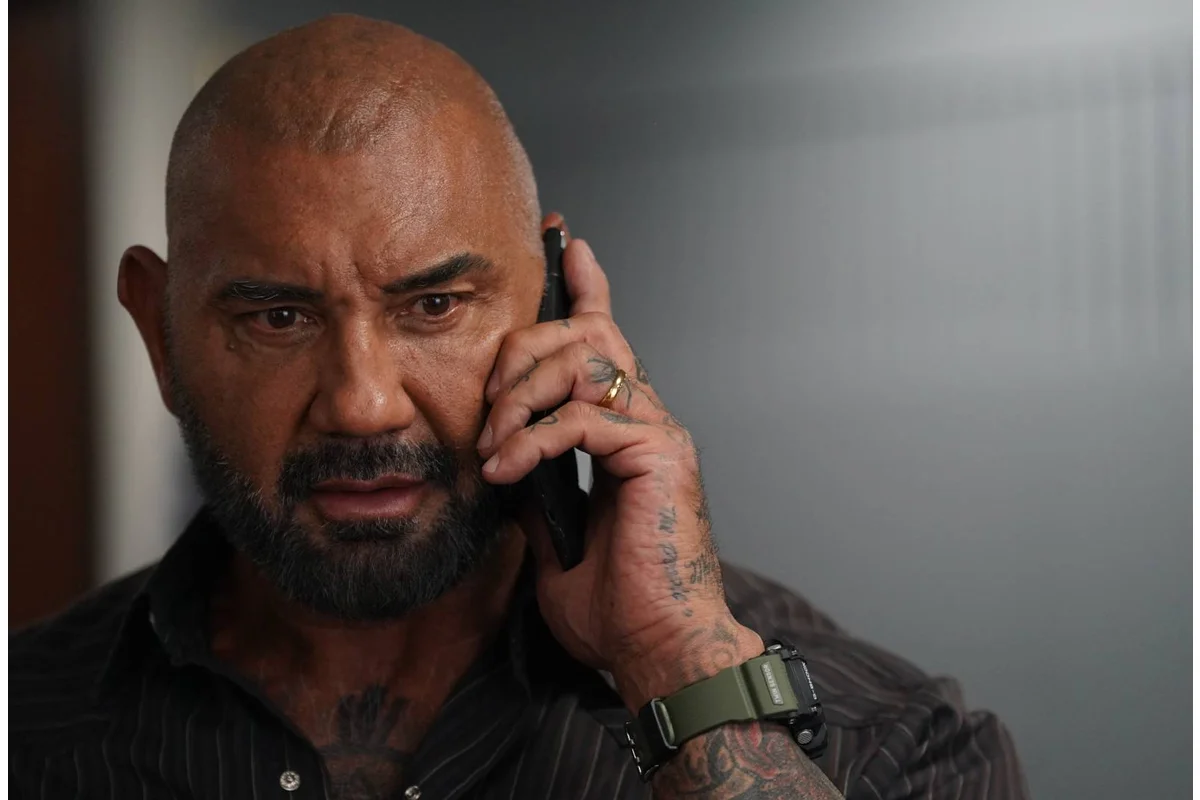
Dave Bautista, Movie, Dave Bautista defends Stuber movie [Image Source: MOVIEWEBIMAGES]
Dave Bautista has spoken passionately about his experience making the 2019 action-comedy Stuber, emphasizing his unwavering support for the film despite its mixed reviews and modest performance. In a recent interview, Bautista underscored his pride in the project and staunchly defended the movie, stressing that the effort behind it, especially from director Michael Dowse, should not go unnoticed. The discussion highlights how Dave Bautista defends Stuber movie, pointing to its uniqueness and collaborative spirit as key reasons it stands out within his career.
Bautista’s Loyalty to Stuber and its Director
While many fans recognize Dave Bautista for his action-packed roles in blockbuster franchises like Dune and the Marvel Cinematic Universe, his filmography also includes lesser-known titles that hold personal significance for him. One such film is Stuber, in which Bautista stars alongside comedian Kumail Nanjiani. In a recent conversation with Grant Hermanns from ScreenRant, Bautista reflected on the making of Stuber and his admiration for director Michael Dowse.
Our director, Michael Dowse, really delivered. I want to give him credit, not only because I love him, but I’ve worked with him before. I did a film called Stuber with him, and I will go to my death saying that is an underrated film. I’m super proud of that film. But he saved us. He stepped in a couple weeks before we were supposed to start filming because we lost our director. I made a personal call to Michael, and I said,
Image of: Dave Bautista
“We are in a bad jam. Can you help us out?”
And he jumped all over it. Literally, I think he was on a plane the next day, helping us with pre-production, going over the script, making changes, and making things better. Michael Dowse, who I love and respect, is very talented. He’s just a boss. This guy comes in, and he has a very clear vision. He knows what he’s doing. He’s experienced, and he’s also knows enough to be able to edit the film in his head as he’s going. I’m going to give him a lot of credit, and I want to work with him again. I just love him as a human being, and I have a lot of respect for him as a director.
— Dave Bautista
Bautista’s emphatic praise draws attention to the circumstances surrounding the making of Stuber. When the film lost its original director only weeks before shooting was scheduled to begin, Bautista personally called Michael Dowse, whom he had previously worked with, to take over the reins. Bautista credits Dowse not only for his ability to step in at the last moment but also for his leadership and creative vision, which he believes were instrumental in shaping the final product.
The Plot and Unique Appeal of Stuber
Stuber tells the story of Stu Prasad, a mild-mannered Uber driver played by Kumail Nanjiani, who finds himself involuntarily swept up in the dangerous pursuit of a drug trafficker alongside hot-tempered LAPD detective Vic Manning, portrayed by Bautista. The movie explores the unusual partnership that develops between the two main characters, bringing together elements of action, comedy, and heart. The film’s humor largely hinges on their dynamic, blending Nanjiani’s comedic timing with Bautista’s physical presence.
Despite the strong interplay between Bautista and Nanjiani, critiques centered on the direction, indicating that the movie struggled to find its footing with critics and some audiences. Still, the chemistry between the lead actors consistently received praise, which, according to Bautista, is a testament to both Dowse’s direction and the collaborative energy among the cast.
Financial Performance and Critical Response
At the box office, Stuber saw modest returns, earning $32.3 million from its $18 million production budget. The film’s critical reception was mixed, with a 43% score on Rotten Tomatoes reflecting divided opinions. While the film didn’t become a major hit, Bautista’s ongoing admiration for it reveals the personal value he places on the process and collaboration involved, rather than just its commercial results.
Michael Dowse, whose previous works include the widely acclaimed romantic comedy The F Word and the sports film Goon, brought his experience to the set of Stuber. Bautista noted that Dowse’s willingness to join the project at a critical moment and his hands-on approach in pre-production played a crucial role in bringing the movie together effectively.
Continuing Partnership with Michael Dowse
Bautista’s positive experience filmingStuber with Dowse inspired him to work with the director again on his newest venture, the action-thriller Trap House. In Trap House, Bautista takes on the role of Ray Seale, a DEA agent who is forced to confront his own son and his son’s friends when they plot to rob a dangerous cartel. The film’s premise, while more serious than Stuber, continues to showcase the synergy between Bautista and Dowse as they explore new genres together.
Bautista’s appreciation for Dowse is rooted not only in their professional collaborations but also his admiration for Dowse as both a creative talent and as a person. This respect and rapport formed on the set of Stuber have led to further opportunities, broadening the kinds of roles and stories that Bautista is able to pursue. The connection also demonstrates the actor’s loyalty to directors and crew who have stood by him, reinforcing his reputation as a dedicated teammate in the industry.
Memorable Cast and Characters
Beyond the main characters of Stu Prasad and Vic Manning, Stuber features a talented supporting cast. Natalie Morales and Mira Sorvino join the ensemble, bringing additional humor and drama to the film’s high-octane storyline. Each actor contributes to the unique atmosphere that sets Stuber apart from standard action-comedy offerings, cementing its place as a distinctive entry in Bautista’s filmography.
Reflecting on Stuber’s Place in Bautista’s Career
While Stuber may not have reached the critical or commercial heights of some of Dave Bautista’s other projects, the movie holds a special status due to the collaborative journey it represents. Bautista’s public defense of the film—and especially his praise for Michael Dowse—highlights the importance he places on teamwork, perseverance, and creative partnership. Stuber’s focus on an unlikely duo resonated with audiences looking for something different, and the behind-the-scenes story underscores how unpredictable filmmaking can be, with last-minute changes sometimes producing memorable results.
With the release of Trap House, Bautista once again demonstrates his commitment to working with directors and storytellers he trusts. As he continues to explore new characters and genres, fans and industry peers alike can expect Bautista to bring the same passion and dedication that drove him to defend Stuber—not just as a role, but as an experience worth celebrating for its creativity and tenacity.
Ultimately, Stuber stands out not only for its plot or critical reception but for the perseverance and strong working relationships behind its creation—qualities that Dave Bautista continues to champion throughout his evolving career.