
Jack Nicholson best performance is often the subject of debate among film enthusiasts, yet his portrayal of R.P. McMurphy in
“One Flew Over the Cuckoo’s Nest”
stands out as the pinnacle of his storied career. Released 50 years ago, the film’s powerful critique of the mental health system and anti-authoritarian character propelled Nicholson into cinematic history and defined a cultural moment still resonant today.
How Nicholson’s Unmatched Energy Defined His Acting Legacy
Known for fusing intense energy with remarkable charm, Jack Nicholson became an American legend by playing characters who were both unpredictable and irresistibly relatable. Emerging after years in supporting roles, he first captured mainstream attention with “Easy Rider” in 1969, and quickly accumulated acclaimed performances in films like “Five Easy Pieces,” “Chinatown,” “The Shining,” and “Batman.” Each role showcased elements of the flawed antihero—figures who rebelled against convention but maintained an everyman appeal.
After a long and celebrated career that concluded with James L. Brooks’ “How Do You Know” in 2010, arguments continue about which role is truly Nicholson’s best. However, the magnitude of his performance as McMurphy in
“One Flew Over the Cuckoo’s Nest”
still draws critical attention and widespread admiration. The film’s initial controversy—stemming from its frank depiction of mental health institutions and its subversive, anti-establishment themes—has, over time, solidified its standing as a landmark of 1970s cinema.
Why R.P. McMurphy Became a Cultural Touchstone
Adapted from Ken Kesey’s 1962 novel and directed by Miloš Forman,
“One Flew Over the Cuckoo’s Nest”
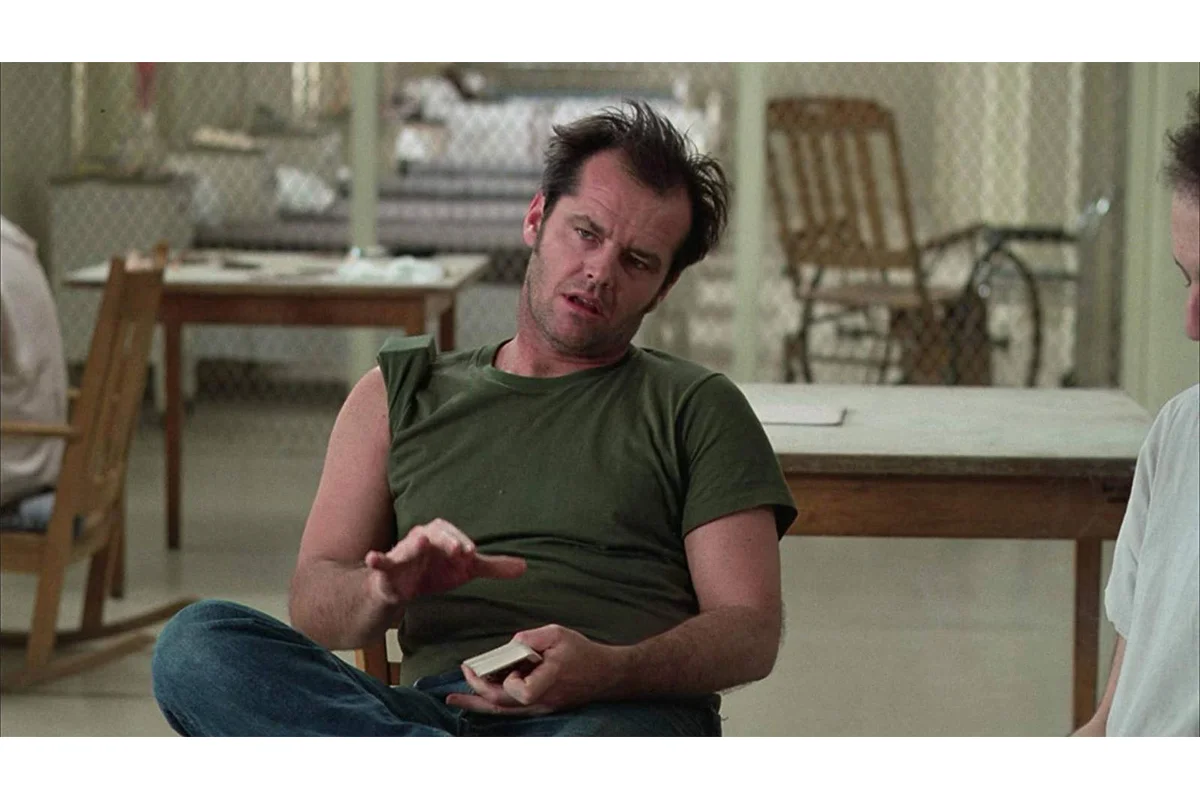
is set in a mental health facility where Nicholson’s character, McMurphy, seeks refuge from prison by pretending to be insane. He soon finds himself locked in a battle of wills with the controlling staff, especially Nurse Ratched, and forms alliances with fellow patients, played by Brad Dourif, Christopher Lloyd, and a nearly unrecognizable Danny DeVito. As McMurphy incites rebellion, the narrative crescendos toward a memorable climax featuring Chief Bromden, brought to life by Will Sampson.
The film masterfully blends dark humor and tragedy, addressing issues of autonomy, institutional abuse, and the lengths to which people will go to retain their sense of self. Its underlying critique of the mental health system—and the lack of proper patient rights—sparked discussions that echoed those prompted by the harrowing documentary “Titcut Folies.” Under the production of Michael Douglas and Saul Zaentz, the film’s biting social commentary reflected the rising anti-authority sentiment that followed the demise of the 1960s counterculture.
“One Flew Over the Cuckoo’s Nest”
was recognized with the Big Five Academy Awards—Best Picture, Director, Actor, Actress, and Screenplay—in 1976, cementing its status as a cinematic classic. Nicholson’s performance captured both the volatility and humanity of McMurphy, who fights not only for himself but for an entire ward of voiceless individuals. His dynamic interplay with the ensemble—especially the fraught relationship with Louise Fletcher’s Nurse Ratched—remains electric. By embodying the “defiant outsider,” Nicholson created a protagonist whose struggle symbolized resistance to a broken system—and set a lasting template for cinematic rebellion.
Other Landmark Roles That Shaped Nicholson’s Career
To claim that McMurphy is indisputably Jack Nicholson best performance is to overlook a series of transformative roles that display his range and influence. In “The Shining,” Nicholson’s descent into madness as Jack Torrance became a defining moment in horror cinema, even though initial critics and the Academy failed to grasp its impact. His chilling presence left a lasting mark on pop culture and redefined expectations for the genre.
Equally memorable is Nicholson’s portrayal of the Joker in Tim Burton’s 1989 “Batman.” Though not the lead, his dizzying mixture of menace and charisma captured the essence of the “Clown Prince of Crime,” reshaping how audiences would view DC villains for decades. His Joker and Jack Torrance remain two of his most iconic, genre-bending characters—though the award circuit sometimes overlooked them, fans continue to hail their lasting cultural significance.
Nicholson’s journey to stardom began as George Hanson in “Easy Rider,” which earned him his first Oscar nomination for Best Supporting Actor. He quickly followed up with highly regarded performances in “The Last Detail,” garnering another nomination, and Roman Polanski’s “Chinatown,” now enshrined as a staple of the neo-noir genre. In his later years, films like “About Schmidt”—for which he won a Golden Globe—and “The Departed,” where he played the menacing Frank Costello, demonstrated Nicholson’s continued vitality and the enduring appeal of his more chaotic, impulsive roles. Through these performances, Nicholson shaped the expectations for leading men, antiheroes, and even villains, never lingering too long in one archetype.
While
“One Flew Over the Cuckoo’s Nest”
is celebrated as Nicholson’s crowning achievement, films such as “The Shining,” “Batman,” “Chinatown,” and “The Departed” continue to influence actors and directors and draw new generations of fans. The sheer volume and diversity of contenders for Jack Nicholson best performance only add to the intrigue of his legacy, highlighting a career marked by versatility and fearless choices.
The Enduring Influence and Complexity of ‘One Flew Over the Cuckoo’s Nest’
For those watching
“One Flew Over the Cuckoo’s Nest”
today, the film’s progressive moments are counterbalanced by the cultural limitations of its era—including notable gender and racial stereotypes. Modern audiences, particularly those examining the depiction of Louise Fletcher’s Nurse Ratched, may struggle with certain themes, given today’s standards for representation and sensitivity. Viewers are encouraged to approach the movie as a product of its time, recognizing both its forward-thinking ambition and its rootedness in the 1970s.
Despite evolving social attitudes, the craftsmanship of Miloš Forman and the performances of the entire ensemble cannot be overstated. For film history lovers and Nicholson fans, the film remains a profound example of how cinema can challenge, provoke, and move audiences. The role of R.P. McMurphy doesn’t just represent a turning point for Nicholson, but for depictions of flawed protagonists and institutional critique in Hollywood.
Those wishing to revisit or discover the film can rent or purchase
“One Flew Over the Cuckoo’s Nest”
on platforms such as YouTube, Prime Video, or Apple TV. As it stands, the movie resists easy categorization—simultaneously entertaining, unsettling, and deeply human. The legacy of Jack Nicholson best performance endures, with McMurphy standing as a symbol of rebellion, empathy, and the enduring power of cinema to question the status quo.
