
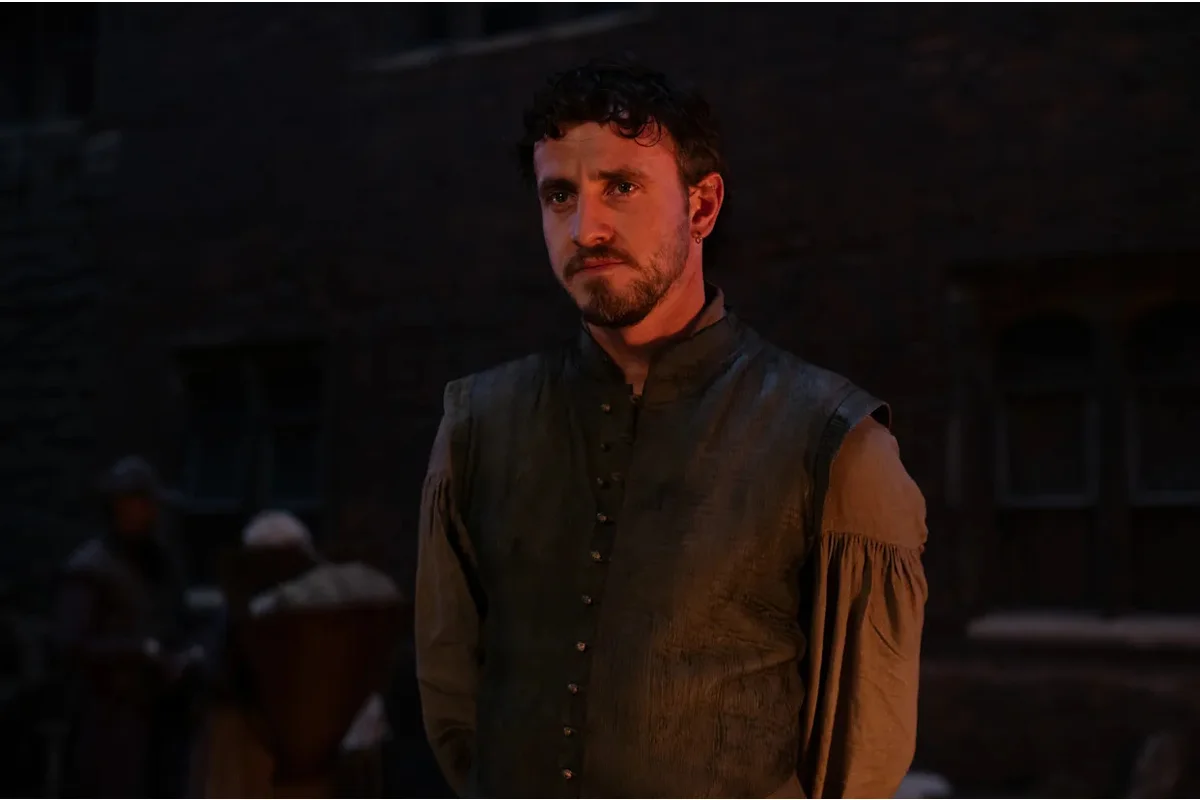
Paul Mescal as William Shakespeare is set to redefine public perception when Hamnet releases in select cinemas on November 26, ahead of a December 12 wide release through Focus Features. The film, directed by Academy Award-winner Chloé Zhao, offers a fresh lens on the iconic playwright by delving into Shakespeare’s personal life, challenging the persistent mythos surrounding his legacy.
Globally, William Shakespeare’s works are performed and celebrated by actors and audiences, yet little is universally known about the playwright himself. While Hollywood has long adapted Shakespeare’s plays for film, only a handful of features have ventured to explore the complexities of the man behind the writings. Zhao’s new film, based on Maggie O’Farrell’s 2020 novel, aims to illuminate a seldom-seen side of Shakespeare, focusing on him as a husband and father, and the profound family loss that would inspire some of his most enduring creations.
Focusing on Shakespeare’s Home Life and Family Relationships
Hamnet brings the private world of Shakespeare to the forefront, portraying the Bard not just as a celebrated author but as a devoted family man. Paul Mescal’s Shakespeare is seen living with his wife Agnes, played by Jessie Buckley, as they raise three children: Susanna, and twins Judith and Hamnet. In one poignant scene depicted in the newly released image, William and his son Hamnet, played by Jacobi Jupe, are engrossed in a playful game amidst tall grass, both wielding sticks, lost in the joy of sword-fighting and soldier games typical of father and son.
The film’s narrative gradually builds toward tragedy, as the family must grapple with the sudden death of young Hamnet. The loss leaves both William and Agnes, along with their surviving children, reeling from heartbreak. As Shakespeare struggles to find hope and meaning in the aftermath, he devotes himself to writing a new play—ultimately creating Hamlet—in a deeply personal quest to memorialize his son and help his family heal from their grief.
Paul Mescal’s Immersive Approach to Playing Shakespeare
Paul Mescal has been praised for his ability to inhabit both fictional and real-life characters fully, and Hamnet tasked him with channeling not just a historical figure but also a deeply personal story. During an interview with Maggie Lovitt for Collider, Mescal explained the process behind portraying a figure as well-known yet mysterious as William Shakespeare. Reflecting on how he approached his role in Charlotte Wells‘ Aftersun, Mescal said:
“I remember having a conversation with Charlotte, and being like, ‘Do we want to have a discussion about the reality of this? Or do you want me to imagine based off the script?’ And it was the latter we chose to do, which I was very grateful for… it felt very freeing.”
– Paul Mescal, Actor
This sense of artistic freedom became central in Hamnet as well. Mescal spoke further about balancing historical fidelity with interpretative imagination, stating,
“I think it’s similar to what this was where it’s like, ‘Yeah, he’s a real person, but — similar to what I said earlier — he’s very much real and exists, but we don’t know a lot. So it leaves you, as an actor, a lot of space to imagine, which is a very exciting place to be because you are then reliant on — especially playing such an artist in Shakespeare — you are relying on your own artistic voice to communicate something about one of the greatest artists of all time. And then that kind of slowly celebrates the myth but removes the pressure of playing the myth. It kind of fuses in a very organic kind of way.”
– Paul Mescal, Actor
Supporting Cast and Relationships Anchoring the Film
Alongside Mescal, the film features Jessie Buckley as Agnes Shakespeare, whose partnership and parenting with Shakespeare are depicted as loving and resilient even amid deep sorrow. The narrative’s emotional core also rests on their children: Susanna, portrayed by Bodhi Rae Breathnach, and twins Judith and Hamnet, played by Olivia Lynes and Jacobi Jupe respectively. Each character’s response to loss and the shifting family dynamic draws empathy from viewers and underscores the story’s relevance for modern families grappling with tragedy.
The performances and relationships further humanize Shakespeare, stripping away grandiose legend in favor of showing a flawed, loving father and partner. These character dynamics are essential as they bridge the gap between classical myth and relatable human emotion, something rarely explored in cinematic portrayals of Shakespeare.
Bringing Hamnet’s Story to Cinemas
Hamnet, guided by Chloé Zhao’s vision, intertwines personal tragedy and artistic triumph to examine how the pain of loss can inspire lasting creative works. The film’s emotionally charged scenes, reflective of intense and passionate connections, promise audiences a fresh look at Paul Mescal as William Shakespeare, revealing vulnerability and playful warmth more than stoic genius.
After its select theater debut on November 26, Hamnet will become widely available on December 12, granting a broader audience the chance to witness a celebrated actor’s transformation into the most influential playwright in Western literature. As more images and interviews surface from Collider’s Exclusive Preview event, viewers can anticipate further insights into Mescal’s process and the artistic choices behind bringing Shakespeare—both myth and man—to the forefront of modern storytelling.
Through this film, Zhao, Mescal, Buckley, and the wider cast and crew bridge centuries, inviting viewers not just to celebrate the works but to meet the man behind them—reminding audiences why Shakespeare, in his roles as father, husband, and artist, remains relevant today.
