
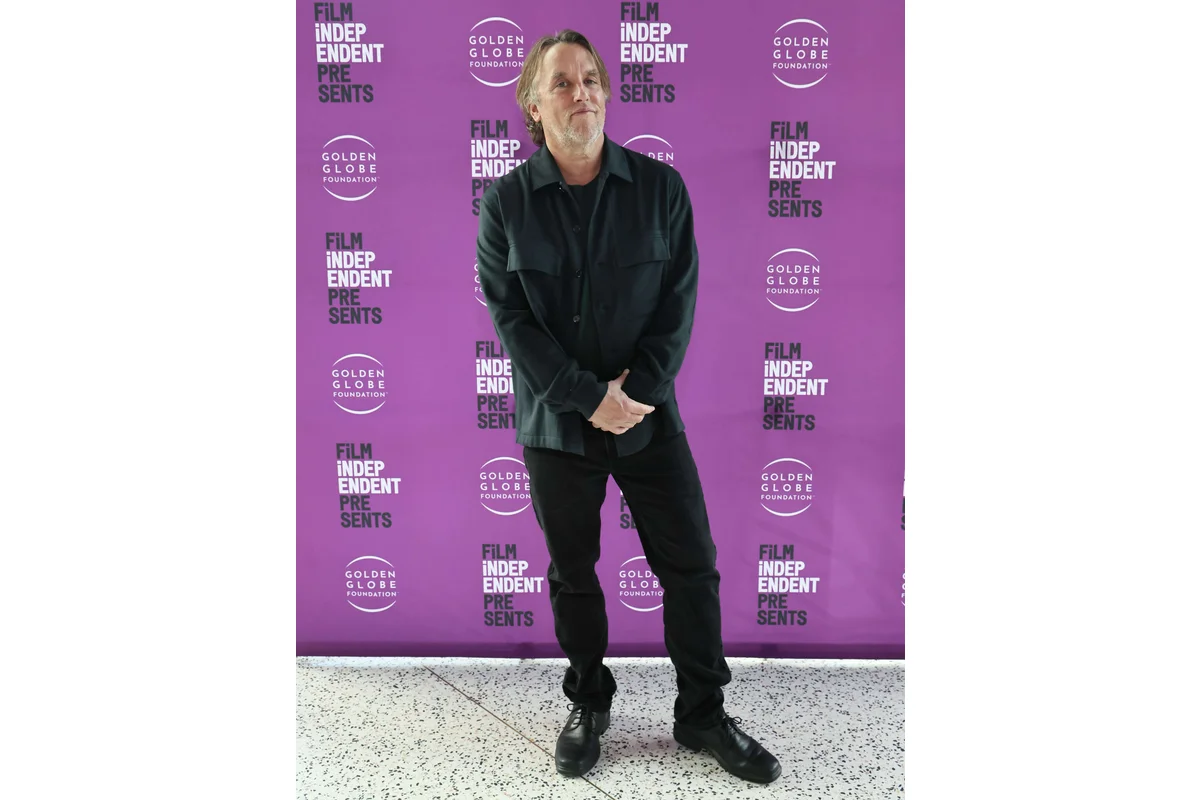
Richard Linklater has achieved a rare feat in 2024 with Richard Linklater dual film releases: his projects “Nouvelle Vague” premiered on Netflix, while simultaneously “Blue Moon” landed in theaters via Sony Pictures Classics. The unexpected overlap, echoing dual-album release strategies seen in music, was not orchestrated by Linklater, but it delivers an intriguing moment in contemporary cinema.
Linklater’s simultaneous release of these two films distinguishes him among filmmakers who rarely have more than one significant project on the calendar in a single year. Unlike calculated double-releases in music, Linklater’s situation arose from scheduling rather than strategy, highlighting his adaptability as a director. Each film explores a vastly different stage in an artist’s life, offering both audiences and critics a unique vantage point into Linklater’s craftsmanship and the dynamics of creation and decline within the arts.
Two Films, One Year: Exploring Creative Beginnings and Endings
The dual release showcases more than mere coincidence; “Nouvelle Vague” and “Blue Moon” form a contrasting pair, each delving into pivotal moments in an artist’s career. “Nouvelle Vague” captures the vibrant dawn of cinematic creativity, focusing on Jean-Luc Godard, played by Guillaume Marbeck, as he directs Jean Seberg (Zoey Deutch) and Jean-Paul Belmondo (Aubry Dullin) in “Breathless.” Brimming with energy, optimism, and the creative possibilities of youth, the film reflects on beginnings and the spark that launches a legacy. Jean-Luc Godard’s influence in the world of cinema is examined through meticulous reenactment, offering audiences a window into the birth of a movement.
In stark contrast, “Blue Moon” centers on the final chapter of an artistic journey. It follows Larry Hart, portrayed by Ethan Hawke, on the opening night of “Oklahoma!” as he is forced to mask his true feelings for his one-time collaborator, Richard Rodgers (Andrew Scott). The story traces despair, professional rivalry, and the poignant exhaustion that precedes Hart’s eventual tragic fate. This juxtaposition of hopeful inception and inevitable decline adds depth to Linklater’s narrative exploration, as he challenges viewers to contemplate the cyclical nature of creative endeavors and personal legacy. Richard Rodgers’ appearance in the film deepens the exploration of artistic partnership and the personal sacrifices often entailed in creative achievement.
Linklater has openly discussed how filming these two movies back-to-back heightened the thematic dialogue between them. Though the close proximity of their release was unplanned, the films resonate as artistic “bookends,” chronicling both the exuberant start and the weary end of the creative spectrum.
Linklater’s Perspective: Behind the Scenes of Dual Releases
While comparisons have been drawn to musicians like Guns N’ Roses, with their simultaneous
“Use Your Illusion I and II”
albums, or to Bruce Springsteen’s dual drops, Linklater distances himself from such deliberate release strategies. As he explains, in past years he has released two films in the same year by happenstance, never by intention, but this particular pairing stands out for their intertwined subject matter and decade-long gestation in his creative vision.
Between these works, Linklater sees more than mere scheduling quirks. He regards them as interconnected, a thematic duo reflecting not only diverse stages of artistry but his own meditations on the processes of beginning and ending. He even situates these two alongside his 2009 film “Me and Orson Welles,” envisioning a trilogy that bookends two beginnings and a poignant conclusion—portraits of real people, each grappling with the cost and reward of creative lives. Linklater notes that while he seldom profiles real-world figures, these exceptions allow him to probe the nature of authenticity, legacy, and narrative invention in his filmmaking process.
Linklater admits that the contrasting moods affected even his outlook while making each film. Shooting the lively “Nouvelle Vague” first, filled with youthful optimism and creative breakthroughs, was invigorating. Filming “Blue Moon” in its wake, by contrast, was emotionally draining, reflecting the profound fatigue that can accompany the twilight of a career. The director reflects that, while both films were long-gestating dreams shot one after the other, the sequence in which they were produced added a personal emotional logic to their creation, accentuating the spectrum from hope to resignation.
Crafting Nouvelle Vague: In-Depth Homage to Breathless
“Nouvelle Vague” was born from an exhaustive engagement with the making of “Breathless,” one of French cinema’s foundational works. Linklater immersed himself in the world of Jean-Luc Godard, obtaining access to nearly every historical document and artifact tied to the original production—photographs, camera reports, payroll ledgers, and correspondence. This deep immersion allowed him to meticulously reconstruct the atmosphere of that seminal film’s set, delving into even the smallest aspects, like uncovering that Claude Beausoleil was the assistant cameraman—confirmed by consulting payroll materials.
In an extraordinary twist, the camera used on “Nouvelle Vague” is the actual camera that Raoul Coutard used to shoot “Breathless.” Following Coutard’s passing, his archive, including the historic camera, was made available, enabling Linklater and his crew to make authentic use of it for the new film. As relayed by the facility that held Coutard’s legacy,
“Yeah, yeah, it’s as he left it.”
– Archive staff
This attention to detail and sense of cinematic communion informed Linklater’s approach throughout the production, contributing to a film that is both homage and a rigorous reconstruction. The process gave Linklater fresh appreciation for the miracle-like confluence of elements—Jean-Paul Belmondo’s charisma, Jean Seberg’s enigmatic performance, and the risky, improvisatory brilliance of Godard’s direction—that made “Breathless” so distinctive. Truffaut’s involvement in developing the film’s outline is also evoked, highlighting the risky act of trusting a singular vision even amid creative collaboration.
For the cast, particularly Zoey Deutch as Jean Seberg, the challenge was formidable: capturing the nuanced, multi-layered performance that history and legend have both burnished and obscured. Linklater praised Deutch’s willingness to immerse herself in the complexities of Seberg’s character, grappling with multilingual dialogue and the pressure of depicting an icon with authenticity.
Exploring Blue Moon: Demanding Minimalism and Emotional Intensity
In “Blue Moon,” Linklater set out to strip away performance artifice, compelling Ethan Hawke as Larry Hart to shed familiar acting tics and vanish into the wounded spirit of his character. The director recalls moments on set when he had to gently yet firmly draw Hawke back from his natural exuberance, repeatedly reminding him that the role called for invisibility rather than charisma. Two vivid comments from Linklater on set were recalled:
“Are you done? Because I’d like to get some work done today.”
– Richard Linklater, Director and
“That’s too confident. That’s Ethan. That’s not Larry.”
– Richard Linklater, Director. Emphasizing this focus on disappearance, he would halt takes when he saw Hawke’s personality overtaking Hart’s fragile persona, telling him,
“I can see you, and we can’t be seeing you.”
– Richard Linklater, Director
This relentless pursuit of authenticity extended to the film’s texture, as Linklater sought to depict Hart as a man rapidly losing his sense of self—a vivid portrait of terminal artistic exhaustion. The emotional demands on Hawke were so intense that he reportedly confided to his wife that he worried Linklater might dislike his acting, despite their long-standing collaboration. The director laughed off such fears, recognizing both the difficulty and necessity of the process, acknowledging that,
“all roads were leading to very sad places for Larry Hart.”
Their shared exhaustion was the point, as the film needed to explore Hart’s demise as honestly as possible.
Andrew Scott’s interpretation of Richard Rodgers provides a poignant foil to Hawke’s Hart, dramatizing the complexities of fleeting partnerships and the ways in which creative differences can become both a source of generosity and deep rivalry. Cameos from others in the arts world subtly enrich the narrative, including a nod to George Roy Hill, disguised slightly as George Hill, to avoid being too explicit while rewarding careful viewers—those whom Linklater calls “cinephiles.” He explained,
“On Blue Moon, I had on my Sidney Lumet, George Roy Hill hat of taking the material and not thinking about me, but performance. It’s so performance-based.”
Dedicated Performances: Nuances of Cast Embodiment
The casting of “Nouvelle Vague” brought together Guillaume Marbeck as an intense Jean-Luc Godard and Zoey Deutch as a transformative Jean Seberg. The film required the actors not only to recreate the atmosphere and mannerisms of real-life legends, but also to access hidden vulnerabilities and triumphs. Linklater admired Deutch’s fearless approach to the role, qualifying her as a true “chameleon”—a term more often reserved for male actors but especially fitting for her immersion into the language, era, and psyche of Seberg. Shooting on location and speaking French, Deutch’s commitment underpinned the film’s authenticity, capturing the complexities of fame, identity, and self-doubt confronted by artists in the public eye.
In “Blue Moon,” Hawke was tasked with submerging his trademark energy and wit into an almost self-effacing performance, subtly reversing the audience’s expectations of a film lead. The result was a more raw, vulnerable depiction of a man grappling with self-destruction and artistic disappointment. The dynamic between Hawke and Linklater, forged over years and multiple projects, allowed for a creative tension essential to bringing Hart’s decline to the screen. The director’s focus shifted toward performance above all, channeling the methods of auteurs like Sidney Lumet and George Roy Hill—directors known for prioritizing actor-driven storytelling. The ensemble for “Blue Moon” functioned as a tight unit navigating the sadness and subdued energy intentionally cultivated on set.
p>Throughout both projects, Linklater’s philosophy toward working with ensembles remained consistent: center the process around honest, character-driven storytelling, and set aside the director’s ego to prioritize the needs of the performance and the atmosphere.
The Interconnected Trilogy: Real Lives, Artistic Invention, and the Heart of Cinema
For Linklater, the conjunction of “Nouvelle Vague” and “Blue Moon” extends beyond happenstance and approaches the structure of an unofficial trilogy when combined with his earlier film, “Me and Orson Welles.” Each piece interrogates the nature of mentorship, invention, rivalry, and the construction—and deconstruction—of artistic identity. In these stories, Jean-Luc Godard, Orson Welles, and Larry Hart occupy the stages of inception, ascension, and fading twilight, raising questions about what endures after the applause dies down.
Linklater’s reflections on his own process—his balance between rigorous research and interpretive liberty—emphasize the tension inherent in retelling real lives. He acknowledges that, even with dedication to authenticity, some narrative liberties must be taken to build compelling drama. His much-discussed “Hit Man” is noted as an example where real-life inspiration gives way to creative embellishment, particularly in its later acts, blurring the boundary between biography and fiction. Linklater’s vigilance regarding these choices underscores a director’s responsibility to honor both subject and story, continually navigating the complex interplay of history and imagination.
Future Implications and What Comes Next
The unplanned convergence of these Richard Linklater dual film releases has created an exciting moment for both the director and moviegoers, inviting new forms of critical dialogue about the role of intention, accident, and thematic resonance in the creation and reception of art. Linklater’s dual examination of creative birth and demise, as embodied in his treatment of Jean-Luc Godard, Jean Seberg, Larry Hart, Richard Rodgers, and other artistic figures, prompts a reflection on the continual cycle of ambition, success, exhaustion, and renewal in human endeavor.
While it remains to be seen whether Linklater or studios like Netflix and Sony Pictures Classics will pursue further coordinated releases of his work, this pair of films sets a compelling precedent for the industry. It challenges expectations around both the endurance of creative partnerships and the unpredictable variables that still shape how stories reach their audiences in a rapidly evolving distribution landscape. Above all, it reaffirms Linklater’s distinctive place in modern filmmaking—as an artist who, knowingly or not, continues to shape the conversation about cinema’s relationship to real life, invention, and the passage of time.
