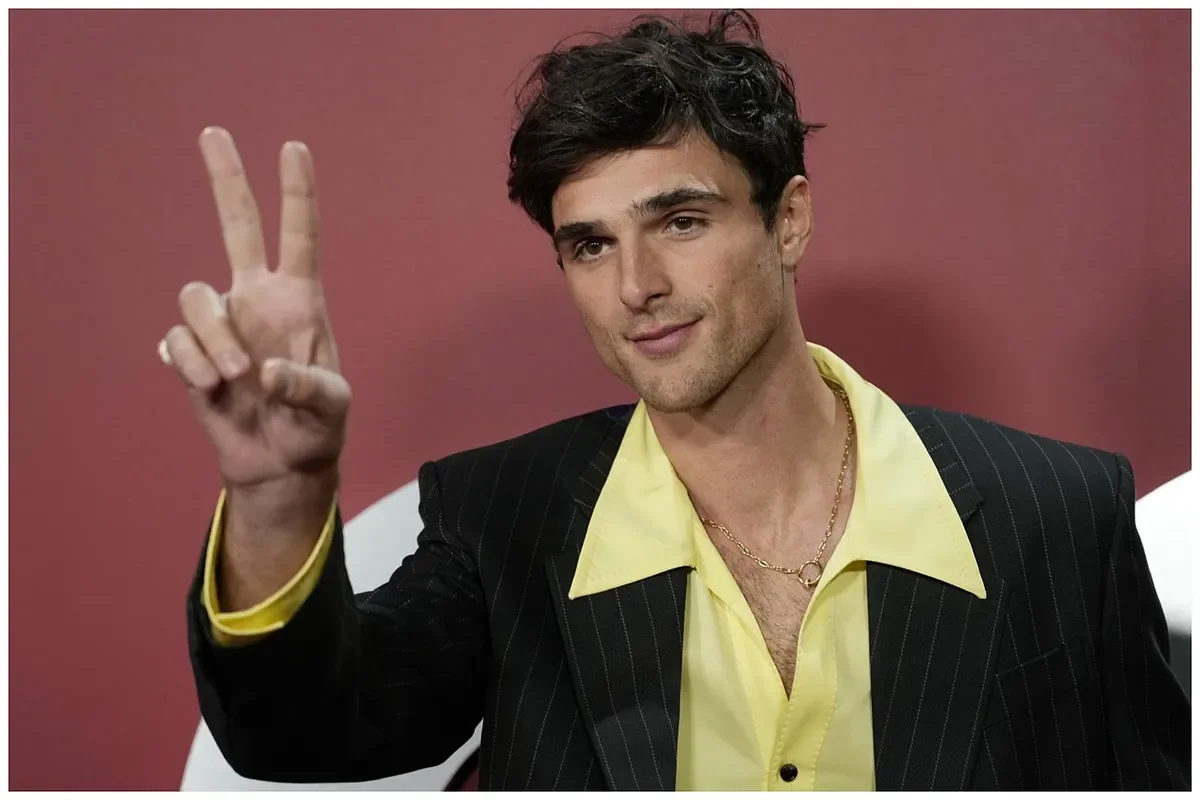
Jacob Elordi, Guillermo del Toro, Jacob Elordi Frankenstein monster design [Image Source: CBRIMAGES]
Jacob Elordi Frankenstein monster design introduces a striking departure from the familiar image audiences know, as Guillermo del Toro’s adaptation takes a bold direction in creature creation. Mike Hill, the film’s lead designer, discussed how he and his team developed a fresh interpretation for the monster in this new vision.
A Fresh Vision for a Timeless Monster
Mike Hill, heading both the creature design and prosthetics, described the challenges and intentions behind crafting Jacob Elordi’s monster for Guillermo del Toro’s Frankenstein. Hill explained that the sheer legacy of the character made originality difficult, noting,
“extremely difficult to come up with a whole new design.”
Hill, Creature Designer and Prosthetics Department Head. The monster has appeared in more than 400 films, prompting the team to forge a new path while respecting the source material.
The goal was to evoke a vintage feel, situating the creature as though it belonged to the 1800s, in alignment with the era of Mary Shelley’s novel. Hill shared,
“What we really wanted was to make it look like he was vintage, and feel like the creature did step out of the 1800s.”
Hill, Creature Designer and Prosthetics Department Head. The design incorporated geometric shapes, adding a sense of intentional craftsmanship. As Hill described,
“We wanted geometric shapes and stuff. I came up with this pattern, so the audience immediately, if you saw him, you’d say, ‘Wow, somebody made this guy. Somebody designed this. Someone made a plan. This is not an accident that’s been repaired.’”
Hill, Creature Designer and Prosthetics Department Head.
Developing the Monster in Collaboration with del Toro’s Script
Hill acknowledged that Guillermo del Toro did not provide a set visual plan from the outset, instead allowing both script and design to evolve hand in hand. He explained,
Image of: Jacob Elordi
“Although Guillermo obviously based it upon Mary Shelley’s wonderful novel, it’s still Guillermo’s version. So I had to absorb that and see what he wanted to do.”
Hill, Creature Designer and Prosthetics Department Head. This collaborative process meant that the story’s emotional arc would shape how the creature appeared on screen, resulting in a design reflective of del Toro’s narrative direction.
As the film progresses, Elordi’s portrayal of the monster physically changes to mirror a journey from adolescence to adulthood. Hill elaborated on this transformation,
“As an adult, he could then take on the air of revenge, because as an adult, you can then say, ‘You know what? No, I was a child, and you did this. This is not me anymore.’”
Hill, Creature Designer and Prosthetics Department Head. The character’s shift in appearance and attitude highlights the monster’s growth and the impacts of his experiences.
Reflecting on the adaptive process, Hill concluded,
“So that’s what helped my design of the creature, is how he would advance with Guillermo’s script of these layers of an adolescent becoming an adult.”
Hill, Creature Designer and Prosthetics Department Head.
The Future of Monster Design in Cinema
The approach to Jacob Elordi Frankenstein monster design in Guillermo del Toro’s film signals a new era for classic horror reinterpretations. The creative risks taken by the design team and the evolving collaboration with del Toro mark a significant moment for genre filmmaking. As audiences await the release, the impact of a fresh creature design may influence future portrayals of iconic characters, reaffirming the lasting relevance of Frankenstein’s monster in popular culture.