
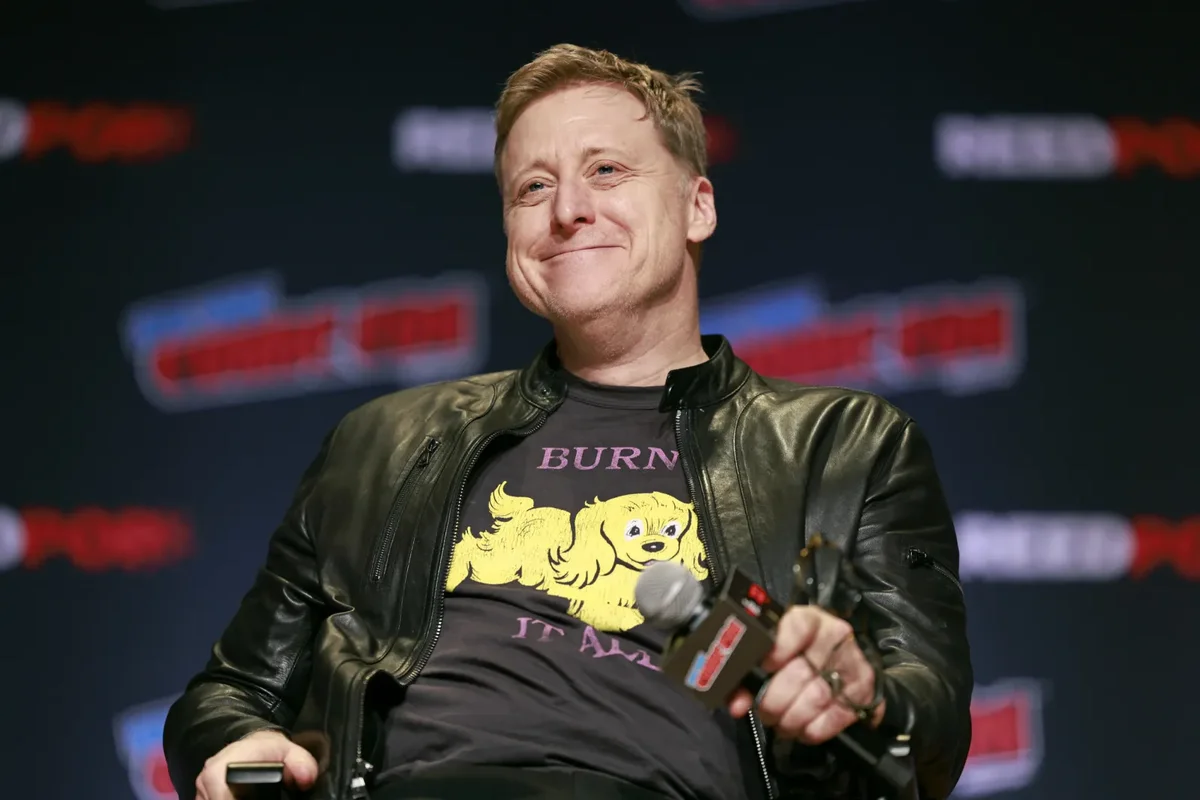
Alan Tudyk, best known for his diverse roles across television and film, opens up about his experience voicing Cadmus Pryde in Apple TV’s animated series WondLa. In a recent Alan Tudyk WondLa interview, Tudyk shared fresh insights about his character’s motivations and the broader themes explored throughout the show’s run.
Tudyk’s Versatility and WondLa’s Ambitious World
Alan Tudyk’s career stretches across beloved franchises such as Serenity, Dodgeball: A True Underdog Story, Justified, Doom Patrol, and his four-season run as Harry Vanderspeigle on Resident Alien. While he is renowned for a multitude of live-action roles, his voice work for giants like Disney, Star Wars, and DC Comics has established Tudyk as a versatile performer able to embody a remarkable range of characters.
In Apple TV’s WondLa, Tudyk steps into the role of Cadmus Pryde, a character described as both visionary and flawed. As the self-appointed savior of humanity, Cadmus embodies complex contradictions—brilliant yet deeply limited by his perspective.
Reflecting on his initial draw to the series, Tudyk explained his fascination with stories of grand scale and imaginative scope, saying he has always been attracted to narratives rich in action, diverse characters, and expansive world-building.
Introducing Cadmus Pryde: Layers and Motivations
Tudyk’s portrayal of Cadmus begins with an air of mentorship, as his character appears to guide the young Eva Nine through holographic messages. Early in WondLa, Cadmus seems supportive and nurturing, yet this persona conceals deeper layers of conflict that become more apparent as the series progresses.
“Eva, this is how we need to do things. This is where we are, and you’re going to grow up and be big and strong and help.”
— Alan Tudyk as Cadmus Pryde, Actor
As the story advances, especially into the second season, Cadmus—with his cloned being—reveals increasingly ambiguous motives. The gradual unveiling of his character exposes the tension between his altruistic ambitions and his eventual missteps, grounding the story’s emotional conflict.
The fall of Cadmus is not abrupt but is marked by a series of survival-driven choices that steer him away from the core values he initially seemed to represent. Tudyk touches on how his character’s desperation leads to decisions in direct opposition to WondLa’s central themes.
The Path of Good Intentions and Misguided Choices
The allure of Cadmus stems from his dual nature: his original intentions genuinely aimed for good, but the escalating odds against him prompt internal conflict. Early on, Cadmus appears to viewers as a figure motivated by benevolence, particularly in his guidance to Eva Nine, yet his focus on ensuring humanity’s survival leads him to questionable actions.
Tudyk agrees that Cadmus began his journey with noble ideals, hoping to save the human race. However, as circumstances grew dire, he closed himself off to alternative options that might have aligned better with the broader ideals of harmony.
“There is no them. It’s just us.”
— Alan Tudyk as Cadmus Pryde, Actor
For Cadmus, “us” refers exclusively to humanity; his inability to see past this distinction places him in opposition to the series’ larger narrative. As the show moves into its later seasons, the tension between self-made promises and real-world limitations grows more pronounced. Cadmus’s pledge to himself was to construct a thriving world for humanity, but the rigidness of his vision becomes his undoing.
Promises, Identity, and The Weight of Leadership
Cadmus’s internal narrative is shaped around a powerful promise: a determination to restore civilization and serve as its architect. According to Tudyk’s perspective, Cadmus believed in his capability and track record, often convincing himself that cleverness and past successes would guarantee future results. When asked if Cadmus sees himself as the hero of the story, Tudyk shares that his character once held that belief, but ultimately had to confront his own limitations.
Throughout the series, Cadmus also serves as a point of comparison for other pivotal characters such as Eva Nine and Eva Eight. While both Evas pursue personal promises and broader ideals, Cadmus clings to a narrow sense of purpose that eventually isolates him, setting the stage for dramatic confrontation and growth.
WondLa’s View of Humanity’s Future
Tudyk acknowledges that WondLa’s depiction of humanity’s destiny rings true not just within the fictional universe, but also offers relevant commentary on real-world issues. The show’s vision of overcoming divisions and seeking collective progress feels timely and urgent, addressing universal themes about inclusivity and cooperation.
Tudyk notes that the parallels between the show and real-life challenges are hard to ignore, as WondLa presents its commentary on the choices facing civilization at key turning points.
Regrets and Hypotheticals for Cadmus Pryde
When posed with the question of what Cadmus might change if given the chance, Tudyk responds with characteristic humor about his character’s appearance but quickly pivots to the importance of communication. He suggests that if Cadmus had prioritized open dialogue, many of the tragic outcomes could have been avoided.
“I wish somebody would’ve given him some of that gum! Communication! It would’ve changed so much! Ultimately, he’s a good man — way down deep — and that would’ve changed things.”
— Alan Tudyk as Cadmus Pryde, Actor
Tudyk reflects on Cadmus’s ultimate potential for goodness, hinting that greater collaboration and self-awareness could have spared him—and humanity—a great deal of hardship. The final season’s arrival signals a reckoning for Cadmus’s choices and offers closure for viewers invested in his journey.
The Implications of WondLa’s Finale
Apple TV’s WondLa concludes with its third and final season set to release on November 26. Fans of the series and newcomers alike will witness the culmination of Cadmus Pryde’s complex story arc. Key figures such as Eva Nine, Eva Eight, and the broader ensemble contribute to a layered narrative about promise, identity, and responsibility.
For Alan Tudyk, portraying Cadmus Pryde represents another addition to his legacy of nuanced, memorable characters, reinforcing his place among genre fans as a performer capable of navigating ambiguous, morally intricate roles. His experience in the Alan Tudyk WondLa interview offers viewers thoughtful reflections on the intersection of character and theme, especially as the narrative approaches its end.
As the show wraps up, the story of Cadmus Pryde prompts viewers to consider how leaders’ choices shape collective destiny—both in science fiction worlds and in the realities they mirror. Alan Tudyk’s insights provide valuable perspective on the significance of perspective, communication, and growth within the highs and lows of WondLa and beyond.
