
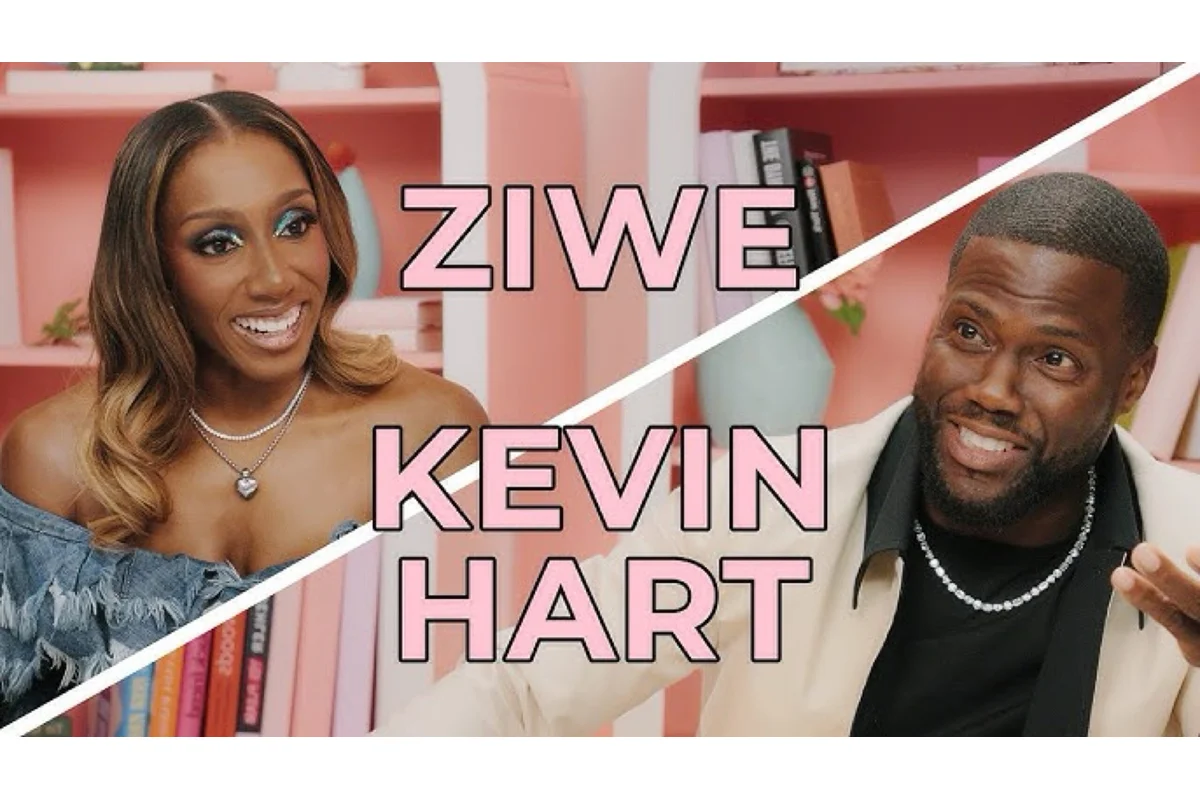
Kevin Hart’s recent appearance on Ziwe Fumudoh’s interview show has captured significant attention after his remarks on a trending social media question sparked widespread discussion. Addressing the Kevin Hart viral interview response, the comedian engaged thoughtfully with the topic, offering his perspective while highlighting underlying issues around labels and assumptions.
Hart Responds to a Controversial Question on Social Media
During his conversation with Ziwe Fumudoh, widely known for her candid interviews, Kevin Hart was asked to weigh in on the divisive “gay son or th*t daughter” hypothetical that has circulated on platforms like Twitter and TikTok. The Fatherhood and Die Hart star was first asked about his views and allyship toward LGBTQ communities, including which letter in “LGBTQIA” was his favorite. Hart initially struggled with the question’s premise before shifting attention back to the host, responding with,
“The fact that you would want me to answer that says a lot about you.”
— Kevin Hart, Comedian. He humorously suggested that Fumudoh was posing problematic questions rather than him offering problematic answers.
Highlighting Acceptance Over Labels
Continuing the discussion, Ziwe Fumodoh pressed Hart with the viral debate, asking if he’d rather have a “gay son” or a “th*t daughter.” Hart made his stance clear, stating,
“I would rather have two healthy kids. Like, it doesn’t matter to me,”
— Kevin Hart, Comedian. He followed this up with,
“Two healthy children and the fact that you have to put them in those categories says a lot about who you are.”
— Kevin Hart, Comedian. Hart’s remarks suggested he objected to categorizing children based on social stereotypes, shifting the focus toward the importance of health and well-being over such labels.
Questioning the Nature of the Debate
Hart elaborated further, asserting,
“I’m just telling you I think the real problem is in the thinker, not the answerer. The thinker,…Maybe you should just ponder on that for a second.”
— Kevin Hart, Comedian. By directing attention to the mindset of those who construct such hypotheticals, Hart suggested that the framing of these debates could be indicative of deeper societal biases, rather than the answers themselves.
Addressing Past Controversies and Accountability
In light of prior criticisms over past jokes some found homophobic, Hart was also asked about his sense of accountability. He explained,
“Well, you don’t have to constantly do something if you’re accountable and you are strong enough to stand in whatever the line of fire is to say things. So, whether it’s been the family or friends or gay people in the past, accountability is key. And I think to all of those people that were mentioned in that particular question, I have definitely been aware and accountable.”
— Kevin Hart, Comedian. This response highlighted his efforts to accept responsibility and the importance of being answerable for one’s statements and actions.
Impact of Hart’s Viral Interview and the Ongoing Debate
The interview, originally reported by Sourav Chakraborty on Mandatory, has sparked a spectrum of responses online and reignited conversations about public figures, social media trends, and sensitive topics. Hart’s approach underscored the value of focusing on acceptance and reflection rather than perpetuating divisive categories. As discussions continue across platforms, the Kevin Hart viral interview response remains a focal point in evaluating the way controversial issues are framed and discussed in public discourse.
“In those moments of despair, great understanding, and education can come out of it if you're given the opportunity,” says Kevin Hart, whose comments about the gay community onstage and on Twitter sparked a controversy. https://t.co/0rEqdUbKxi pic.twitter.com/OqWo9XSMx3
— 60 Minutes (@60Minutes) April 21, 2024
