
In the upcoming Guillermo del Toro Frankenstein film, director Guillermo del Toro has revealed a unique filming technique that enhances the emotional impact of key scenes between Jacob Elordi’s Creature and Mia Goth’s Elizabeth. By opting for a higher frame rate during their interactions, del Toro aims to create deeper resonance between the characters, offering viewers a subtle but powerful experience.
A New Approach to Capturing Emotional Moments
Del Toro chose to shoot all the scenes featuring the Creature and Elizabeth at 36 frames per second, diverging from the standard 24 frames commonly used in cinema. This deliberate adjustment allowed him to play with the tempo of critical moments, lending new emotional depth to the pair’s relationship. He explained his method publicly after a fan observed the slower movements in one memorable scene featuring the two characters.
“I shot all their scenes together at 36 frames per second so I could slow down certain moments/Gestures (wedding dress moth flutter float) or speed them (her face trembling in glove scene) and you can feel that effect leaning on every emotional beat…”
— Guillermo del Toro, Director
Exploring the Bond Between Elizabeth and the Creature
Within the film, Elizabeth, who is engaged to Victor Frankenstein’s brother William, emerges as one of the few characters capable of extending genuine compassion to the newly created Creature. This dynamic is especially pronounced in the period immediately following the Creature’s creation, where Victor keeps him chained in a secluded basement below his laboratory. The way these scenes are filmed underlines the empathy Elizabeth shows and helps set her apart from the rest of the cast.
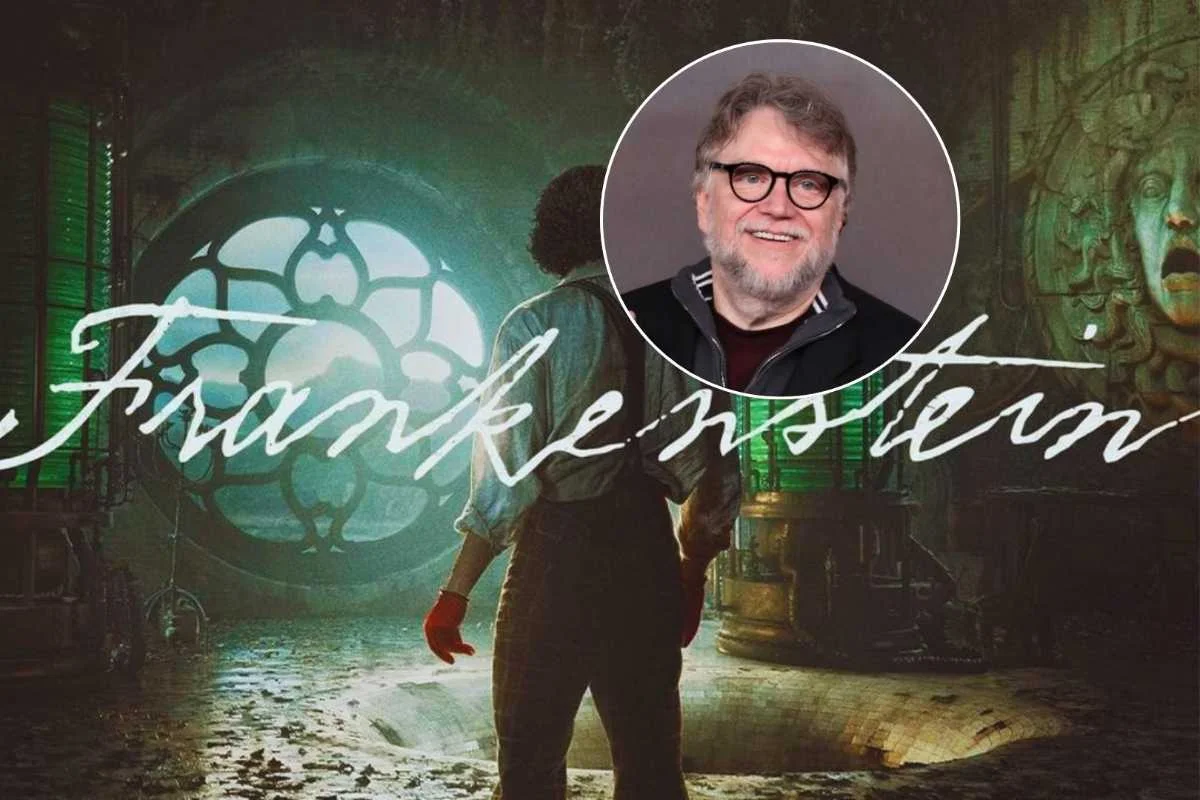
Stars Reflect on Del Toro’s Creative Vision
Actors Jacob Elordi and Oscar Isaac have praised del Toro for emphasizing personal connections over scientific elements within the narrative. According to them, the Netflix adaptation explores character motivations and relationships, deviating from the conventional horror approach often associated with Mary Shelley’s classic. This perspective is evident in the performances as well as the visual storytelling choices crafted by del Toro.
Oscar Isaac, who plays the iconic scientist Victor Frankenstein, highlighted the film’s innovative tone, indicating that the story is more focused on human experience and emotion than on traditional horror tropes. Meanwhile, Jacob Elordi noted that he was given significant creative freedom in shaping the Creature’s appearance, resulting in a process characterized by experimentation and collaboration with the director.
Supporting Cast and Production Details
Alongside Elordi, Goth, and Isaac, the film features a notable ensemble that includes Christoph Waltz, David Bradley, Charles Dance, Ralph Ineson, and Lars Mikkelsen. As part of the adaptation of Mary Shelley’s enduring Gothic novel, these actors help breathe new life into the classic story.
Frankenstein is currently available for streaming on Netflix, inviting both returning fans of the story and new viewers to experience del Toro’s innovative filmmaking methods. With its distinctive technical choices and a focus on character-driven storytelling, the movie contributes a fresh perspective to a tale that has captivated audiences for generations.
I shot all their scenes together at 36 frames per second so I could slow down certain moments/Gestures (wedding dress moth flutter float) or speed them (her face trembling in glove scene) and you can feel that effect leaning on every emotional beat… https://t.co/O28C0HvEx8
— Guillermo del Toro (@RealGDT) November 30, 2025
