
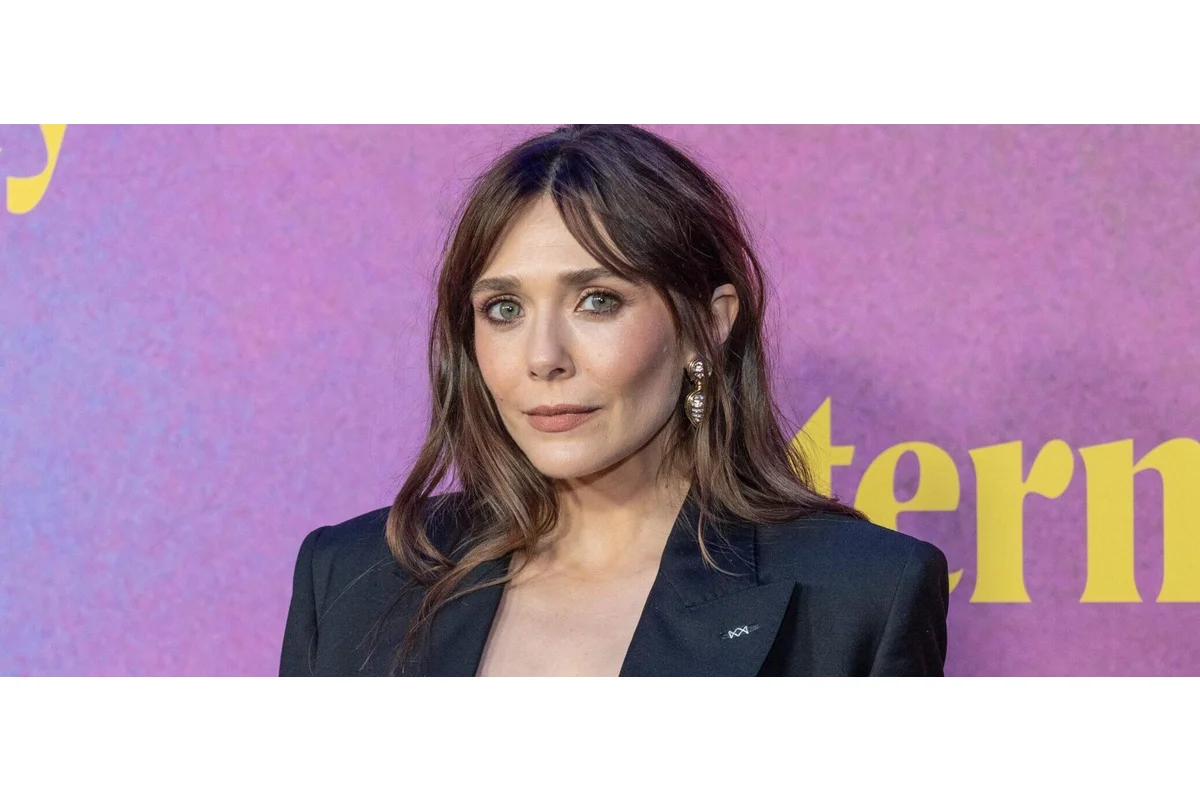
Elizabeth Olsen delivers a remarkable portrayal in the new A24 fantasy romance film, Eternity, setting a record with her immersive performance at its center. The buzz around her work in the movie has made “Elizabeth Olsen Eternity performance” a trending topic since the film’s world premiere at the Toronto International Film Festival in September 2025, drawing attention to the unique narrative and ensemble cast.
Eternity follows Joan, played by Elizabeth Olsen, who dies and enters The Junction—a peculiar realm where the deceased select the kind of eternity they wish to inhabit. Seeking her recently passed husband Larry (Miles Teller), Joan is startled to meet her first husband Luke (Callum Turner) who has been anticipating her arrival for nearly seven decades. Caught between past and present loves, Joan faces the emotional dilemma of choosing which afterlife and which man to spend forever with.
Inside the Vision: Creating The Junction’s Afterlife World
The film’s co-writer and director, David Freyne, crafts The Junction as both an emotional and visual spectacle, drawing inspiration from memory and theatrical storytelling. Eternity offers a retrofuturistic imagining of the afterlife, presenting a surreal, museum-like portal filled with reconstructed fragments of one’s life. Freyne explains his approach:
“something that would illustrate how you go into memories,”
—David Freyne, Co-writer/Director.
The Junction’s design evokes both familiarity and other-worldliness. Freyne likens it to a set built with brutalist architecture, evoking scenic bluffs and echoing moments from the leads’ lives with a painterly backdrops. In his words:
“like a natural history museum of dioramas”
—David Freyne, Co-writer/Director.
To invoke a deeper sense of nostalgia and existential exploration, Freyne staged Olsen’s various ‘Joans’—reflecting different eras and relationships—all in a single, rigorously scheduled day. The complexity of this shoot led to a record-setting number of on-set hair and makeup transformations:
“a record for the amount of hair and makeup changes”
—David Freyne, Co-writer/Director.
This achievement highlights the commitment both Freyne and Olsen brought to visualizing shifting identities, supported by meticulous work from the art departments.
The Craft: How the Film’s Rules Shape Its Emotional Stakes
The world of Eternity operates with a set of carefully designed rules—there’s a ticking clock that offers each soul only seven days to make their ultimate afterlife choice. This deadline not only drives Joan’s narrative urgency, but also grounds the fantasy in structured consequence:
“it gave you an instant ticking clock for Joan to make her decision.”
—David Freyne, Co-writer/Director.
Within The Junction, a detailed bureaucracy mimics the real world, where occupants can take jobs, receive promotions or demotions, and settle into new routines. The character Luke’s role as a bartender, for example, both adds humor and injects real-world drama into an otherworldly landscape:
“added to the drama for these characters”
—David Freyne, Co-writer/Director.
Freyne meticulously scripted much of the afterlife’s texture, from immersive commercials to the little details of the various ‘booths’ and places within The Junction:
“a lot of them were written into the script”
—David Freyne, Co-writer/Director.
“the other booths that we pass by”
—David Freyne, Co-writer/Director.
“I remember just doing a spreadsheet of names of eternities and taglines and paragraphs and I would give that to the art department, and they did an extraordinary job with what they created. So yeah, I created all those, which were really, really fun, but then there were touches that people would come up with that added to them in great ways as well.”
—David Freyne, Co-writer/Director.
Comparison and Relationships: Exploring Bonds Beyond the Love Triangle
In the current cinematic landscape, love triangles have become a recurring motif, especially for A24. Freyne draws a distinction between Eternity and other recent entries, notably Materialists, by giving significant narrative space to the relationship between the two husbands, Luke and Larry, played by Callum Turner and Miles Teller. The development of camaraderie and rivalry between them enriches the film’s interpersonal web:
“It was really important. I think it was so important to me that the relationship between Joan and her husbands isn’t the only one. It’s between the men. It was so important that you have the competition with them, but there’s a reason she loves both of them. There’s something between them that’s familiar, and it’s really important, particularly later in the film when they’re getting drunk together, and you realize how much they have in common. What they really have in common is that they love this woman. Miles and Callum were just so brilliant with each other. They got on so well, and you feel that chemistry. I think if you have that, you have to explore it. And I think those actors really did. I did a lot of little rewrites, the pre-production and production, just responding to how brilliant they are. That was a lot of fun.”
—David Freyne, Co-writer/Director.
This deepening of male friendship against the backdrop of Joan’s monumental choice creates a narrative complexity that is both touching and real, further amplifying the stakes for everyone involved.
A Spotlight on Elizabeth Olsen’s Transformative Performance
Elizabeth Olsen’s performance as Joan has been widely regarded as a career-defining achievement, bringing extraordinary nuance and evolution to the role. Freyne credits Olsen for her transformational qualities and commitment to embodying different aspects of Joan as she interacts with each husband:
“She is staggering in this. I think it is such an extraordinarily nuanced performance, and I think that was absolutely it. Myself and Lizzie spoke a lot about not just how she would behave being an older woman in a younger body again, and how that would affect her voice and her posture, but how she is a different Joan with Luke, she’s with Larry, and how she reacts to them and the joy she might have with each of them is different, and she really developed that over. I mean, like you said, her voice changes subtly, her posture changes. How she walks or kind of brushes her hair. Everything is different with each man and I think it’s just a gift. It’s a gift to have an actor of her caliber and her talent come in and craft that with you and, yeah, I can gush all day about Lizzie.”
—David Freyne, Co-writer/Director.
This level of detail—down to micro-expressions, vocal changes, and physical nuances—sets Olsen’s portrayal apart. When asked about possible influences from her acclaimed turn in Marvel’s WandaVision, Freyne responded:
“I mean, I love WandaVision. I think it’s brilliant. I’m sure it helped a little bit. Yeah.”
—David Freyne, Co-writer/Director.
The film’s narrative structure allowed Olsen to simultaneously embody aspects of nostalgia, regret, hope, and love, shifting personas as Joan connects with different parts of her past.
Leading Cast Reflect on What Differentiates Eternity from Other Romantic Comedies
Miles Teller, who plays Larry, reflected on the evolution of the romantic comedy genre, highlighting what makes Eternity distinct among contemporary love stories:
“I guess for my generation, it’s even something like You’ve Got Mail. I think that probably came out when I was like 9 or 10. On the earlier side, I think some of the romantic comedies maybe have leaned into the comedy a little more. There’s kind of a lot more one-liners, maybe. And what I loved about this, it felt very character-driven. There’s a real arc here. You really care about the progression of these characters. It’s incredibly heartwarming. And for me, I’ve certainly made some comedies where we’re just going for the biggest laughs possible. But for this one, it just really felt truthful and sincere. And I like movies that treat the audiences with sincerity.”
—Miles Teller, Actor (Larry).
Olsen also offered insight into portraying Joan’s multi-layered relationships with both Luke and Larry, explaining her approach to exploring the different versions of the character:
“I think even without having lost someone, if we haven’t seen someone that was important to us and a moment in our lives, we haven’t seen them in 10 years, when we see them, we kind of return to the people that we were, even if we’re trying not to. So I thought about that a lot with Luke and Joan. She was obviously younger, but also maybe not as sure about what she has to say or how she says it, or her own mannerisms, or making a mistake, or not wanting to, and just being kind of overwhelmed by the butterfly feelings. Whereas with Larry, there’s almost a deflation.”
—Elizabeth Olsen, Actor (Joan).
“Yeah, a tired feeling, but it’s because of that intimacy that you get from that kind of comfort with someone for so many years. And so there is a difference, I think. I think we’re all slightly different versions of ourselves depending on who we’re with or who’s around. And so I think it was an opportunity to get to show that.”
—Elizabeth Olsen, Actor (Joan).
This portrayal resonates with viewers, offering a genuine look at the passage of time, enduring love, and personal evolution.
Portraying Connection: The Art of Listening in Eternity
Callum Turner’s performance as Luke, the patient and attentive first husband, also stands out. Turner reflects on the significance of empathetic listening—a quality embedded in his character who long awaits Joan’s arrival:
“What’d you say? [Laughs]. He’s been in The Junction for 67 years. He has been waiting for a long, long time and I guess he’s incredibly susceptible to everything around him and people that are coming through. People don’t stay for a long time, and he’s managed to build a few relationships with people that have stayed in The Junction to work. But really he’s been waiting for Joan his whole time. And to be a good listener, I guess, is about communication, separate from Luke.”
—Callum Turner, Actor (Luke).
“Also to be a good bartender. You have to be a good listener. You go there for that sometimes. They listen to a lot of stories.”
—Miles Teller, Actor (Larry).
This dynamic of patience and observation highlights both Luke’s depth as a character and his central role in the emotional landscape of Eternity.
The Cast and Critical Reception
Alongside Elizabeth Olsen, Miles Teller, and Callum Turner, the Eternity ensemble features Da’Vine Joy Randolph, John Early, and Olga Merediz. Their performances have received widespread acclaim from audiences and critics. Following positive early reviews at Toronto, Eternity holds strong scores of 76% approval from critics and a remarkable 91% rating from general audiences on Rotten Tomatoes, signaling both industry and public endorsement.
The collaborative artistry of the cast and Freyne’s direction deliver a film that both honors classic rom-com traditions and adds new emotional and conceptual depth, earning praise for its originality and resonance.
The Impact of Eternity and What Lies Ahead
Elizabeth Olsen’s record-setting work, the film’s inventive world-building, and a cast that shines with sincerity together mark Eternity as a standout in a revitalized romantic fantasy genre. As the narrative unfolds, blending complex personal choice with a vividly imagined afterlife, it provides audiences with deep reflections on memory, love, and the passage of time.
With audiences responding so positively upon its wide release, potential conversations are already underway about sequels, as well as further exploration of the emotional landscapes introduced in The Junction. For now, Eternity is captivating moviegoers in theaters around the world, reinforcing the cultural impact of both Elizabeth Olsen’s Eternity performance and the power of inventive ensemble storytelling.
