
James Cameron is preparing to tackle the challenge of developing a new entry in the iconic science fiction series, this time with the goal of making a truly future-proof Terminator film. As he prepares for the release of Avatar: Fire and Ash, Cameron is already setting his sights on reinvigorating a franchise that first brought him into the global spotlight.
Cameron’s Approach to a New Sci-Fi Frontier
The task ahead for James Cameron involves more than just revitalizing the Terminator series; it involves creating a story that anticipates technological realities just around the corner. Cameron, reflecting on the franchise and its relevance in today’s world, shared insights in a recent interview about his creative process and the difficulties of predicting the future of technology and society. After completing the marketing rounds for his current film, Cameron plans to dedicate time to writing his next projects, with the James Cameron future-proof Terminator high on his list.
“I’ll have some time to write and to consider my next projects and the order in which I do them and so on once we’re done with the marketing on this in a month or so,”
said Cameron, outlining how he structures his workflow as he transitions between major film releases. His commitment to the new Terminator movie is already evident in his preparatory work.
“I’ve got a stack of notes this thick [holds fingers about three inches apart], which is how I start all my scripts, on what I want to do with a new Terminator film. I’m going to pour myself into that as a writer.”
Cameron’s process begins with extensive notes, and he acknowledges that laying out ideas is the first critical step towards drafting a compelling screenplay. That preparation is now more complex, as real-life advancements in artificial intelligence and robotics pose a challenge to traditional science fiction narratives.
Science Fiction Catches Up with Reality
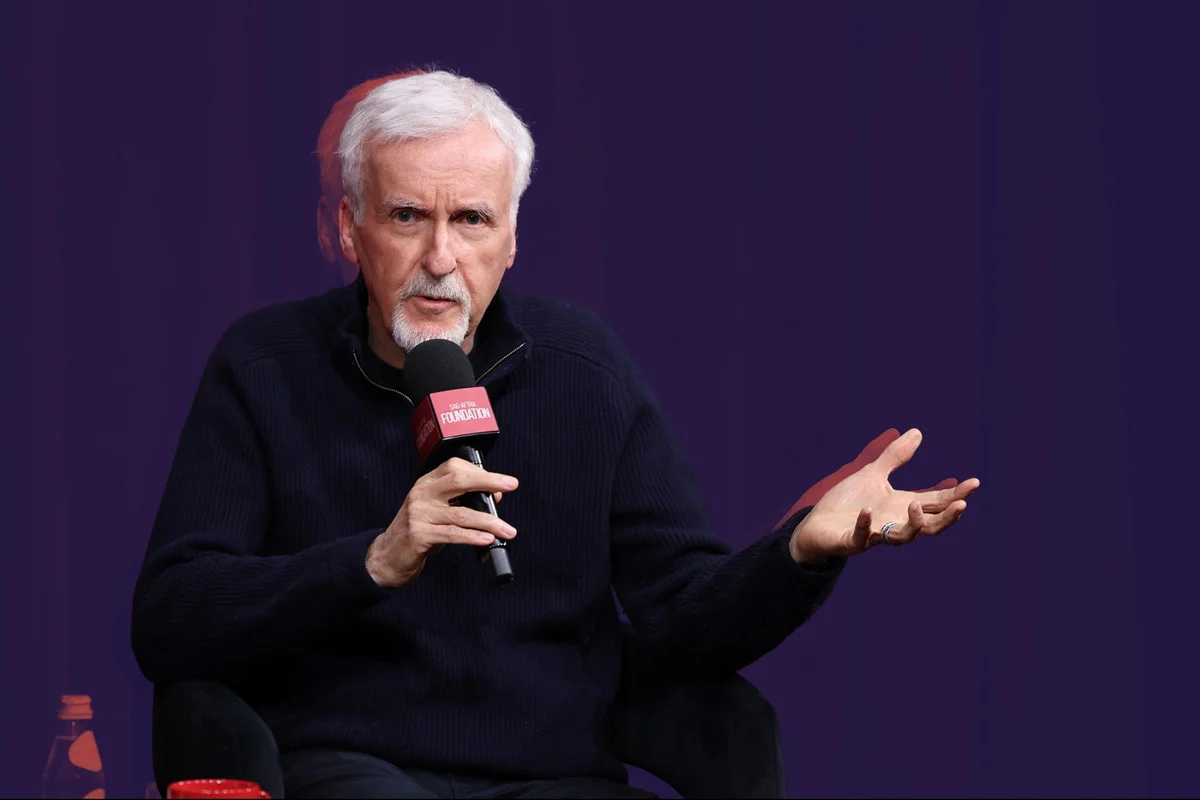
James Cameron has always been ahead of the curve, but now he recognizes that contemporary science fiction has, in some ways, become reality. Cameron points out that story elements which once seemed fantastical are now close to daily life, making it harder to stay ahead of future technological changes, even for a visionary director.
“It’s difficult. I have to tell you. Science fiction has caught up and is actually overwhelming us at this point. We’re living in a science fiction world, and we’re literally having to deal with problems that in the past only existed in science fiction books and movies. Now we’re living it for real. I’ll never be as prescient as I was back in 1984 of imagining this one because I don’t think anybody knows what’s going to be happening a year or two years from now. But I at least want to future-proof myself by being a couple years out.”
This statement from Cameron underlines the challenges of crafting narratives that remain relevant in a fast-evolving technological landscape. He admits that forecasting the future is now more complex than when he first wrote The Terminator and acknowledges the unpredictability of where technology is heading, especially with artificial intelligence becoming a greater part of daily existence.
Multiple Projects and a Return to Familiar Worlds
While the new Terminator movie is Cameron’s priority following Avatar: Fire and Ash, he is also preparing other projects. He is set to adapt Charles Pellegrino’s novel Ghost of Hiroshima, dramatizing the story of a Japanese man surviving the atomic bombings during World War II. This film will be Cameron’s first non-Avatar project in more than twenty years and demonstrates his ongoing commitment to storytelling grounded in both science fiction and real-world history.
The director’s schedule remains full. Avatar 4 and Avatar 5 are planned for theatrical release in 2029 and 2031, respectively. Cameron structured Avatar: Fire and Ash to allow for a satisfying conclusion in case the sequels do not progress, showing his awareness of the uncertainty involved in major franchise filmmaking.
Leadership Roles and Franchise Evolution
Although Cameron plans to write the next Terminator installment, it is possible he may not direct it, similar to his recent approach on Alita: Battle Angel, where he contributed as a writer and producer. After stepping back from Terminator after the second film, Cameron returned as a major influence for Terminator: Dark Fate in 2019. Despite being well received by audiences and critics, Dark Fate struggled at the box office.
Cameron has shared in prior interviews the unique challenges of relaunching Terminator, particularly as real-world reliance on technology and AI has become central to society since the series first began. The questions raised by AI’s everyday use are different from the fears that inspired the original films, and adapting to these new realities is a priority for Cameron as he seeks to ensure the franchise remains relevant.
Main Cast Members from the Original Film
Among the most recognized performers from The Terminator series are Michael Biehn, Linda Hamilton, Lance Henriksen, and Paul Winfield. Their portrayals helped define the tone and impact of the original film, and these cast members remain closely associated with the franchise’s legacy.
The Future of a Legacy Franchise
As James Cameron revisits the world he helped build, he finds himself adapting to a landscape where science fiction’s predictions have become present-day concerns. Facing rapid advances in artificial intelligence and societal changes, Cameron’s endeavor to create a James Cameron future-proof Terminator may set new standards for science fiction storytelling, shaping not only the direction of the franchise but also the way filmmakers address technology’s role in modern life. Audiences and industry observers alike will be watching to see how Cameron and his collaborators respond to these evolving challenges, and whether the next film can once again push cinematic boundaries.
