
Laurence Fishburne recently shed light on the intense challenges he faced while filming The Matrix, revealing personal stories that highlight the physical toll. Discussing his Laurence Fishburne Matrix memories, the acclaimed actor described training and working alongside co-stars Keanu Reeves and Carrie-Anne Moss under renowned martial arts choreographer Yuen Woo-ping, who insisted on a rigorous Hong Kong-style approach never before attempted by Western actors. This demanding preparation took place before and during filming, forcing Fishburne and his colleagues to push far beyond conventional acting routines.
“We were essentially the first Western actors to work in the Hong Kong style,”
Fishburne recalled, referencing the formidable transition he and his fellow stars underwent.
“And so [martial arts choreographer] Yuen Woo-ping was very concerned that we weren’t going to be able to [pull it off]. So he trained us really hard—training us like professional athletes. And it was in the middle of that training I realized why they pay professional athletes so much money: Because professional athletes are always in pain. Not in pain sometimes—like when you go to the gym and then you’re sore for a day. They’re in pain All. The. Time.”
— Laurence Fishburne, Actor
The results of this effort are etched into cinema history through The Matrix‘s iconic action scenes. Even over 25 years later, Fishburne acknowledges the physical legacy remains with him.
“It’s all—I mean, it’s still in the body,”
he laughed, unable to forget what those months demanded.
“We each had two trainers, and they worked us really, really hard!”
— Laurence Fishburne, Actor
Career of Transformation and Defying Stereotypes
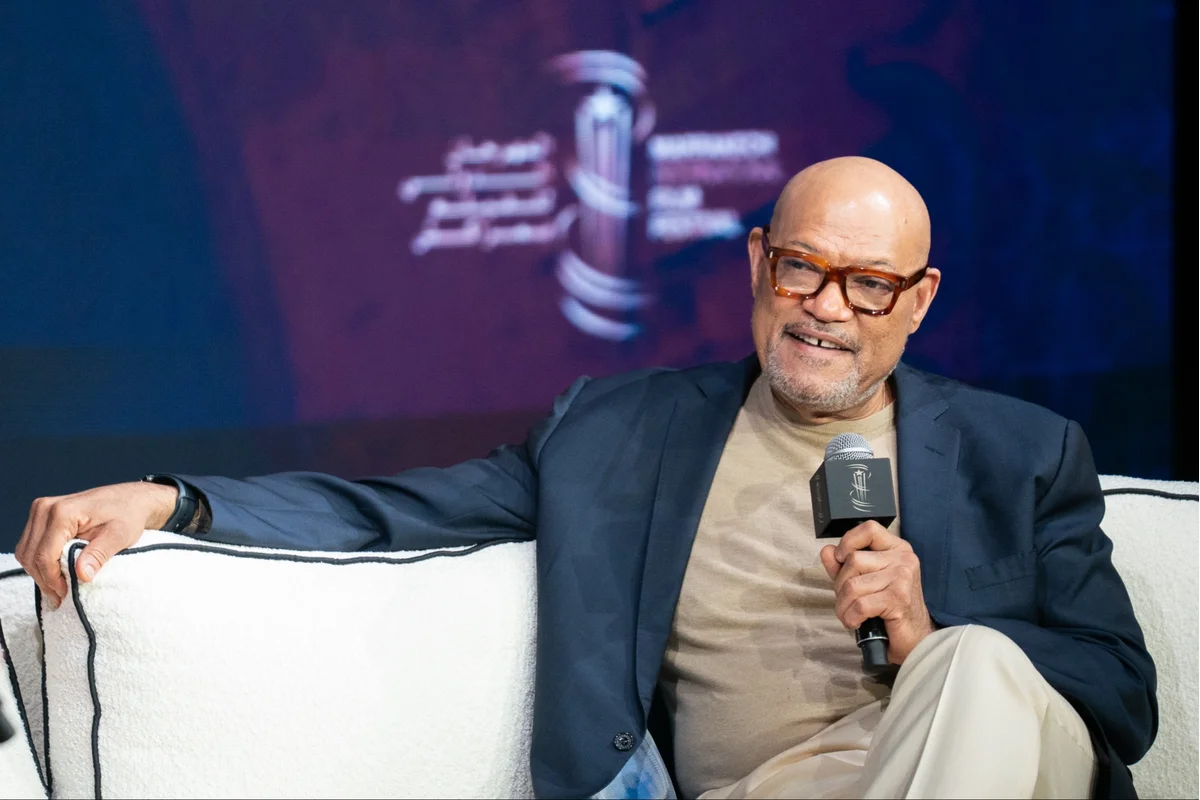
In a candid onstage conversation at this year’s Marrakech Film Festival, Fishburne shared anecdotes from key phases of his acting journey, emphasizing a lifelong pursuit of reinvention. He described his childhood in Brooklyn as having
“a universe was six blocks in Brooklyn,”
evoking the narrow world he grew up in before rising to international fame through major films like Apocalypse Now, Boyz N the Hood, and The Matrix. Over an hour and a half—punctuated by minor technical interruptions—Fishburne detailed how he actively seeks to defy typecasting and surprise viewers with each character.
“I’m always looking for ways to surprise the audience,”
he explained.
“I’m always trying to change a little here, shift a little there, so it’s not familiar visually—not someone you instantly recognize or can predict. Instead, I want to create a character who surprises you, someone in whom you either see yourself or someone you know.”
— Laurence Fishburne, Actor
Creating the First Hip-Hop Gangster on Screen
Fishburne described his process for developing Jimmy Jump, the unpredictable figure in Abel Ferrara’s King of New York. Drawing on archetypes familiar from American Westerns, he said Jimmy Jump was rooted in
“a classic ‘two-gun kid’ from American westerns,”
before referencing,
“That young, reckless guy with two guns, like the character Kevin Costner plays in ‘Silverado’”
— Laurence Fishburne, Actor. By combining this foundation with fashion, unique behavior, and street influences, he strove to bring something new to cinematic portrayals of gangsters.
“Jimmy Jump, for me, is the first hip-hop gangster on film,”
Fishburne asserted, drawing from his life in New York.
“It came from intuition, from being from New York, spending time in those neighborhoods, going to hip-hop shows, knowing graffiti writers and breakdancers. I was very much part of that culture. I even knew someone who called himself a hip-hop gangster—he wanted to be a rapper but also had another side business. And I thought, ‘Why haven’t I ever seen this type of character in movies?’”
— Laurence Fishburne, Actor
Impact of Boyz N the Hood and Connection with Audiences
Playing Furious Styles in John Singleton’s Boyz N the Hood brought Fishburne a different level of recognition and emotional response from the public. He recounted a particularly powerful exchange soon after the film’s release:
“I was living in Venice, California, right after the movie came out, when a young man approached me,”
Fishburne remembered.
“He had tears in his eyes and didn’t quite know how to express himself, except to say thank you for the movie. I responded gently and thanked him, but I was deeply moved by the raw emotion he was showing.”
— Laurence Fishburne, Actor
Roger Guenveur Smith, a fellow actor and friend from King of New York, helped Fishburne understand the significance of his performance in that film.
“Roger turned to me and said, ‘You don’t understand what happened.’ I asked him what he meant, and he explained, ‘When you played Furious Styles, you essentially became the father to a fatherless generation of boys.’”
— Laurence Fishburne, Actor
Commanding the Room Through Adversity
Fishburne’s measured and empathetic persona was also apparent during the Marrakech Film Festival, when technical difficulties interrupted the flow of the discussion. Even as tension mounted, he reassured the audience, offering a calming presence. His closing words,
“You’re all so beautiful, Thank you for being here,”
were met with applause, a testament to the connection he maintains with fans and the respect he commands during live events.
The Lasting Influence of Fishburne’s Journey
Laurence Fishburne’s recollections provide a unique window into the demanding world behind iconic films like The Matrix, as well as his commitment to evolving as an artist. His Laurence Fishburne Matrix memories exemplify how hard-earned experience, physical endurance, and a dedication to surprising audiences have shaped both his career and the roles he takes on. Having challenged conventions on screen and earned heartfelt appreciation from viewers, Fishburne continues to be a pivotal force in contemporary storytelling, inspiring audiences and creators alike with each transformation.
