
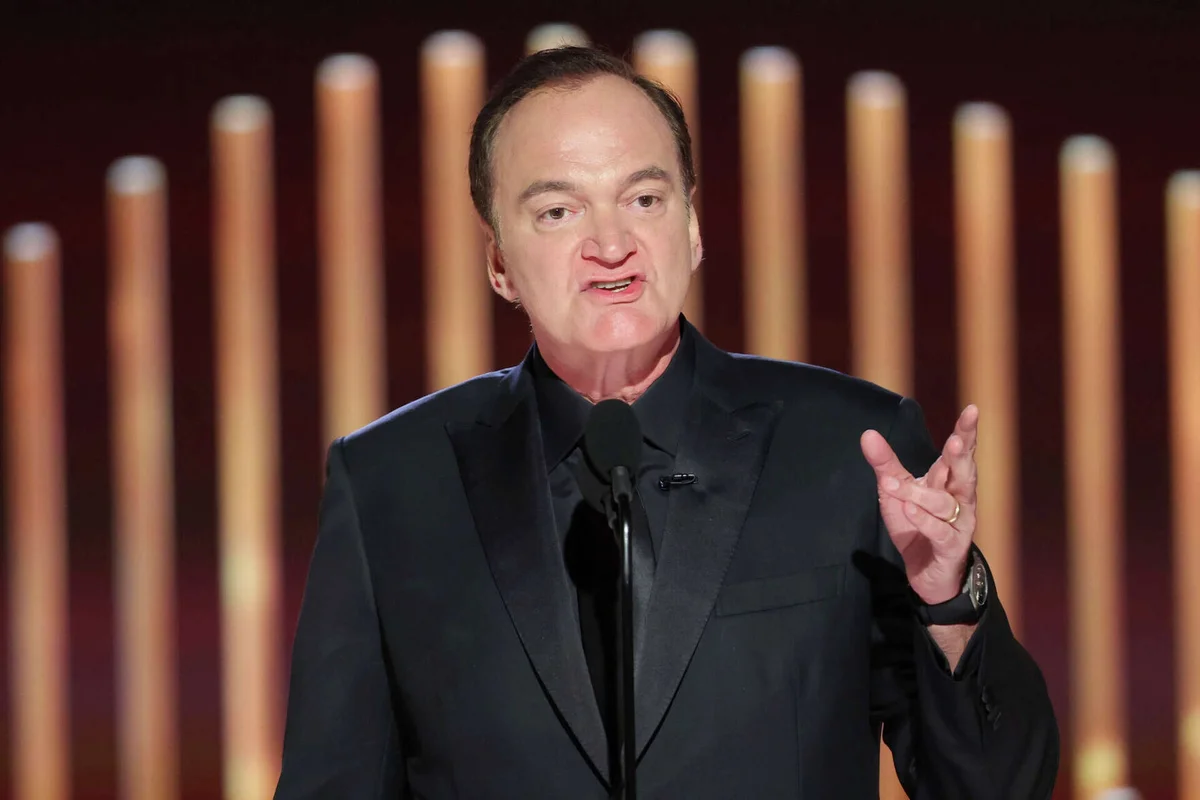
Quentin Tarantino‘s recent harsh remarks on Paul Dano’s role in “There Will Be Blood” have generated notable controversy within the film community, placing the acclaimed director at the center of a discussion about actor performances and industry expectations. The Quentin Tarantino Paul Dano criticism has sparked debate as fans and critics reflect on Dano’s portrayal of the Sunday twins and question whether Tarantino’s opinions accurately reflect the film’s achievements.
Tarantino’s Dismissal of Paul Dano’s Performance
Quentin Tarantino, renowned for his cinematic impact through films such as “Pulp Fiction,” voiced his disapproval of Paul Dano’s work in “There Will Be Blood” while discussing the movie’s overall strengths. He listed the film among his top modern favorites, yet stopped short of fully endorsing it, pointing directly to Dano’s involvement as a key flaw. Tarantino described Dano’s acting as “weak sauce,” dismissing the impact of his dual portrayal of both Paul and Eli Sunday. This strong critique, coming from a filmmaker known for his bold takes on cinema, stands out for its intensity.
Tarantino’s opinions often generate strong reactions, and his willingness to call Dano “a weak, weak, uninteresting guy” further fueled the backlash. Many observers felt Tarantino missed the nuanced qualities of Dano’s performance, which some regard as a masterful balance to Daniel Day-Lewis’s dominant role as Daniel Plainview.
The Demands and Depth of Dano’s Role
Paul Dano faced considerable challenges preparing for the Sunday twins, having been cast in one role before being asked, at short notice, to also embody Eli Sunday, transforming the brothers into twins. By his own account, Dano entered the second role with virtually no preparation time—a daunting ask for any actor, let alone someone early in their career. Despite this, Dano’s nuanced and emotive approach impressed many film critics, especially considering he was acting opposite Daniel Day-Lewis, a performer noted for his commanding presence.
Dano’s Eli Sunday is marked by subtlety—a contrast to Day-Lewis’s overt, menacing Plainview. While Eli’s character may appear subdued, his performance negotiates the complex themes of the film, balancing faith and evil within the story’s broader narrative. This subtle approach resonates deeply for many, emphasizing the psychological tension at the heart of the movie. Dano’s skill was recognized with a BAFTA nomination.
For some, Tarantino’s evaluation fails to recognize these intricacies, focusing instead on showier aspects often favored in acting. As a result, many film enthusiasts argue that Tarantino overlooked not only the intent behind Dano’s choices but also the pressure of stepping into a dual role with minimal time to prepare.
Context of Tarantino’s Critique and Community Response
Over the years, Quentin Tarantino has built a reputation for fiercely honest appraisals of cinema, but his recent remarks on Paul Dano crossed from opinion into outright disparagement. Tarantino publicly called Dano
“The weakest f*****g actor in SAG,”
a statement that drew immediate criticism for its personal and inflammatory tone. The gulf between this comment and Tarantino’s earlier, more measured view—
“there’s nothing bad about it, it just does seem a compromise”
—was particularly striking. In the past, Tarantino’s critique seemed rooted in stylistic preference, suggesting Dano lacked the boldness to match Day-Lewis. His new statement, however, appeared to take aim at Dano’s abilities as a whole.
Despite Tarantino’s harsh words, Dano’s career tells a different story. His critically acclaimed roles in “Little Miss Sunshine,” where he delivered a believable portrayal of a troubled teen, and as The Riddler in “The Batman,” demonstrate a consistent ability to adapt to complex roles. Dano’s collaborations with directors like Paul Thomas Anderson, Bong Joon Ho, and Steve McQueen further affirm his range and reputation among leading filmmakers in Hollywood.
Dano’s Standing in Hollywood and What Lies Ahead
Paul Dano’s performance in “There Will Be Blood” stands as one of several key roles that have secured his place among noteworthy contemporary actors. The Quentin Tarantino Paul Dano criticism has ignited debate about the value judges place on visible theatrics versus subtle artistry. While Tarantino’s pointed words have stirred emotions, the reaction from fans and filmmakers alike suggests that Dano’s achievements remain widely recognized.
With industry accolades such as his BAFTA nomination and a record of consistent, respected work, Dano remains a sought-after actor, regardless of Tarantino’s opinions. The controversy illuminates the subjective nature of film appreciation and the passion that strong personalities like Quentin Tarantino can provoke. Ultimately, while Dano may never join the cast of Tarantino’s long-promised tenth feature, his body of work stands as testimony to his capabilities and resilience in Hollywood’s ever-judgmental landscape.
