
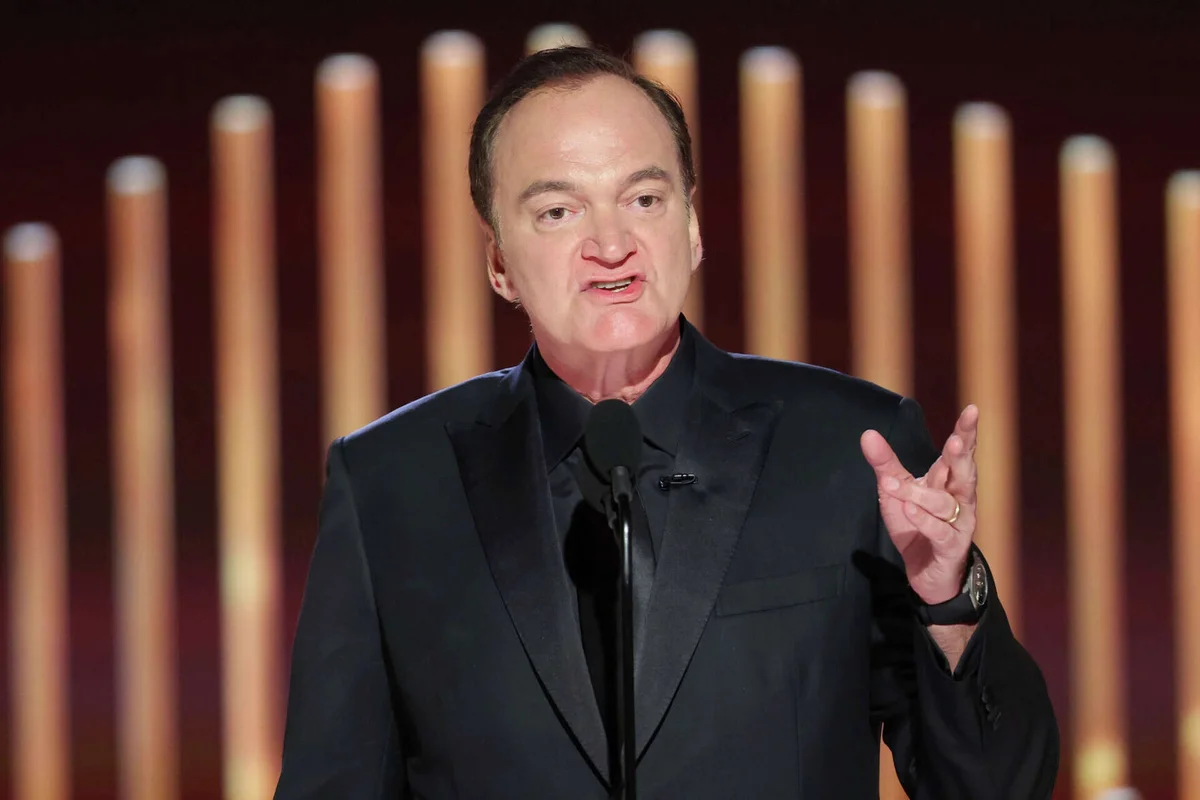
A heated wave of controversy erupted online after Quentin Tarantino, noted filmmaker and self-identified thespian, made pointed comments about Paul Dano during a podcast appearance. The “Quentin Tarantino Paul Dano controversy” kicked off when Tarantino questioned Dano’s performance in “There Will Be Blood” while discussing his top films of the 21st century, challenging Dano’s abilities and igniting passionate reactions across Twitter and Hollywood communities.
Tarantino’s remarks surfaced on The Bret Easton Ellis Podcast, where he discussed his upcoming retirement and weighed in on modern cinema. The acclaimed director, who revealed “There Will Be Blood” as one of his top five films since 2000, quickly pivoted to critique Dano, who portrayed Eli Sunday in the Paul Thomas Anderson-directed drama. Tarantino did not hold back, revealing he would have rated the film even higher
“
if it didn’t have a big giant flaw in it, and the flaw is Paul Dano,
”
Quentin Tarantino, Filmmaker.
Direct Criticism of Dano’s Acting and Casting Choices
On the podcast, Tarantino expanded his critique, asserting,
“
He is weak sauce, man. He’s a weak sister,
”
Quentin Tarantino, Filmmaker. The director also suggested that
“
Austin Butler would have been wonderful in that role
,”
Quentin Tarantino, Filmmaker, and doubled down by claiming Dano is
“
just such a weak, weak, uninteresting guy.
”
Quentin Tarantino, Filmmaker. Tarantino escalated further, labeling Dano
“
the weakest male actor in SAG
,”
Quentin Tarantino, Filmmaker, and aligned his lack of enthusiasm with similar disinterest toward Owen Wilson and Matthew Lillard, saying
“
I don’t care for him, I don’t care for Owen Wilson, and I don’t care for Matthew Lillard.
”
Quentin Tarantino, Filmmaker.
Tarantino’s assessment didn’t end with Dano but placed “There Will Be Blood” against other films he deems superior, such as “Black Hawk Down,” highlighting performances by actors like Orlando Bloom, Ioan Gruffudd, Jeremy Piven, Ewan McGregor, Josh Hartnett, William Fichtner, and Eric Bana. These comments, delivered as part of a broader conversation about acting prowess and casting, underscore Tarantino’s willingness to be candid and controversial while reflecting on his career trajectory and future in film criticism.
Why Dano Bears the Brunt of Such Criticism
This outburst reflects more than just personal taste; it taps into a recurring response some viewers have toward Paul Dano since his breakthrough in “There Will Be Blood,” directed by Paul Thomas Anderson and starring Daniel Day-Lewis as oil man Daniel Plainview. The choice to cast Dano as Eli Sunday instead of another actor stemmed from behind-the-scenes changes—Dano originally landed the smaller part of Eli’s brother Paul, but ended up portraying both twins when the initial Eli actor departed. Eli’s confrontational presence is designed to challenge Plainview, and Dano’s performance as a persistent, if subtle, antagonist is central to the film’s tension.
Critics and some audiences agree that if Dano truly lacked substance—as Tarantino asserted—his scenes wouldn’t provoke such strong reactions, nor would the adversarial dynamic with Plainview resonate as it does. The film’s strength rests in part on how Eli’s perceived meekness conceals a formidable tenacity, making the character’s ongoing clashes with Plainview both unpredictable and memorable.
The Spectrum of Dano’s Onscreen Persona and Roles
Waves of disagreement over Dano’s acting style are not new. In films like “Cowboys & Aliens,” “Prisoners,” “Looper,” and as the Riddler in “The Batman,” Dano has often leaned into roles depicting outcasts, misfits, or unnerving suspects. While this energy can make some performances feel abrasive or deliberately off-putting, it also contributes to the unique presence he brings to diverse ensembles and character-driven stories.
Dano’s turn as Brian Wilson in “Love & Mercy” was met with praise, his portrayal tapping into Wilson’s inherent vulnerability and complexity. Some argue that his approach suited the role more than a typical assertive performance ever could. Recent credits also include starring as Burt Fabelman in Steven Spielberg’s “The Fabelmans” and as an amateur finance enthusiast in “Dumb Money,” both roles that situated Dano amidst high-profile ensembles, further demonstrating his adaptability on screen.
Questions over casting linger, but Dano’s involvement in high-profile projects continues, reinforced by his commitment to giving each character a distinct energy, regardless of audience or peer division. He even expanded his creative resume by authoring a six-issue prequel comic miniseries on his “Batman” character, the Riddler, underlining his dedicated and multidimensional involvement in projects.
Evaluating Subjectivity Versus Merit in Performance
Tarantino’s pointed remarks about Dano, and his dismissal of other actors like Owen Wilson and Matthew Lillard, wade into the subjective nature of performance appreciation. Fans and critics alike note that opinions about an actor’s merit or charisma are often grounded in personal experience or instinct, rather than universal agreement. Tarantino’s reference to other actors he is similarly disinterested in supports the argument that these assessments may reveal more about individual taste than about talent or impact on a film.
Dano’s career is not limited to acting; his work on “Wildlife,” co-written with writer and partner Zoe Kazan and directed by Dano himself, was recognized for its nuanced handling of family drama. Starring Carey Mulligan and Jake Gyllanhaal, “Wildlife” even earned a place in the Criterion Collection, reinforcing Dano’s capability not just in front of the camera but behind it as well.
Dano’s Professional Resilience in the Face of Critique
Despite the controversy incited by Tarantino’s harsh evaluation during the now-viral podcast appearance, Paul Dano continues to enjoy a thriving career. Dano and Kazan, his creative and personal partner, have built a family and consistently pursue meaningful work within the film industry. Dano’s willingness to tackle complex, often divisive roles suggests a level of professional confidence and resilience that has served him across various genres and roles.
From his portrayal of an uneasy adolescent in “Little Miss Sunshine” to a dorky financial amateur in “Dumb Money,” Dano regularly walks the fine line between likability and challenge, earning both acclaim and criticism. His ability to generate strong emotional reactions—positive or negative—indicates the distinctive stamp he leaves on his projects, a quality that can polarize opinion but rarely leaves audiences indifferent.
The Continuing Discourse and Potential Future Impact
The ongoing debate over Tarantino’s comments is unlikely to fade soon, as both support and disagreement continue circulating among fans, actors, and industry insiders. The controversy shines a spotlight not only on the “Quentin Tarantino Paul Dano controversy,” but also on broader questions about the subjectivity of criticism in cinema, the unpredictable chemistry between actor and role, and the evolving standards by which performances are judged.
Dano’s trajectory—marked by performances in films from “There Will Be Blood” to “The Batman,” collaborations with people like Steven Spielberg and Zoe Kazan, and a successful foray into directing—suggests that criticism, even from industry giants such as Tarantino, is unlikely to diminish his relevance or creativity. As Tarantino ponders a shift from directing to criticism, his statements are certain to trigger further conversation on how directors critique each other and navigate their own legacies within the industry.
While public sentiment may remain sharply divided, the attention paid to this exchange demonstrates that both Tarantino and Dano continue to matter deeply to audiences who care about the art of film. This heated episode will almost certainly shape dialogues about acting, taste, and professional rivalry long after the immediate uproar subsides.
