
Richard Gere has openly discussed his two-decade exclusion from the Academy Awards, marking his first major comments on the subject. The actor, known for his activism in support of Tibetan rights, specifically addressed the circumstances and personal effects of the Richard Gere Oscars ban in a recent interview with Variety on December 3.
Gere, now 76, reflected on the lengthy period when he was absent from one of Hollywood’s most prestigious events, making clear his feelings about the Academy’s decision and the events that sparked it. During the 1993 ceremony, Gere spoke candidly about China’s policies in Tibet, diverging from the planned script while presenting an award. His advocacy, inspired by a longstanding friendship with the Dalai Lama, led to his years-long omission from Oscars night.
Gere’s Perspective on the Ban and Advocacy
The actor shared his thoughts on how the situation affected him personally, stressing that he did not harbor resentment over the Academy’s move.
“I didn’t take it particularly personally,”
Gere noted.
“I didn’t think there were any bad guys in the situation. I do what I do and I certainly don’t mean anyone any harm.”
– Richard Gere, Actor
Gere’s comments underscored his intentions as an activist, reaffirming a commitment to nonviolence and social justice. His perspective on exclusion was firmly rooted in his values and the philosophies he learned from his close relationship with the Dalai Lama. Gere explained further,
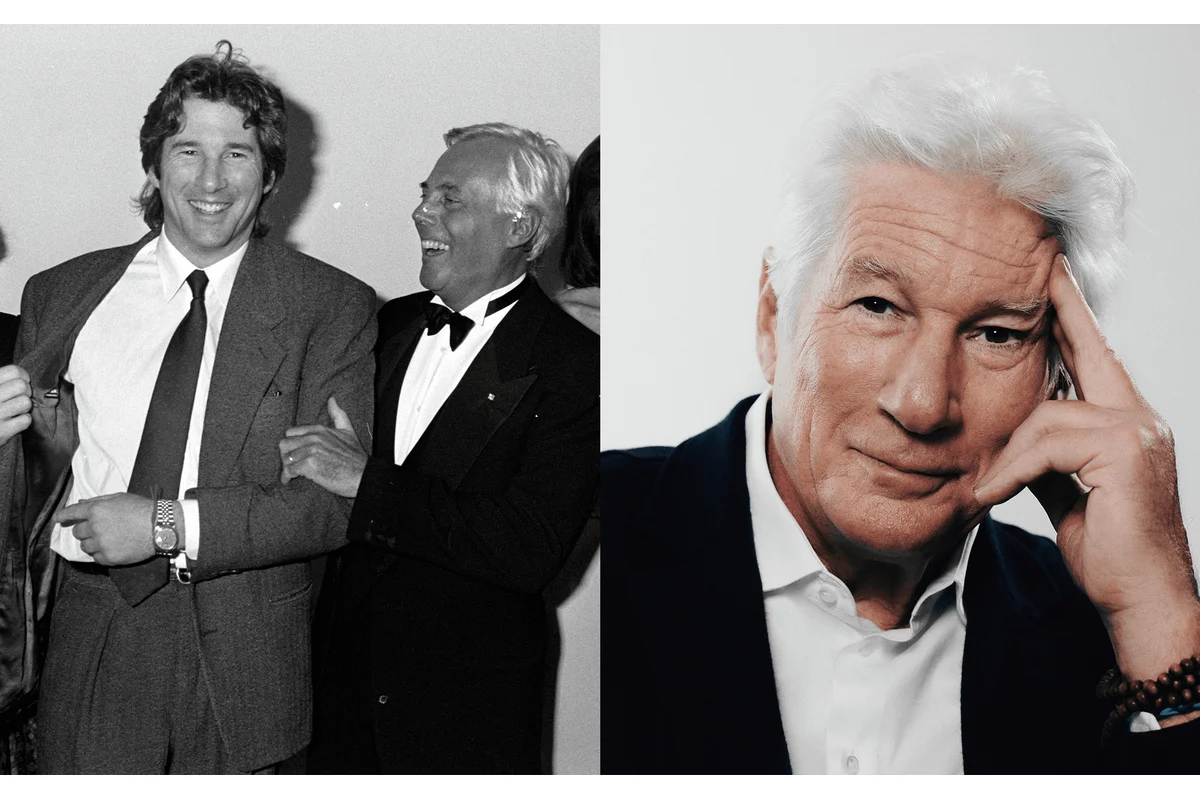
“I mean to harm anger. I mean to harm exclusion. I mean to harm human rights abuses, but I try to stay as close to where His Holiness comes from,”
he said on Wednesday.
“Everyone is redeemable, and in the end, everyone has to be redeemed or none of us [are]. So in that sense, I don’t take it personally.”
– Richard Gere, Actor
Other High-Profile Oscars Bans
While Gere’s Oscars ban drew attention for its political overtones, he is not alone in being excluded from the ceremony. Currently, six figures are on the banned list: Carmine Caridi, Harvey Weinstein, Bill Cosby, Roman Polanski, Adam Kimmel, and Will Smith. Each ban resulted from a unique set of circumstances, some involving legal issues, and others breaking protocols during ceremonies.
Will Smith, notably, was barred from attending the Oscars for ten years after striking Chris Rock during the 2022 telecast. In the aftermath, Smith delivered public apologies addressing his actions.
“I would like to publicly apologize to you, Chris. I was out of line and I was wrong. I am embarrassed and my actions were not indicative of the man I want to be. There is no place for violence in a world of love and kindness.”
– Will Smith, Actor
Smith continued,
“I would also like to apologize to The Academy, the producers of the show, all the attendees and everyone watching around the world. I would like to apologize to the Williams Family and my King Richard Family. I deeply regret that my behavior has stained what has been an otherwise gorgeous journey for all of us.”
– Will Smith, Actor
The Dalai Lama’s Influence and a Documentary Project
Despite his close connection with the Dalai Lama, Gere revealed that the topic of the Oscars incident was never a subject of discussion between them. Gere remarked, It never came up, and explained,
“They’ll tell him once in a while if I get an award or something and he sends a note, congratulating me, that he’s happy for me. But that’s about as close as it gets to actually talking about movies.”
– Richard Gere, Actor
This enduring friendship ultimately led Gere to take on the role of executive producer for a documentary centered on the Dalai Lama, called “Wisdom of Happiness.” The project reflects Gere’s ongoing efforts to promote themes of peace, redemption, and compassion—values he attributes to his mentor and spiritual guide.
Bringing the Dalai Lama’s Story to Audiences
Gere spoke of the challenges in bringing the documentary to public attention and his dedication to ensuring its message is heard.
“I’ve never worked this hard to get a film that I’ve been associated with to be seen in the world,”
Gere noted.
“I think this is important enough that I have to give my last bit of energy to put this out there for people to see. At the very least, it will put a seed in the minds of people who see it.”
– Richard Gere, Executive Producer
The Dalai Lama, according to Gere, has only watched select segments of the film with his niece, Tencho Gyatso, who serves as president of the International Campaign for Tibet. Gere said,
“He really didn’t have any interest in seeing himself at all,”
Gere added.
“So she kind of skipped forward through that, but when there was this old footage where he was seeing his old friends and family and remembering — he was delighted going into his memory bank of his childhood, like we all would.”
– Richard Gere, Executive Producer
Implications and Ongoing Impact
Gere’s ability to reconcile activism with his public persona at the Oscars remains significant in Hollywood’s ongoing discussions around artistic freedom and international advocacy. The Richard Gere Oscars ban highlights the complex line entertainers walk when raising political issues on prominent stages like the Academy Awards. His work, both as an actor and advocate, continues to influence debates around freedom of speech, Hollywood’s relationship with global politics, and the power of redemption.
As Gere devotes his latest efforts to amplifying the Dalai Lama’s message, questions linger about the Academy’s approach to activism, the long-term effects of censorship, and the future participation of outspoken figures at the Oscars. For now, Gere’s story stands as a notable example of personal conviction intersecting with public consequence, resonating both within Hollywood and beyond.
