
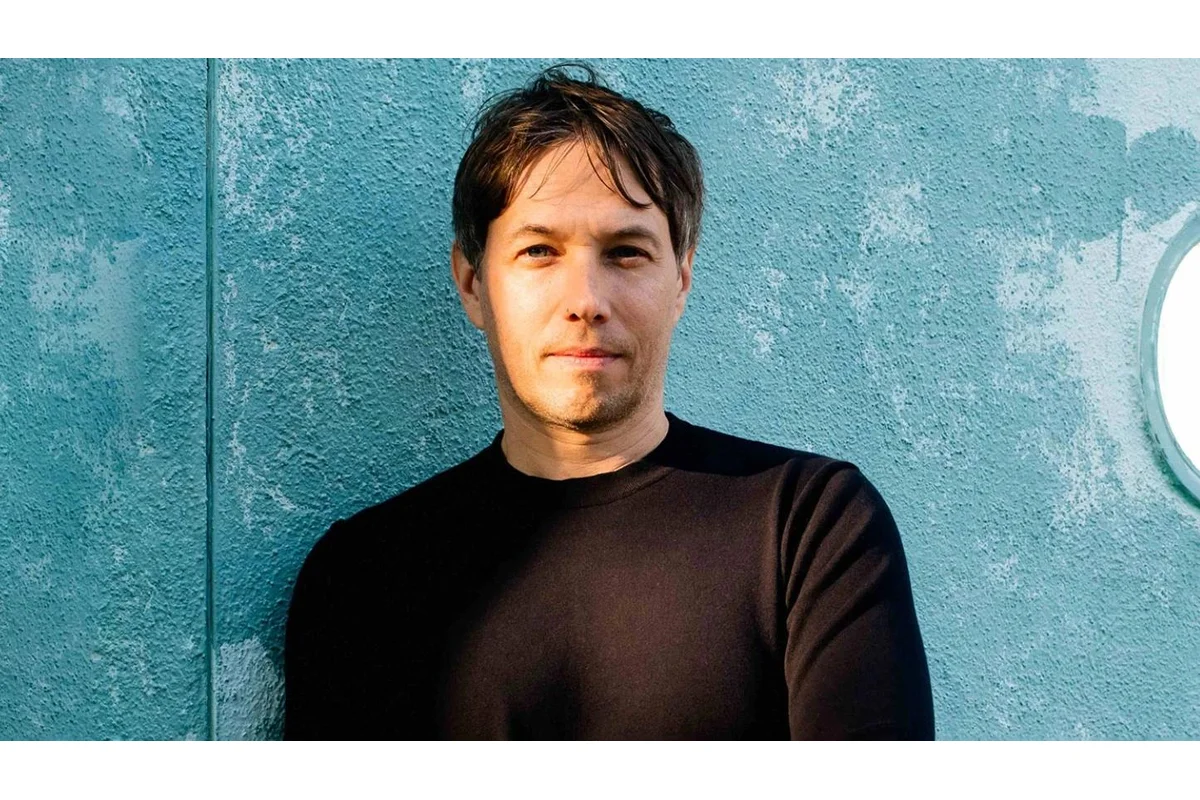
Sean Baker Left-Handed Girl, the latest cinematic endeavor from Shih-Ching Tsou and Sean Baker, draws inspiration from a fateful night in Taipei, where a young girl’s vibrant spirit led to the birth of a uniquely personal story about family, identity, and tradition. As Taiwan’s submission for the 2026 Oscars, this film captures the delicate complexities of growing up while navigating old customs and new beginnings amidst the electric atmosphere of Taipei’s night markets.
Inspiration Sparked in Taipei’s Night Markets
Back in 2001, Tsou and Baker, then partners in both life and creativity, searched for film concepts while visiting Taiwan together. The vision that ignited Left-Handed Girl emerged nearly a decade later, during a 2010 return to Taipei. There, the pair witnessed a five-year-old girl moving freely through a bustling market—a scene so evocative, it formed the core image for their script.
Tsou, who co-wrote and directed the film, recounts how this fleeting observation evolved:
“
We followed her back to her mother.
”
Tsou, Director and Co-writer.
Baker, who shares writing and editing credits, adds:
“
We wanted a young girl who grew up in night markets, but we didn’t know whether she really existed or not,
”
Baker, Co-writer and Editor. Their quest for authenticity was rewarded when they discovered a real-life girl embodying the essence of their character, I-Jing. Baker notes,
“
When we came across a girl who was literally I-Jing, we said, ‘OK, this is realistic.’ It gave us confidence to write the screenplay.
”
Baker, Co-writer and Editor.
Developing the Story and Characters
Tsou and Baker first collaborated as film students at The New School in New York, later co-directing indie projects like the 2004 feature Take Out. While Left-Handed Girl began to take shape, Tsou’s filmmaking journey included producing several of Baker’s acclaimed works—Starlet, Tangerine, The Florida Project, and Red Rocket—before she independently helmed Left-Handed Girl in Taipei as Baker moved on to Anora, which would go on to win five Oscars including Best Picture.
The filmmakers set out to depict five-year-old I-Ying (portrayed by Nina Ye) and her older sister I-Ann (played by newcomer Shih-Yuan Ma) as they move with their mother, Shu-Fen (Janel Tsai), from rural Taiwan to the dynamic cityscape of Taipei. The urban night markets not only offer economic opportunity, but also a playground for reinvention, each character’s journey revealing deep personal wants and family dynamics.
Tsou and Baker have described the film as “Mike Leigh-ish,” shaped by the truthful, character-driven narratives of Leigh’s Secrets & Lies. Comedy and dramatic grit collide in the script, recalling elements from Baker’s previous films, including the manic energy of Tangerine and the grounded atmosphere of Take Out.
Cultural Specificity and the Challenge of Tradition
The title Left-Handed Girl finds its origins in a critical scene where I-Ying shocks her traditional grandfather by eating with her left hand, an act viewed as transgressive due to deep-seated superstitions—she is told it’s “the Devil’s hand.” I-Ying begins self-training with her right hand, only to concoct loopholes that fuel both innocent mischief, like shoplifting, and moments of physical danger as she contemplates drastic actions to “fix” herself.
Tsou’s own experience as a left-handed child in Taiwan, pressured by her grandfather to switch hands, informs the film’s emotional core. Despite assurances from friends that left-handed correction was a relic of the past, reality proved otherwise. Tsou observes:
“
I told them, ‘It’s my story, and I’m going to make my story,’
”
Tsou, Director and Co-writer. When casting Nina Ye as I-Ying, Tsou discovered the legacy endured:
“
Then when I cast Nina in 2022, the mother told me that Nina was born left-handed and they corrected it because of her grandmother.
”
Tsou, Director and Co-writer.
Baker reacts with humor, highlighting the persistence of these traditions. During production, Tsou remarks:
“
We had to train Nina to use her left hand again,
”
Tsou, Director and Co-writer, and detailed the on-set vigilance:
“
Every time we cut, we’d be like, ‘Which hand did she use?’
”
Tsou, Director and Co-writer.
Screenplay Evolution and Language Choices
The film’s script began in English, penned by Baker before Tsou translated it to Mandarin for a government funding application. Over time, the two refined the script to ensure cultural authenticity and effective storytelling. Baker grew increasingly enamored with Taiwan, stating:
“
I just fell in love with Taiwan immediately. It’s not just the night markets. It’s the binlang stands, the dance hall, the extravagant karaoke rooms
”
Baker, Co-writer and Editor, capturing the breadth of what makes Taipei unique.
Reflecting Reality Through Subplots and Local Color
Left-Handed Girl weaves real-life events into its plot. Baker notes of a key subplot:
“
The subplot with the grandmother being part of a trafficking ring, that was based on real events,
”
Baker, Co-writer and Editor. This commitment to mirroring reality, along with shooting on-location, brings vitality and rawness to the film’s depiction of urban Taiwan.
The duo’s earlier work, Take Out, was an ultra-low-budget exploration of New York’s multiculturalism. With Left-Handed Girl, a greater financial backing allowed Tsou and Baker to immerse viewers in Taipei’s rhythm, capturing children darting through crowded stalls and the coming-of-age experiences of a “binlang girl” selling betel nuts—a job handled with frankness and compassion.
Innovative Filmmaking Techniques in a Crowded City
To preserve authenticity and fluidity in the night market scenes, Tsou leaned into technology, opting to shoot much of the film using an iPhone. She explains:
“
If you set up a huge camera, everyone will want to know what you’re doing,
”
Tsou, Director and Co-writer, describing the practical benefits,
“
With an iPhone, we could follow a little girl in a crowded space.
”
Tsou, Director and Co-writer. Baker concurs:
“
If you’re shooting digital, there’s no reason not to shoot on an iPhone,
”
Baker, Co-writer and Editor. He points out the improved quality, noting their previous success shooting Tangerine on an iPhone 5s and Tsou’s decision to use the iPhone 13 in 4K for this project.
On particularly cramped set pieces, Tsou describes their solution:
“
In the beginning, in the car, there was nowhere to put a cameraman amongst the cast,
”
Tsou, Director and Co-writer.
“
So we taped a phone onto the window.
”
Tsou, Director and Co-writer. Baker, marveling at the outcome, reflects:
“
Oh, that’s how you did it?
”
Baker, Co-writer and Editor, and credits smartphones for making such dynamic camerawork possible:
“
The movie has so much movement. That was made possible by iPhones.
”
Baker, Co-writer and Editor.
Editing Across Languages and Building Emotional Resonance
Baker’s editing process, tailored to non-English dialogue, drew upon his experiences with Take Out and Anora. As he explains:
“
I get all the dailies subtitled, and then it’s making choices off of the emotion,
”
Baker, Co-writer and Editor.
“
You’re judging a performance from the physicality and inflection. You don’t need to know the language.
”
Baker, Co-writer and Editor. He identifies the greatest editing challenge as ensuring the film stands up to repeat viewings, revealing new layers with each rewatch—including a trademark vomiting scene present in all Baker-related films. Tsou humorously credits this tradition:
“
We knew that [a character throwing up] would be a tradition [in Baker’s films] from very early on,
”
Tsou, Director and Co-writer.
“
The only thing that changed is that Gogo was originally a monkey.
”
Tsou, Director and Co-writer.
The iconic pet, Gogo, evolved from a childhood memory. Tsou reveals:
“
I had a pet monkey when I was young,
”
Tsou, Director and Co-writer, but legal limitations led to a creative pivot. Baker recalls:
“
She called me from Taipei, and said, ‘We can’t get the monkey,’
”
Baker, Co-writer and Editor.
“
I was heartbroken. Then she goes, ‘No, don’t worry, I’m going to go with a meerkat instead.’ I thought, ‘That’s good. Besides Life of Pi, I’ve never seen a meerkat in a film. And, by the way, this meerkat is touring film festivals and screenings in Taiwan.
”
Baker, Co-writer and Editor. Tsou adds cheerfully:
“
The meerkat’s coming to our premiere,
”
Tsou, Director and Co-writer.
Filmmaking Perspectives and Audience Reception
Tsou sees I-Ying’s fascination with city life as echoing Baker’s own relationship with Taipei, observing:
“
That’s why the film is so special to audiences, especially westerners,
”
Tsou, Director and Co-writer.
“
It’s like it’s seen through a white guy’s eyes!
”
Tsou, Director and Co-writer. She adds that local Taiwanese crew members, having not participated in the film’s color grading, were surprised by how the final film reflected foreign perspectives on their culture:
“
The [local Taiwanese] cinematographers didn’t do the colour correction process with us. When they first saw the film at Cannes, they were like, ‘Oh, that’s how foreign people look at Taiwan.’ They saw the film through Sean’s eyes.
”
Tsou, Director and Co-writer.
Baker shares his own growing love for the city, repeating:
“
I just fell in love with Taiwan immediately,
”
Baker, Co-writer and Editor.
“
It’s not just the night markets. It’s the binlang stands, the dance hall, the extravagant karaoke rooms. It was all about embracing the cultural specificity, and celebrating it.
”
Baker, Co-writer and Editor.
Transformation Beyond the Screen
The real-life impact of the story is not lost on Tsou, who takes pride in her young star’s empowerment. She reports that after filming, Nina Ye’s grandmother became more accepting of her granddaughter’s natural left-handedness, illustrating the film’s resonance beyond entertainment:
“
So now Nina’s got her left hand back,
”
Tsou, Director and Co-writer.
“
It’s wonderful. We have to get rid of this outdated tradition. You should be able to be who you are. It’s important for people to understand this message.
”
Tsou, Director and Co-writer.
Sean Baker Left-Handed Girl is currently screening in cinemas and available on Netflix, inviting audiences worldwide to experience a heartfelt journey through family, tradition, and the vibrant crossroads of modern Taiwan.
