
On Bret Easton Ellis’ podcast, Quentin Tarantino, joined by the novelist-screenwriter, discussed his list of top films from the 21st century, and in the process, did not hold back his opinion on Owen Wilson’s role in Woody Allen’s ‘Midnight In Paris’. During the conversation, the famed filmmaker aired his appreciation for the film itself but used the occasion to share his long-standing criticism of Wilson’s performance and Woody Allen’s approach to filmmaking, prompting a fresh round of debate about both the actor and the director.
Tarantino is no stranger to controversy when it comes to evaluating popular films and performers, often sharing pointed critiques alongside his praise. On this occasion, while he acknowledged his enjoyment of ‘Midnight In Paris’ and included it among his favorite movies of the century, he brought sharp and passionate views to the table about what he considers flaws, with Owen Wilson’s portrayal at the center of his argument. The discussion offers a window into both Tarantino’s cinematic tastes and his challenging relationship with Hollywood actors and auteurs.
A Pattern of Unfiltered Critique
This is not the first time Quentin Tarantino has singled out individual actors for criticism on Bret Easton Ellis’s podcast. In a previous episode, he labeled Paul Dano as the key weakness in Paul Thomas Anderson’s ‘There Will Be Blood’, describing Dano’s work as “the weak sauce” in what he otherwise regarded as a near-masterpiece. The consistency in Tarantino’s method—highlighting an overall impressive film, but then zeroing in on a perceived ‘giant flaw’—reflects his passionate and, at times, conflicted approach to film analysis.
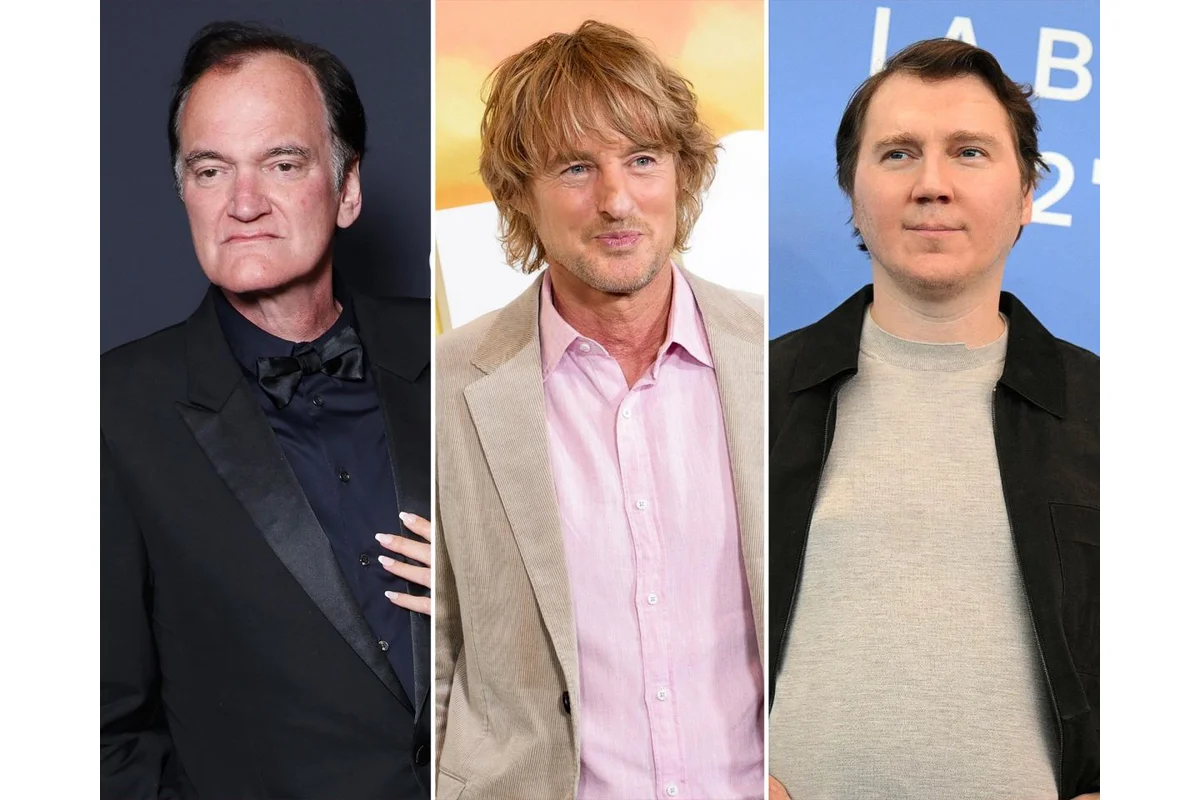
Turning to Woody Allen’s celebrated ‘Midnight In Paris’, Tarantino first set a positive tone by calling the film “endlessly funny,” and admitted to repeated viewings. However, it was clear that his patience for Owen Wilson was limited, and he made his feelings unmistakable from the outset. He stated:
“Oddly enough, I really can’t stand Owen Wilson. I mean, I can’t stand him.”
— Quentin Tarantino, Filmmaker
He further revealed the internal conflict he experienced while watching the film for the first time, explaining:
“Spent the first time watching the movie loving it and hating [Wilson].”
— Quentin Tarantino, Filmmaker
On additional viewings, Tarantino attempted to temper his attitude, acknowledging:
“Don’t be such a prick, he’s not so bad.”
— Quentin Tarantino, Filmmaker
But by the third time he watched the movie, he said he found himself simply “watching him,” which was about as close to a compliment as he offered toward Owen Wilson’s performance in the film.
Midnight In Paris and Woody Allen’s Creative Process Under Scrutiny
The scope of the podcast conversation widened to consider Woody Allen’s filmmaking method, particularly his 21st-century output. Many critics have denounced Allen’s recent work as a decline from earlier highs, often citing a perceived lack of depth or polish. Tarantino, however, pushed back on this sweeping critique by highlighting a group of post-2000 Allen films—‘Match Point,’ ‘Scoop,’ ‘Vicky Cristina Barcelona,’ and ‘Blue Jasmine’—as evidence that Allen was still able to deliver standout achievements even while averaging a film per year.
Tarantino went on to draw a clear distinction between the movies Allen put considerable time and teamwork into, mentioning ‘Annie Hall’ and ‘Manhattan’ as examples of films shaped in partnership with Marshall Brickman and strengthened by substantial rewriting. By contrast, he labeled works such as ‘Alice’ as “first draft movies” that felt rushed or insufficiently refined—a criticism that would echo in his assessment of the majority of Allen’s work during this period.
The Question of Effort and the ‘Third Draft’ Theory
Delving further into Allen’s writing process, Tarantino posed a pointed question:
“If you want to know how Woody Allen does it, how Woody Allen writes these scripts, like, you know, one a year, for so long?”
— Quentin Tarantino, Filmmaker
Tarantino’s answer was unapologetic; he argued that Allen was often not truly crafting movies, but instead:
“Writing short stories that he expands to feature length,”
— Quentin Tarantino, Filmmaker
He speculated that Allen frequently shot first-draft scripts, rarely revisiting his material for multiple improvements. As a writer himself, Tarantino wondered aloud what results Allen could achieve if he put his scripts through several more drafts, stating that the impact could be extraordinary. However, he noted that Allen seemed more invested in completing projects quickly and maintaining his prolific output, rather than taking additional time for development.
Why ‘Midnight In Paris’ Stands Out for Tarantino
Amid these criticisms, Tarantino explained his special regard for ‘Midnight In Paris’. He suggested that, in contrast to many of Allen’s other 21st-century works, this film displayed the hallmarks of being more thoughtfully developed than usual, remarking:
“Looks like he actually might have written a third draft.”
— Quentin Tarantino, Filmmaker
It was this sense of additional care and refinement that, for Tarantino, set ‘Midnight In Paris’ apart from its contemporaries in Allen’s filmography, even if he still found fault with the casting of Owen Wilson.
Balancing Admiration and Critique
Tarantino’s evaluative style is almost as much a part of his public persona as his films. He routinely elevates a movie to high status, only to simultaneously undercut its achievements by exposing what he deems its primary flaw. In the case of ‘Midnight In Paris’, his conflicted appreciation for the movie was always interlaced with his doubts about Owen Wilson—and more widely, Allen’s ‘film-a-year’ approach. These criticisms fueled an animated debate not only about the actor and director themselves but also about standards of quality and labor in contemporary cinema. Figures such as Bret Easton Ellis, a close conversation partner during this interaction, and other critics have similarly questioned the results that arise from Allen’s process.
Names like Paul Thomas Anderson, previously critiqued by Tarantino for collaboration choices; Marshall Brickman, highlighted as a factor in Allen’s strongest scripts; and the continuing resonance of Allen’s earlier works like ‘Annie Hall’ and ‘Manhattan’, all surfaced as evidence in the ongoing discussion of what separates memorable films from quickly-forgotten features. These references further connected Tarantino’s critique to a broader context of Hollywood filmmaking, with the debate playing out among both filmmakers and industry observers in Hollywood and beyond.
Enduring Impact and Future Debate
The conversation between Quentin Tarantino and Bret Easton Ellis underscores not only the director’s willingness to voice harsh opinions about actors like Owen Wilson, but also his deeper concerns about how directors such as Woody Allen approach their craft. ‘Owen Wilson Midnight In Paris’ remains a lightning rod within discussions surrounding Allen’s output and the place of improvisation, rewriting, and actor selection within influential films. For Tarantino, the lingering question is whether more rigorous creative discipline—and perhaps more critical candor—could drive contemporary cinema toward greater heights. As the industry continues to weigh efficiency versus depth, such debates are poised to shape both viewer expectations and the practices of directors, writers, and actors for years to come.
