
At the Marrakech Film Festival in Morocco, Guillermo del Toro openly discussed his perspective on mortality, revealing a striking acceptance of death. During a public talk, del Toro, renowned for his recent adaptation of Frankenstein, shared with festival attendees, film students, and journalists his thoughts on life and the inevitable end, illustrating his unique worldview around the subject of death.
Del Toro’s Thoughts on Legacy and Mortality
As the director took the stage, attention was initially on his latest cinematic work, which he described as deeply connected to themes of birth. However, the focus soon shifted when del Toro candidly addressed the audience with,
“Why should you want to live longer?”
Directly confronting the subject, he added,
“I’m a big fan of death … I think death is really good. I’m certainly looking forward to it, because it’s the day you go, ‘Well, tomorrow I won’t have any problems,’”
Guillermo del Toro, Director.
These statements struck a chord with many in attendance, as the acclaimed filmmaker’s honest approach to a universal topic contrasted with common anxieties about dying. His engagement at the festival underscored his willingness to address themes both profound and uncomfortable, continuing a pattern evident throughout his works.
Reflections on Inspiration and Emotional Influence
Del Toro’s nearly two-hour conversation, moderated by Kim Morgan—screenwriter of Nightmare Alley and his wife—explored not only personal philosophies but also his creative journey. He discussed the significant impact of Romantic poets on his storytelling style, as well as the ambitious, half-century-long process to bring his vision of Frankenstein to life.
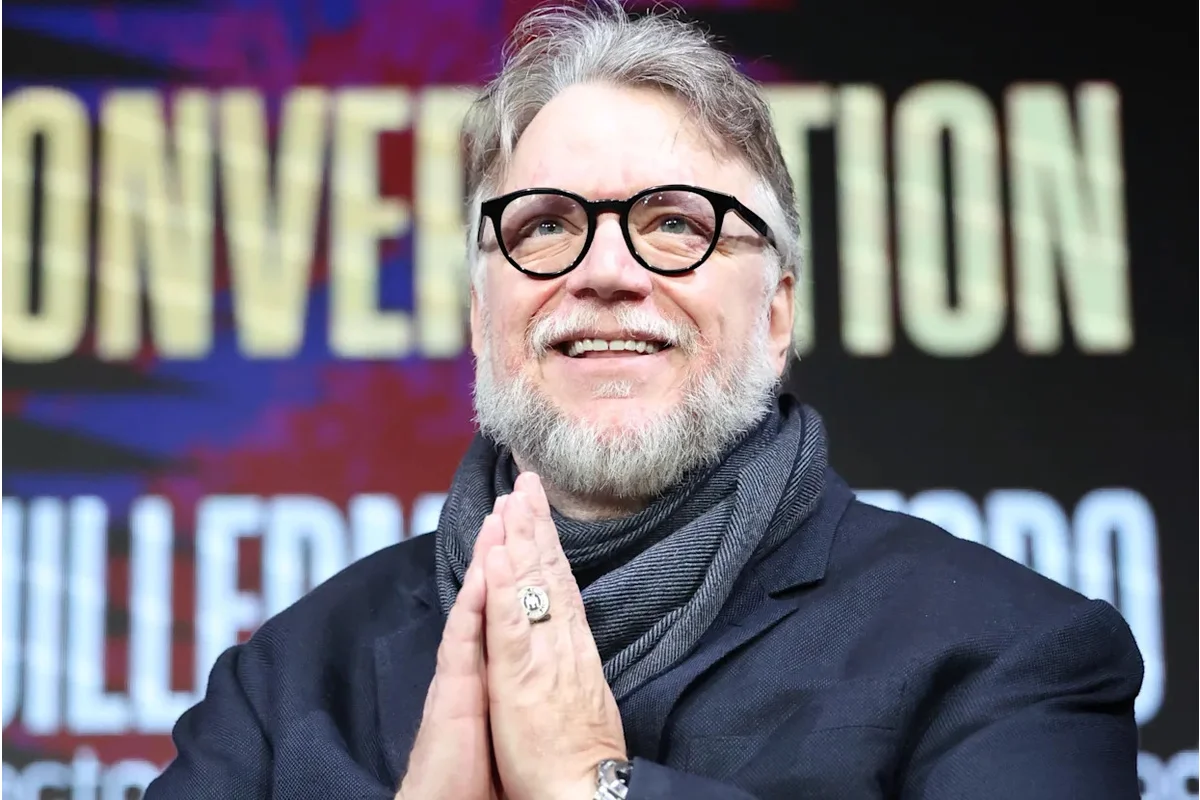
Recounting pivotal memories, del Toro shared his childhood experience of watching Boris Karloff as Frankenstein’s monster at age seven.
“That was religion. That was my church,”
Guillermo del Toro, Director, recalled.
“I immediately felt that what my grandmother used to feel about Jesus, I now felt about Boris. And I saw myself in him,”
Guillermo del Toro, Director. These early influences from both literature and film set the foundation for del Toro’s lifelong commitment to the classic story.
This year, del Toro finally achieved his longstanding goal of making his own adaptation of Frankenstein, with the Netflix film featuring Oscar Isaac and Jacob Elordi in leading roles. Concluding such a deeply personal project left him feeling what he described as “postpartum depression,” signaling the emotional intensity tied to his career milestones.
The Role of Emotion and Openness in Creation
Addressing the audience further, del Toro conversed about the expressive power of cinema and emotion’s role within society.
“I’m Mexican, so emotion is big for me. I think emotion is very scarce right now. We have come to a point in civilization when emotion seems to be something you hide … We are in a horrible moment in which cynicism simulates intelligence. If you say, ‘I believe in love,’ you’re a fool. If you say, ‘I don’t believe in love,’ you’re a wise man. I don’t agree with any of that,”
Guillermo del Toro, Director, remarked. By acknowledging the value of feeling deeply, del Toro drew connections between his cultural background and his body of work.
Del Toro intended for his interpretation of Frankenstein to possess the grandeur of an opera, citing the boldness of the Romantics as inspiration.
“The Romantics took a huge step toward the possibility of ridicule,”
Guillermo del Toro, Director, noted, later reinforcing the idea that creative success is inextricably linked to a readiness for failure.
“You have to be completely open to failure if you’re ever to experience success … you have to be ready to be ridiculous. So I’m ready to be ridiculous at all times,”
Guillermo del Toro, Director.
Significance and What Lies Ahead
Guillermo del Toro’s candid discussion about death and artistic vulnerability offers insight into the mindset driving his celebrated works. By embracing mortality and emotional honesty, the director challenges artistic norms, encouraging others to pursue authenticity in both life and creativity. As his adaptation of Frankenstein reaches audiences worldwide through Netflix, del Toro’s words at the Marrakech Film Festival may inspire creators and fans alike to reflect more openly on life’s profound questions.
