
Ryan Coogler Kraven Black Panther discussions have resurfaced after the acclaimed director shared that he had wanted to include the famed villain in his 2018 Marvel movie, but Sony Pictures ultimately refused his request. Coogler revealed the behind-the-scenes developments during a recent interview with Josh Horowitz, explaining how his original vision was altered when permission was denied, shaping the final direction of Black Panther’s iconic roster of antagonists.
Marvel’s Early Plans for Black Panther’s Villains
Ryan Coogler, known for his dynamic storytelling, stepped into the Black Panther project as Marvel Studios had already selected Erik Killmonger, portrayed by Michael B. Jordan, and Ulysses Klaue, played by Andy Serkis, to be the film’s adversaries. Coogler addressed rumors about casting, clarifying one point directly in a podcast appearance:
“No. [Michael B. Jordan] was always gonna be Killmonger,”
— Ryan Coogler, Director
The director provided more insight into the pre-established plan, referencing his collaboration with co-writer Joe Robert Cole and Marvel:
“When I took that job, Joe Robert Cole, who’s my co-writer on both the Panthers, [he] had been working with Marvel and they had a line, so when I showed up, it was like, ‘Hey, we have our villains. Our villains are Klaue and Eric Killmonger.’ That had been decided upon.”
— Ryan Coogler, Director
Kraven the Hunter: A Personal Favorite Overlooked
As story development progressed, Marvel decision-makers began questioning whether Klaue fit naturally within the film’s storyline. At that stage, Ryan Coogler proposed Kraven the Hunter, a classic Spider-Man antagonist, as an alternative villain, citing inspiration from Christopher Priest’s run of the Black Panther comics.
“The outline of villains was Claw and Kilmonger, but they weren’t sure. They weren’t sure. Klaue felt slightly modular to them, and obviously, it was the great Andy Serkis, so I’m hyped to work with him,”
— Ryan Coogler, Director
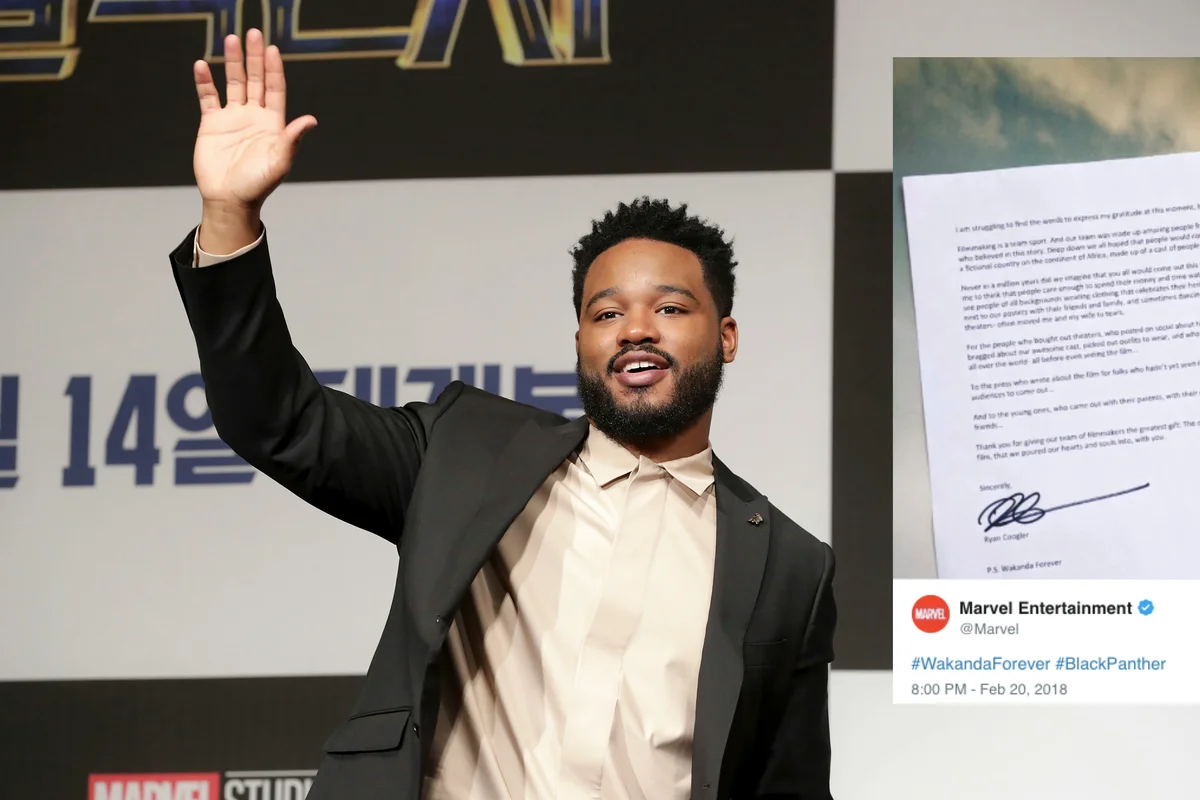
“[I] wanted to base it on the Christopher Priest run of Panther, and his run starts with Panther and Kraven in the kitchen. That’s the first thing. It’s Ross, Panther, and Kraven fighting in the Kitchen.”
— Ryan Coogler, Director
Coogler envisioned Kraven the Hunter, or Sergei Kravinoff, taking on the narrative role that was eventually given to Klaue. His passion for the character stems from a long-standing appreciation as both a fan and a filmmaker, and he recalled his personal ties to the Kraven character in other Spider-Man media:
“I’m a big Spider-Man fan, especially Spider-Man: The Animated Series. Kraven is in that. He’s also great in the books,”
— Ryan Coogler, Director
Sony Pictures Declines Marvel’s Request
When Coogler sought to bring Kraven into Black Panther, he needed Sony Pictures’ approval, since the rights to the character are owned by Sony. He described the process leading to Sony’s firm refusal:
“I was like, ‘Yo, can I have Kraven in the movie?’ They were like, ‘We don’t think so, but let us check.’ So, they hit Sony, and Sony was like, ‘Absolutely not.’ They came back to me like, ‘Yo, we can’t do it.’ So, I was like, ‘Okay.’”
— Ryan Coogler, Director
Although Marvel Studios and Sony were already collaborating on Spider-Man himself for the Marvel Cinematic Universe, Sony remained protective over Kraven, intending to reserve certain characters for their own projects. This reservation prevented not only his appearance in Black Panther but also kept him from being included in major Spider-Man projects like No Way Home.
The Fate of Kraven and Black Panther’s Villains
Eventually, Kraven the Hunter was given his cinematic debut in an R-rated feature headlined by Aaron Taylor-Johnson, but the film did not meet critical or commercial expectations and the character’s future remains uncertain. Had Coogler’s version of Black Panther included Kraven, the introduction could have opened doors for subsequent stories spanning Marvel Studios and Sony Pictures collaborations.
Instead, the final film saw Klaue meet his end at the hands of Killmonger, played intensely by Michael B. Jordan, closing out Andy Serkis’s role within the Marvel Cinematic Universe. The director’s experience underscores the complex web of character ownership and studio negotiations that shape the narratives fans ultimately see on screen.
This episode serves as a notable moment in modern superhero filmmaking, marking how licensing restrictions and cross-studio boundaries can shift creative ambitions, even for distinguished creators like Ryan Coogler. As fans continue to speculate about what might have been, the interplay between Marvel Studios and Sony Pictures will no doubt influence which characters appear where in future comic book adaptations.
