
George Clooney has come forward to defend his colleagues, after Quentin Tarantino criticized actors Paul Dano, Owen Wilson, and Matthew Lillard on a recent episode of the Bret Easton Ellis Podcast. The exchange reignited discussions about respect within Hollywood, as Clooney voiced support for the actors following Tarantino’s harsh public commentary.
Clooney Responds to Tarantino’s Scathing Remarks
On the Bret Easton Ellis Podcast, Quentin Tarantino shared his unfiltered opinions about several actors while listing his favorite movies of the 21st century. He suggested that Paul Dano’s performance in “There Will Be Blood,” directed by Paul Thomas Anderson, was a significant shortcoming for the film. Tarantino asserted that the movie’s effectiveness was compromised by Dano’s participation, even suggesting Austin Butler would have been a better fit for the role, and extended his disapproval to both Owen Wilson and Matthew Lillard, stating that he did not appreciate their work as actors. His pointed criticisms stirred strong reactions in the film community.
“There Will Be Blood would stand a good chance at being 1 or 2 if it didn’t have a big, giant flaw in it… Paul Dano. Obviously, it’s supposed to be a two-hander, but it’s also drastically obvious that it’s not a two-hander. [Dano] is weak sauce, man. He is the weak sister. Austin Butler would have been wonderful in that role. He’s just such a weak, weak, uninteresting guy. The weakest f****** actor in [the Screen Actors Guild].”
Quentin Tarantino, Director
The comments did not go unnoticed by George Clooney, who has previously worked with Tarantino in the 1996 film “From Dusk till Dawn.” During his acceptance speech for Best Actor at AARP’s Movies for Grownups Awards for his role in Netflix’s “Jay Kelly,” Clooney addressed the controversy, making his feelings clear regarding his fellow professionals.
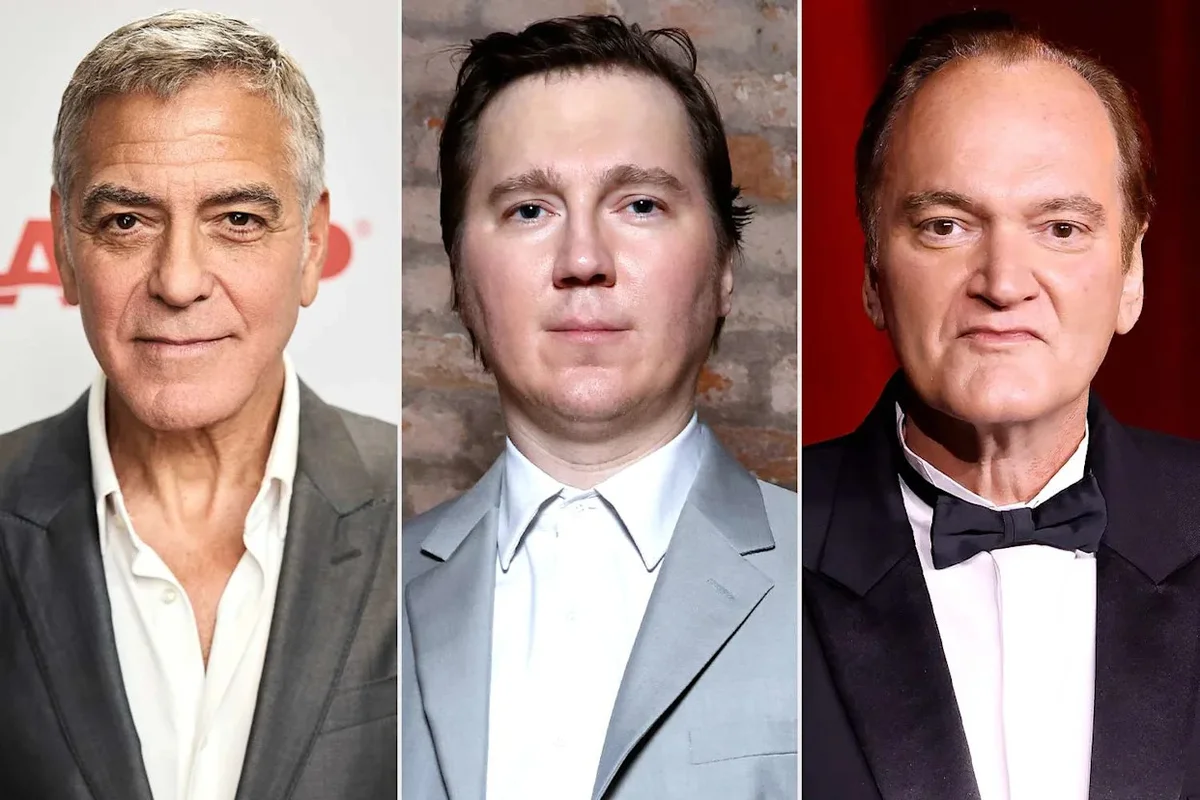
“By the way, Paul Dano and Owen Wilson and Matthew Lillard, I would be honored to work with those actors. Honored.”
George Clooney, Actor
Acknowledging the importance of constructive collaboration and kindness in the industry, Clooney went on to highlight the spirit behind projects like “Jay Kelly.” He emphasized that the film was crafted by individuals who value actors and have spent their careers around them, advocating for empathy and mutual respect rather than public disparagement.
“made by people who love actors — that’s an important part. People I’ve known most of my life… actually, most of them are actors. I have a great affinity [for them], and I don’t enjoy watching people be cruel. We are living in a time of cruelty. We don’t need to be adding to it.”
George Clooney, Actor
Matthew Lillard Addresses Hurt from Tarantino’s Words
Matthew Lillard, best known for his role in “Scream,” was among those directly affected by Tarantino’s criticisms. News of Tarantino’s remarks quickly circulated, prompting Lillard to share his candid thoughts during an appearance at GalaxyCon in Columbus, Ohio. Lillard confessed the comments were emotionally painful and pointed out the disparity in how feedback is given to different tiers of Hollywood actors, referencing Tom Cruise as an example.
“Quentin Tarantino this week said he didn’t like me as an actor. Eh, whatever. Who gives a s***. It hurts your feelings. It f****** sucks. And you wouldn’t say that to Tom Cruise. You wouldn’t say that to somebody who’s a top-line actor in Hollywood. I’m very popular in this room. I’m not very popular in Hollywood. Two totally different microcosms, right? And so, you know, it’s humbling, and it hurts.”
Matthew Lillard, Actor
Broader Criticism from Tarantino on the Industry
The intense emotional tone of the discussion extended beyond just comments on the actors. Tarantino also took the opportunity to criticize the “Hunger Games” franchise, asserting that Suzanne Collins’ novels had heavily borrowed from Koushun Takami’s “Battle Royale.” He expressed his disbelief at the lack of legal action by Takami and condemned book critics for not recognizing the similarities, calling into question claims about originality in mainstream cinema and literature.
“I do not understand how the Japanese writer didn’t sue Suzanne Collins for every f****** thing she owns. They just ripped off the f****** book. Stupid book critics are not going to go watch a Japanese movie called Battle Royale, so the stupid book critics never called her on it. They talked about how it was the most original f****** thing they’d ever read. As soon as the film critics saw the film, they said, ‘What the f***? This is just Battle Royale except PG!'”
Quentin Tarantino, Director
The Debate Over Criticism and Respect in Hollywood
Tarantino’s recent outbursts have sparked debate about the responsibility that comes with public criticism in creative industries. George Clooney’s intervention, as someone with significant experience and standing in the film industry, underscores a call for compassion and dignity among professionals. His defense of Paul Dano, Owen Wilson, and Matthew Lillard places emphasis on fostering an environment where mutual respect prevails.
For actors like Matthew Lillard, the emotional toll of public denigration by influential figures like Tarantino is significant, highlighting the human side of Hollywood’s celebrity culture. The episode has also brought renewed attention to conversations about originality in entertainment, as exemplified by Tarantino’s remarks about “Battle Royale” and “The Hunger Games.”
As the industry continues to discuss these events, the debate over creative critique versus personal attacks persists, suggesting that the conversation about respect and the careful exercise of influence in Hollywood is far from over. With George Clooney choosing to defend his peers, the larger impact may shape how artists and fans alike approach conversations about art and the individuals behind it.
