
Pamela Anderson encountered Seth Rogen at the 2026 Golden Globes, an event marked by tension due to the Hulu series inspired by her life. The incident stood out as Anderson expressed discomfort since the show, Pam & Tommy, dramatized her past without her involvement.
The actress, whose one-time marriage to Tommy Lee was central to the series, spoke about the uneasy feelings sparked by seeing Rogen, who portrayed a key figure linked to the couple’s leaked private tape. This unexpected meeting highlighted the personal impact of the show’s portrayal on Anderson.
Anderson’s Perspective on the Hulu Series
During an upcoming episode of Andy Cohen’s SiriusXM show, Anderson articulated her disapproval of the series. She said,
“Seth Rogen, he did that [show] on me without talking to me,”
revealing her frustration over being excluded from the project’s creation and telling her story without consent.
She further reflected on the emotional complexity of seeing her own difficult experiences turned into entertainment, stating,
“I just felt like, you know, how can someone make a TV series out of difficult times in your life, and I’m a living, breathing human being over here.”
The series, which also stars Lily James and Sebastian Stan, was based on a 2014 Rolling Stone article about Anderson and Lee’s relationship.
Anderson admitted,
“I felt a little bit weird about [seeing him],”
referring to Rogen’s presence at the ceremony, which made the situation uncomfortable for her.
Events at the Award Ceremony and Anderson’s Reaction
At the awards held on Sunday, January 11, Seth Rogen won Best Performance by a Male Actor in a Television Series – Musical or Comedy for his role in The Studio. Rogen’s previous work portraying Rand Gauthier, the individual responsible for stealing and distributing Anderson and Lee’s private tape, added to the complicated dynamic between them.
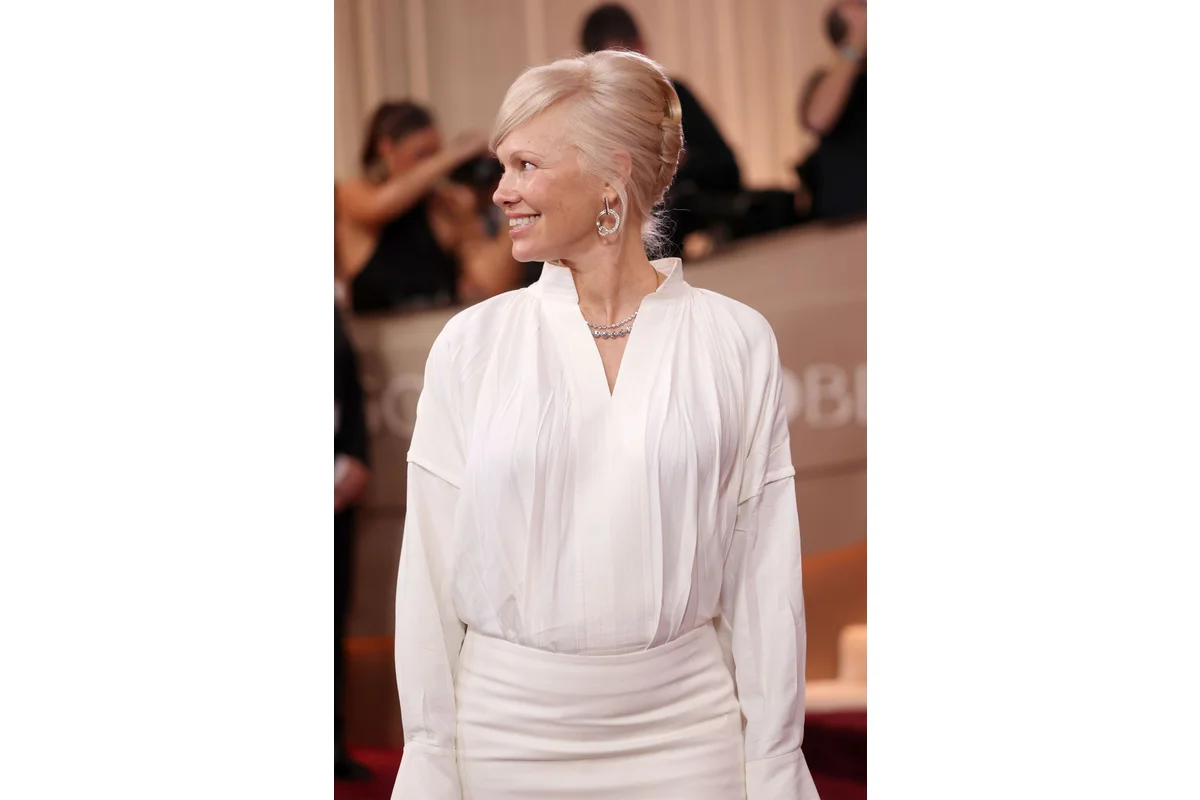
Despite the proximity, Anderson chose not to engage with Rogen at the event and left early. She described her internal struggle, saying,
“I didn’t make a beeline for him, but in my mind, I did and really told him how I felt.”
She recalled,
“I’m sitting there in my seat just [staring at him]. … I mean, you’re kind of already tip-toeing around it. It’s so uncomfortable being around everybody there. A lot of those people [are] even from Malibu days, so I still don’t feel like I belong in those rooms. I feel, you know, uncomfortable.”
Addressing the Impact of Publicizing Personal Tragedies
When asked by Andy Cohen whether Rogen might be aware of her feelings toward the show, Anderson responded cautiously about the motivations behind such projects. She said,
“Do people? Do these kinds of people? What do you say? Some of these things have been very lucrative for people,”
acknowledging the financial incentives that might overshadow ethical considerations.
Anderson, however, tried to keep perspective, adding,
“So then, I think that just goes out the window. I guess that’s the most important thing. But anyway, not to complain. Everything’s good.”
Reflecting on her life as a public figure, Anderson conceded that her experiences have often been exposed. She explained,
“When you are a public person they say you have no right to privacy,”
but she emphasized a clear boundary:
“But your darkest, deepest secrets or your tragedies in your life shouldn’t be fair game for [a] TV series. That pissed me off a little bit.”
Personal Life and Current Relationships
Pamela Anderson’s past relationships have frequently attracted media attention. She was married to Tommy Lee from 1995 to 1998, during which they had two sons. In the years following, her marriages to Kid Rock and Rick Salomon, as well as her most recent relationship with actor Liam Neeson in 2025, have been noted by the public and press alike.
Anderson shared about her connection with Neeson,
“He is such a supporter of this new trajectory in my career and kindly tells me he is very proud of me,”
adding,
“I’m sure we will always be in each other’s lives.”
Ongoing Effects and Future Perspectives
The encounter at the Golden Globes underscored the ongoing emotional repercussions for Anderson stemming from the dramatization of her private life without consent. Her response reveals the tension between privacy boundaries and public storytelling in the entertainment industry.
This situation may influence how future projects approach consent and representation of real individuals, highlighting the need for respectful dialogue when real lives are adapted into media. Pamela Anderson’s candidness about her feelings brings attention to the personal impact behind popular dramatizations and the complexities faced by those portrayed on screen.
