
Tom Hiddleston has once again stepped into the shadowy role of Jonathan Pine in the highly anticipated return of The Night Manager, continuing to explore the complex world created by John le Carré. Nearly a decade after the first season’s debut, the actor remains deeply connected to the story’s moral ambiguities and layered characters, bringing renewed intensity to this gripping spy drama.
The Enduring Bond Between Hiddleston and the Night Manager Role
Before cameras began rolling on what became The Night Manager in 2015, the cast and crew shared a memorable dinner, an event that Tom Hiddleston recalls consistently the same way, underscoring its significance. A defining moment came during his meeting with David Cornwell, known to readers worldwide as John le Carré. When Hiddleston inquired if there was anything he should know before starting, Cornwell replied with warmth and a hint of mischief, confirming a metaphorical passing of the torch: the character Jonathan Pine, originally based on Cornwell himself, was now to be embodied by Hiddleston.
I said, ‘David, is there anything you would like me to know before we start?’
Tom Hiddleston recounts.
And he, with enormous kindness, leant over and said, with twinkling eyes and a conspiratorial tone of mischief, ‘Tom, of course you would have guessed, by now, that Jonathan Pine is me, and now, he must be you.’
— Tom Hiddleston
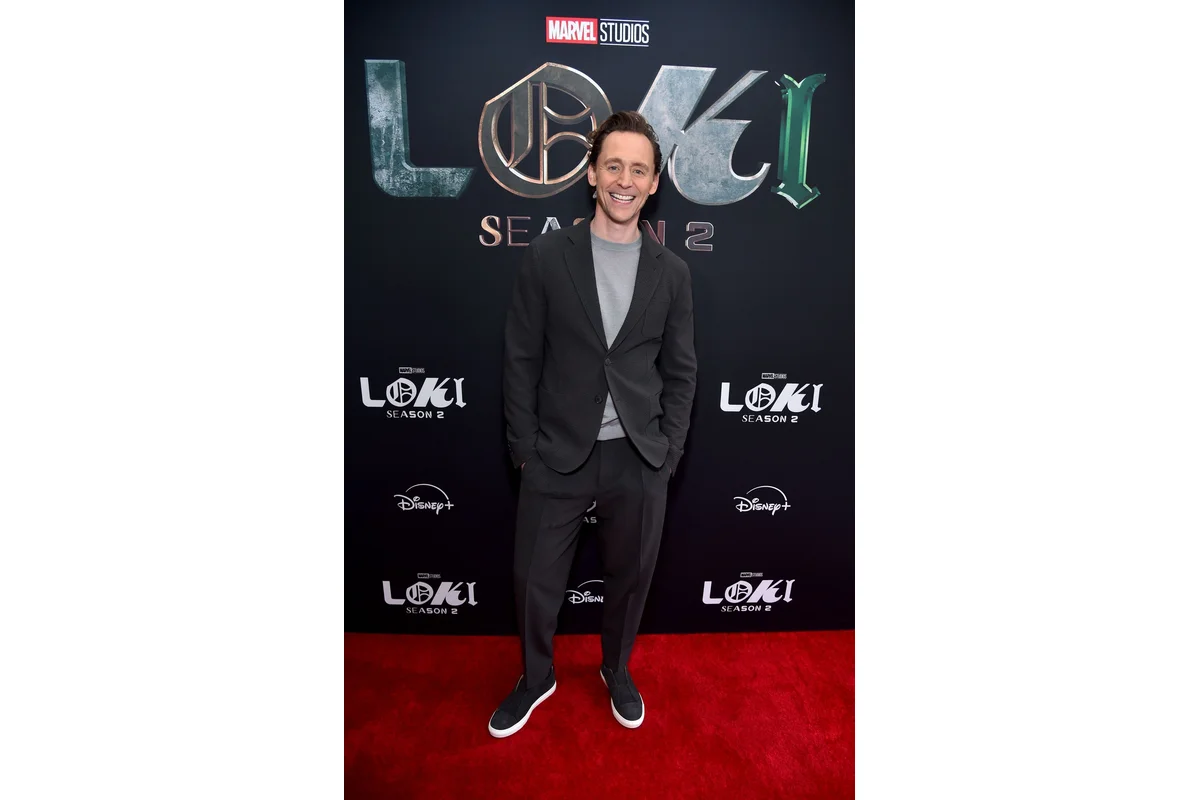
This exchange provided Hiddleston with not only invaluable insight but also a sense of ownership and responsibility toward the character. It confirmed that Pine was not just a creation to be portrayed, but a persona to be carried forward with passion and vulnerability. This understanding ultimately influenced Hiddleston’s decision to reprise the role after a decade-long gap.
The encouragement or exhortation was: Take it, own it, possess it. Make it belong to you. Fill this character with all your own passion, curiosity, courage, vulnerability, and humanity. It’s yours now. He had a real trust in me to deliver that.
— Tom Hiddleston
Why Tom Hiddleston Remained Drawn to The Night Manager
Following the critical acclaim of Season 1, which concluded in March 2016, speculation about the possibility of a second season circulated widely. Uncertainty surrounded whether continuing the adaptation of le Carré’s work would be creatively or commercially justifiable, especially since the original novel had already been fully translated on screen. Despite publicly declining to discuss the show‘s future, Hiddleston reveals that behind the scenes, Cornwell supported the idea of continuing the story.
He seemed to think it was a good idea, and he wanted to find a way. The more time that passed, the more interesting the possibility became, because we kept talking about it and turning it over. Events in the world overtook the story — and imagining how these characters, how Jonathan Pine would be responding, the kind of life he would be living, the more time that passed, the more interesting it became.
— Tom Hiddleston
Cornwell’s death in late 2020 initially cast a shadow over the potential continuation, but he had already expressed strong trust in Hiddleston and the story’s expansion. At Cornwell’s memorial, his sons Simon and Stephen, who run The Ink Factory (the series’ co-producer alongside BBC and AMC), directly broached the idea of a second season with Hiddleston.
They said, ‘We’ve had some thoughts about The Night Manager and a second season, and our dad wanted us to talk to you about it.’
— Tom Hiddleston
In an intriguing turn, series head writer David Farr experienced a vivid dream featuring a black car racing toward a young boy. This vision would inspire the creation of Teddy Dos Santos, portrayed by Diego Calva, a young Colombian arms trafficker who models himself as the ideological successor to Richard Onslow Roper, the merciless antagonist from Season 1 played by Hugh Laurie.
It was the beginning of a dream about Teddy,
Hiddleston says,
and a way of diving deeper into the personal histories of the characters we’ve got to know in the first season, going more deeply into their psyche, more deeply into their trauma, more deeply into that pain, and pushing them closer to the edge, and seeing who they really are.
Jonathan Pine, too, has evolved significantly. Though outwardly calm, poised, and charming, Pine is a man of inner turmoil, driven by pain and a fierce moral clarity that leads him to confront danger if it means defending what he believes is right.
His exterior presents as immaculate, elegant, controlled, calm, charming. He prepares a thousand faces to meet the thousands of people that he meets. His interior is full of turbulence and vulnerability and doubt and pain. His soul is on fire with a moral clarity, and he has this extraordinary courage and bravery that can impel him into danger at great personal cost to himself, great personal risk, to defend what he believes is good in the world.
— Tom Hiddleston
Hiddleston often cites the evocative description of Pine from le Carré’s novel, painting him as both a wanderer and a survivor molded by hardship and constant escape:
‘Jonathan Pine, orphaned only son of a cancer-ridden German beauty and infantry officer killed in one of his country’s many post-colonial wars, graduate of a rainy archipelago of orphanages, foster homes, cadet units and training camps, sometimes army wolf-child with a special unit in even rainer Northern Ireland, caterer, chef, itinerant hotelier… collector of other people’s languages, self-exiled creature of the night and sailor without a destination.’
Hiddleston quickly amends his own recollection:
The thing I missed out was ‘perpetual escapee from emotional entanglement.’
— Tom Hiddleston
Looking ahead to Season 2, Pine has transitioned from the lost “sailor without a destination” to a man with renewed sense of mission, albeit one fraught with unresolved trauma.
A dragonslayer can only call himself a dragonslayer if the dragon is still alive and at large, and that’s an Achilles heel for him. There’s trauma that he hasn’t processed or healed, so, how effective is he, really?
— Tom Hiddleston
Building on his understanding of Pine’s complexities, Hiddleston explains how Season 2 pushes the character toward moral extremes, testing his limits and solitude.
I wanted to take him right to the edge. Le Carré used to call spies ‘the lonely deciders,’ people who exist at the fringes of our reality, working in the shadows, defending our freedoms, and the solitude of it, that you have to make decisions about good and bad, about right and wrong alone, in a location no one knows about, in a life that you’ve invented. There’s a loneliness to it, and I wanted to isolate him even more, to put him in even greater jeopardy and see if his center is still uncorruptible and unassailable, to see what remains, and to really turn up the heat.
— Tom Hiddleston
For Hiddleston, le Carré’s prose remains a wellspring of inspiration, driving him to delve deeper into the moral ambiguity and human duality at the heart of the spy world.
These are characters who trade in secrets and lies. They seduce in order to betray, and they lie in order to tell the truth. But behind the masks they wear, who are they really? Behind the masks we wear as a nation, who are we really as a nation?
— Tom Hiddleston
This commitment to the story also serves as a tribute to Cornwell’s legacy.
His legacy, I carry very close, and I hope we have honored all of that in this season.
— Tom Hiddleston
The Impact of Time on Hiddleston and His Characters
Returning as Jonathan Pine required Hiddleston to consider how a decade’s passage had transformed both the character and himself. During the time between seasons, Hiddleston entered new phases of his personal life—starting a family with actress and writer Zawe Ashton and welcoming their second child—as well as deepening his professional commitments, including reprising his widely beloved role as Loki in the Marvel Cinematic Universe.
I knew that there would be things even if I didn’t think about it,
Hiddleston reflects.
The body keeps the score. I knew that if you just rolled the camera on my face, that face is 10 years older, but the human being inside the face is also 10 years older, and it’s lived a bit more life. There are a few more scars on the inside, a few more scars on the outside, and that’s a good thing. I’m grateful for it. I’m grateful for all that life.
He also acknowledges the impact of global events, not least the COVID-19 pandemic, as forces that inevitably shape the mood and direction of the story.
Rather than allowing visible changes or external circumstances to dominate, Hiddleston aimed to challenge himself artistically with this return.
I’m profoundly aware that these opportunities don’t come around all the time, and you only get so many chances. My encouragement and expectation to myself was, “This must be braver. You must be bolder. You must risk more. You must work harder. You must commit more deeply. It will cost you more, but it will be worth it. Investigate the material in a very deep and rigorous way.’ I wanted it to be more emotional, I wanted it to be more dynamic and raw, and I think it is those things. I think the soul of the piece feels older.
— Tom Hiddleston
Hiddleston’s ongoing role as Loki has similarly offered a chance for evolution, allowing him to explore different facets of a single character over time. Few actors experience this level of depth with multiple roles outside of long-running franchises, making his connection with both Jonathan Pine and Loki particularly notable.
I feel very fortunate that in both cases, I’ve been given extraordinarily complex characters to explore, and the depth and range within those characters, within the character of Jonathan Pine and Loki, is limitless. The only limits, really, are the limits of my imagination, because they have been written with such care and complexity. What I take great meaning from in my work is being afforded the opportunity to go very deeply into these explorations.
— Tom Hiddleston
Alongside the ongoing series of The Night Manager, which has been confirmed for a third season, Hiddleston has completed filming for the upcoming Avengers: Doomsday, though details remain tightly under wraps.
When you get asked to come back to tell more story, you get to go more deeply, you get to investigate more profoundly, think more carefully.
— Tom Hiddleston
For a performer who thrives on exploring nuanced characters over time, such opportunities are especially valuable.
They’re almost like you’re having a long-term relationship with an idea. You get to invigorate these questions. Both Pine and Loki are complex characters. They contain multitudes. They contain great depth and great range. They’re very powerful. They’re very capable. They’re very capable of great charm, but also, they carry with them deep wells of private pain. The tension between the exterior and interior is something I find fascinating. So, yeah, I’m very fortunate that I get to come back to the well.
— Tom Hiddleston
The Night Manager Season 2 Introduces Fresh Faces and Hidden Twists
Season 2 reunites Hiddleston with several familiar faces, including Olivia Colman and Douglas Hodge, who returns as the character Rex Mayhew. Mayhew’s suspicious death early in the season pulls Pine back into the murky underworld he believed he had escaped. The new cast adds complexity, featuring Diego Calva as the enigmatic arms dealer Teddy Dos Santos and Camila Morrone as Roxana Bolaños, a Colombian businesswoman whose shifting alliances challenge Pine’s loyalties.
Within MI6, Pine’s support network has notably thinned. Only senior official Basil Karapetian, played by Paul Chahidi, and fellow Night Owl operative Sally Price-Jones, portrayed by Hayley Squires, stand with him in his unofficial mission. Meanwhile, MI6 Chief Mayra Cavendish, brought to life by Indira Varma, relentlessly investigates Pine’s activities.
The helm of Season 2’s direction passes to Georgi Banks-Davies, succeeding Susanne Bier, who directed the Emmy-winning first season. Hiddleston notes the advantage of collaboration with a director who understands the show’s unique blend of subtlety and intensity, able to bring out both the characters’ vulnerabilities and the series’ thriller elements.
She was fascinated by every character’s vulnerability, and understood that these characters are extremely tough in lots of ways, extremely isolated, but all broken, all carrying trauma, and she wanted to try and investigate the vulnerability of every single character, but also was aware that this story was a thriller and needed to be told with a kinetic, propulsive momentum which also contains secrets and surprises,
Hiddleston explains.
That’s in the roadmap of a great thriller. You don’t want to know everything. It’s a process of discovery and thrill.
Banks-Davies encouraged a grounded performance style centered on authenticity.
One of her great guiding lights is about reality. She’s not interested in anything generalized or cliché. Her encouragement to all of us was to, ‘Make it as real as you dare. Make these experiences for these characters real to you, as much as you can safely. We will be safe. We will be careful. We will be respectful of each other. But I dare you to make this as real as you can.’ And I think that transmits in the work.
— Tom Hiddleston
The result has been described by Hiddleston as akin to a 360-page, six-hour movie, filmed not as separate episodes but as a continuous story.
One of the most carefully guarded secrets of Season 2 was the return of Hugh Laurie’s Richard Onslow Roper, hidden in plain sight under the alias Gilberto Hanson. Revealed in the third episode, this bombshell surprised both viewers and much of the cast during production, with his name withheld from opening credits until after the reveal.
He’s one of the great scholars of le Carré, I think — his admiration and his appreciation for le Carré’s writing, not just the specifics of it. He’s read them all several times, and he knows the fine stitching of his writing, his phrasing, and his point of view. He’s a great protector of what makes le Carré le Carré. I don’t think The Night Manager would be the same without his contribution.
— Tom Hiddleston
A Scene Among Hiddleston’s Most Cherished Challenges
Once Roper emerges as Gilberto Hanson, a tense, intimate confrontation with Pine becomes unavoidable. Their meeting, staged at a sunny Colombian restaurant during the fifth episode, is a masterclass in controlled intensity. Hiddleston describes the ten-minute face-off between himself and Laurie as a rare and exhilarating experience.
Playing five sets against Roger Federer.
— Tom Hiddleston
The scene balances a slow, deliberate pace with electric tension, allowing both actors to explore the complex relationship between hunter and hunted, mentor and heir.
The thrill for both of us was, by keeping them apart, their reunion felt inevitable. But the longer we could wait, the more we knew that scene needed to feel as though, in a way, time stood still. I think in a perverse and unsettling way, the meeting is a relief for both of them, because face-to-face with the other, they each know who they are. They define themselves in opposition to each other, and they know each other intimately. Hugh, at one point, as Roper, says, ‘You need me, and you dream of me just as I dream of you.’ They are somehow two halves of a whole, but there is a red line of moral clarity which sets them apart. It is mythic, I hope. It feels like the meeting of the father and his chosen son, the heir and executioner that he chose.
— Tom Hiddleston
It’s a confrontation. It’s a seduction. It’s an invitation. It’s a reconciliation. It’s all those things and more.
— Tom Hiddleston
The ambiguity of their dynamic permeates every interaction. Pine’s descent into morally compromising territory contrasts starkly with his previous survival; the risk lies in whether he will maintain his integrity or surrender to darker impulses.
The deeper the danger, the more alive he feels,
Hiddleston notes. And that’s problematic.
This scene stands out as one of Hiddleston’s favorite moments, a complex interplay of power, vulnerability, and seduction shaped by David Farr’s rich script.
It’s a game of chess. It’s a game of tennis. It’s a game of poker. It’s all three. It’s a confrontation. It’s a seduction. It’s an invitation. It’s a reconciliation. It’s all those things and more.
— Tom Hiddleston
Hiddleston freely shares his admiration for Laurie, emphasizing the crucial role his co-star played in shaping the series’ identity.
My whole memory of the first one is bound up with memories of working with him and how enjoyable that was. I think he’s brilliant. I admire and respect him so much. He’s indivisible from my whole experience of making anything about The Night Manager.
— Tom Hiddleston
Continuing to Pursue Story over Genre Boundaries
The Night Manager’s mysteries extend beyond what has been revealed so far, with the show’s trajectory locked in for at least one additional season. Hiddleston, whose filmography spans blockbuster superhero films, historical dramas, and intimate character studies, approaches future projects guided by curiosity rather than strict genre preferences.
It’s very hard to describe, because the choices I’ve made have often been instinctive choices that are based in my curiosity,
he says after reflecting.
Am I curious about this story? Do I think it has value in the world? What’s it trying to say? What does it say to me? Does it move me? Does it make me cry? Does it make me laugh? Does it make me want to explore it? In a way, the genre is a secondary question. It’s really the prospect of the experience.
He cites Guillermo del Toro’s Crimson Peak as a standout experience, describing it as unique in his career.
It was one of one in my working life.
— Tom Hiddleston
Looking back, Hiddleston acknowledges a consistent draw toward projects with depth and a search for truth, noting that Jonathan Pine is one of his most contemporary characters despite the series’ feel.
Sometimes I go out in search of things, but sometimes they meet me in the middle. I love The Night Manager for so many reasons, but one of the things I love about it is its searching, yearning for the truth, [and] a kind of deep, profound curiosity about the world, about being English, and about identity.
— Tom Hiddleston
I haven’t actually done, in my working life, an enormous amount of contemporary work, and Pine now feels extremely contemporary, and he felt, in 2016, the same.
— Tom Hiddleston
Regardless of the genre, Hiddleston affirms his belief in the power of storytelling.
I believe in stories. I believe profoundly in them and that good stories resonate across time, no matter the genre. Long way around the house of answering your question, I don’t really know. I don’t know if there’s anything I haven’t done. We’ll see where it takes me. Last year, I got to play Edmund Hillary in Tenzing and climbed Mount Everest, which I’ve never done. I got to dance on screen, which I’d never done before, in The Life of Chuck.
— Tom Hiddleston
When asked about his future direction, Hiddleston concludes with a poetic reflection:
He knows not where he’s going / For the ocean will decide / It’s not the destination / It’s the glory of the ride.
— Tom Hiddleston
