
Al Pacino, renowned for his iconic film roles, has long been celebrated for shaping American cinema, yet his career includes notable setbacks, including the infamous 2003 movie Gigli. This film stands out as an unexpected black mark amid Pacino’s otherwise stellar reputation, highlighting the challenges even the greatest actors face in balancing artistry and career choices.
Al Pacino’s Cinematic Legacy and Occasional Missteps
Few actors boast a portfolio as distinguished as Al Pacino’s, whose career is filled with landmark performances in films like The Godfather by Francis Ford Coppola and Brian De Palma’s Scarface. His collaborations with notable filmmakers, including Martin Scorsese on projects such as The Irishman, have reinforced his status as a Hollywood legend. Despite this, Pacino’s filmography also contains projects that contrast sharply with his most acclaimed works.
One such surprising appearance was in Adam Sandler’s 2011 comedy Jack and Jill, where Pacino played a fictionalized version of himself in a poorly received commercial promoting the “Dunkaccino” drink. This choice exemplifies how even celebrated actors sometimes accept roles diverging from their typical standards, often influenced by financial considerations—a phenomenon common in Hollywood, as exemplified by Robert De Niro’s participation in productions like Rocky & Bullwinkle primarily for financial reasons.
The Controversy Surrounding Gigli and Its Impact
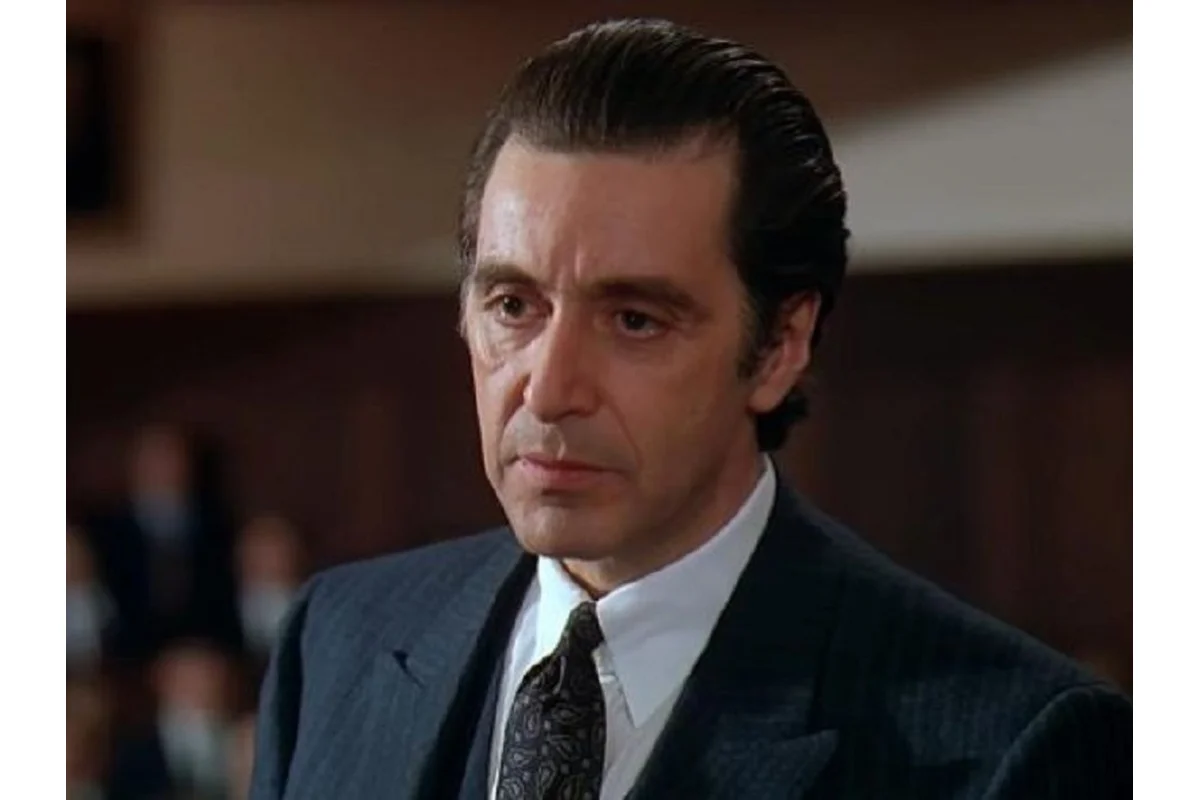
Pacino’s role in Gigli remains one of the most criticized chapters in his career. Directed by Martin Brest, who had previously earned Pacino an Oscar for Scent of a Woman, the film featured Pacino as mob boss Starkman, acting alongside Ben Affleck and Jennifer Lopez during a period when media heavily fixated on Affleck and Lopez’s high-profile relationship.
Gigli was met with harsh criticism and quickly became synonymous with cinematic failure, consistently appearing in “worst movie ever made” lists. Ben Affleck candidly reflected on the production’s difficulties in an Entertainment Weekly interview:
“[Gigli] didn’t work, and we did five weeks of reshoots, which we knew were not gonna work. It was a movie that didn’t work … Interestingly, I learned more about directing on that movie than anything else because Marty [Brest] is a brilliant director, really gifted. It’s not like it’s worse than all … there’s a bunch of horrible movies, and in terms of losing money, I’ve had five movies — at least! — that have lost more money than Gigli has.” – Ben Affleck, Actor
Affleck also addressed the overwhelming negative response fueled by many factors beyond the film’s content:
“It’s just that it became a story in and of itself. The funny name, the Jennifer Lopez romance and the overexposure of that, it was kind of a perfect storm. And I remember talking to Marty the Friday it came out, and I was like, it’s just spectacular, it’s a tsunami, it couldn’t be worse. This is as bad as it gets.” – Ben Affleck, Actor
Despite the debacle, Affleck viewed Gigli as a learning experience that motivated him to pursue directing in order to create better films in the future.
Why Gigli Is a Notable Stain on Pacino’s Resume
Although Pacino’s performance in Scent of a Woman under Brest’s direction had brought him an Academy Award, his collaboration with Brest on Gigli severely contrasted, resulting in a widely ridiculed project that even the cast found embarrassing. Unlike other flawed films in Pacino’s career, Gigli drew derision not only from critics and audiences but also from its own actors. This rare unanimous disdain cements the film as a major career blackmark for the acclaimed actor.
While Pacino’s career is filled with bold, substantive work—movies that, even when flawed, sought to say something meaningful—Gigli stands apart as a project lacking artistic merit or audience support. This distinction underscores its significance as a moment to which even Pacino’s loyal admirers refer with hesitation when assessing his legacy.
Reflecting on Pacino’s Career and Lessons from Gigli
In the context of Al Pacino’s extensive and celebrated career, Gigli serves as a cautionary example of how even the most esteemed actors can encounter professional miscalculations. The film’s failure highlights the complex interplay between financing, media attention, and creative ambition that shapes an actor’s choices. For Pacino, this setback does not diminish his contribution to cinema but illustrates that no career, regardless of stature, is without its flaws.
Given Pacino’s ongoing involvement in significant projects, including his work with Martin Scorsese, his ability to navigate and recover from such disappointments continues to define his resilience as an artist and a professional. The lessons drawn from Gigli provide valuable insights into the pressures of Hollywood and the unpredictable nature of movie making.
