
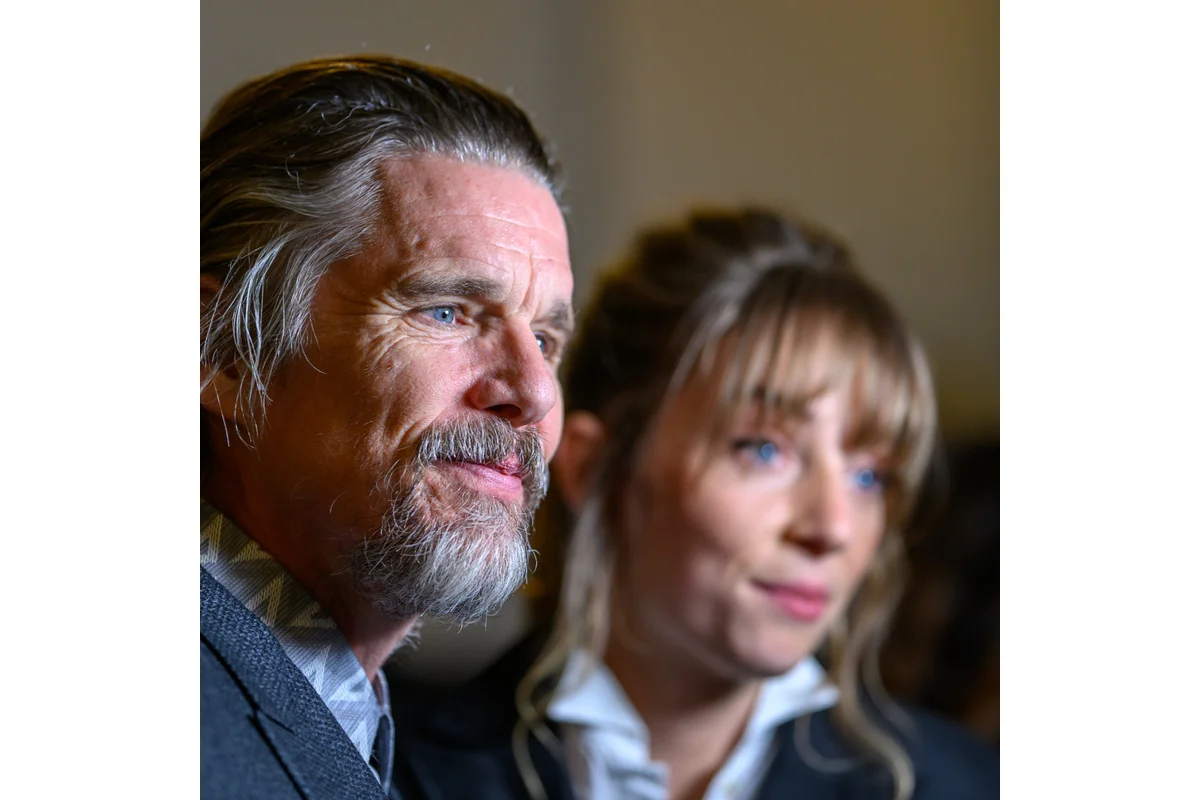
Ethan Hawke recently spoke candidly about his rising fear of expressing his thoughts openly, highlighting what many perceive as an atmosphere of suppression in Hollywood. During an interview with Variety, Hawke admitted that in recent years, he has felt increasingly cautious about sharing his views, a sentiment that underscores broader concerns about free speech within the entertainment industry.
Hollywood’s Culture of Silence and Censorship
Hawke’s admission comes amid discussion around the pressure entertainers face when their beliefs do not align with prevailing industry views. While he acknowledged feeling this fear for the first time recently, critics argue Hawke has remained silent on notable instances when peers faced professional consequences for their opinions. Public figures like Gina Carano were blacklisted following outspoken views, and others such as Sasha Stone have experienced career setbacks after voicing dissenting opinions.
Despite acknowledging Hollywood as a place where speaking freely can be dangerous, Ethan Hawke has not publicly defended individuals who suffered fallout for their beliefs, such as Woody Allen, who was heavily criticized despite two state investigations clearing him of previous allegations, or Kevin Spacey and Johnny Depp, who have grappled with career impacts after legal exoneration.
Speaking Restrictions Extend to Politics and Social Issues
Criticism of Hollywood’s limits on free expression extends beyond entertainment careers to political and social topics. Hawke himself reportedly would face severe backlash if he openly supported controversial positions, such as voting for Donald Trump, advocating for stronger immigration enforcement, or opposing certain gender-related medical procedures for minors. These issues reflect a broader pattern where deviation from accepted views can result in personal and professional exclusion.
Observers highlight instances where industry gatekeepers and corporate media have silenced dissent. The cancellation of Disney’s miniseries “The Path to 9/11” to appease political interests exemplifies the entertainment sector’s intertwining with political influence, further complicating free artistic expression.
Contradictions in Hawke’s Claims of Artistic Freedom
In his interview, Ethan Hawke acknowledged the privilege of being an artist in a free country but lamented that he no longer fully feels this freedom.
“To get to be an artist in a free country, I’ve had enough of an education to know what a privilege that is. And, um, I don’t feel that way anymore. And that’s something that has to change,”
he said. Yet, critics contend that his cautious approach and silence on key free speech controversies undermine the credibility of his statement.
As highlighted by commentator Christian Toto, Hawke has not confronted censorship occurring under the current administration or the restrictions faced by comedians and other entertainers, raising questions about the authenticity of his expressed fears. Toto observed,
“while Team Biden silenced online voices, while comedians found their jokes censored… I could go on and on and on. Great actor. And he’s full of s***.”
—Christian Toto, Commentator
The Broader Implications of Fear in the Entertainment Industry
The tension between free expression and professional survival continues to shape Hollywood’s culture, affecting not only individual careers but also the industry’s artistic landscape. Hawke’s hesitation to speak openly reflects a climate where deviating from dominant cultural narratives can lead to swift consequences, reinforcing a pattern of self-censorship and conformity.
This environment has created an uneasy balance for artists attempting to navigate ideological divides. The ongoing struggle over freedom of speech in Hollywood may influence future artistic choices and public discourse, prompting calls for greater openness and protection for divergent views within the creative community.
He said nothing as Cancel Culture ran wild … while Team Biden silenced online voices, while comedians found their jokes censored …
I could go on and on and on
Great actor. And he's full of s***
— Christian Toto (@HollywoodInToto) January 27, 2026
