
The Judd Apatow Mel Brooks Documentary offers an in-depth look at the legendary entertainer Mel Brooks as he approaches his 99th year. This comprehensive film, currently available on HBO Max, provides viewers insight into Brooks’ remarkable journey in show business, spanning decades of comedy, film, and musical theater.
Born Melvin Kaminsky in Brooklyn, Brooks rose to prominence through his work as a comedian and writer in the Catskills and later as part of an influential writing team alongside Woody Allen and Neil Simon for Sid Caesar’s groundbreaking TV shows. Throughout his career, Brooks created iconic works such as Get Smart, the 2000 Year Old Man comedy albums with Carl Reiner, and classic films like The Producers, Young Frankenstein, and Blazing Saddles.
Facing a Turning Point: The Pressure Behind The Producers
Although Brooks had a string of successes earlier in his career, by the year 2000 he had not produced a significant critical or commercial hit since his 1977 film High Anxiety. During a pivotal moment on a chilly December day in New York, Brooks was overseeing the musical adaptation of The Producers, a project many believed might define the end of his career. The show’s eventual triumph, which included opening in Chicago before transferring to Broadway and winning a record-setting 12 Tony Awards, revitalized his fame and cemented his lasting impact on entertainment.
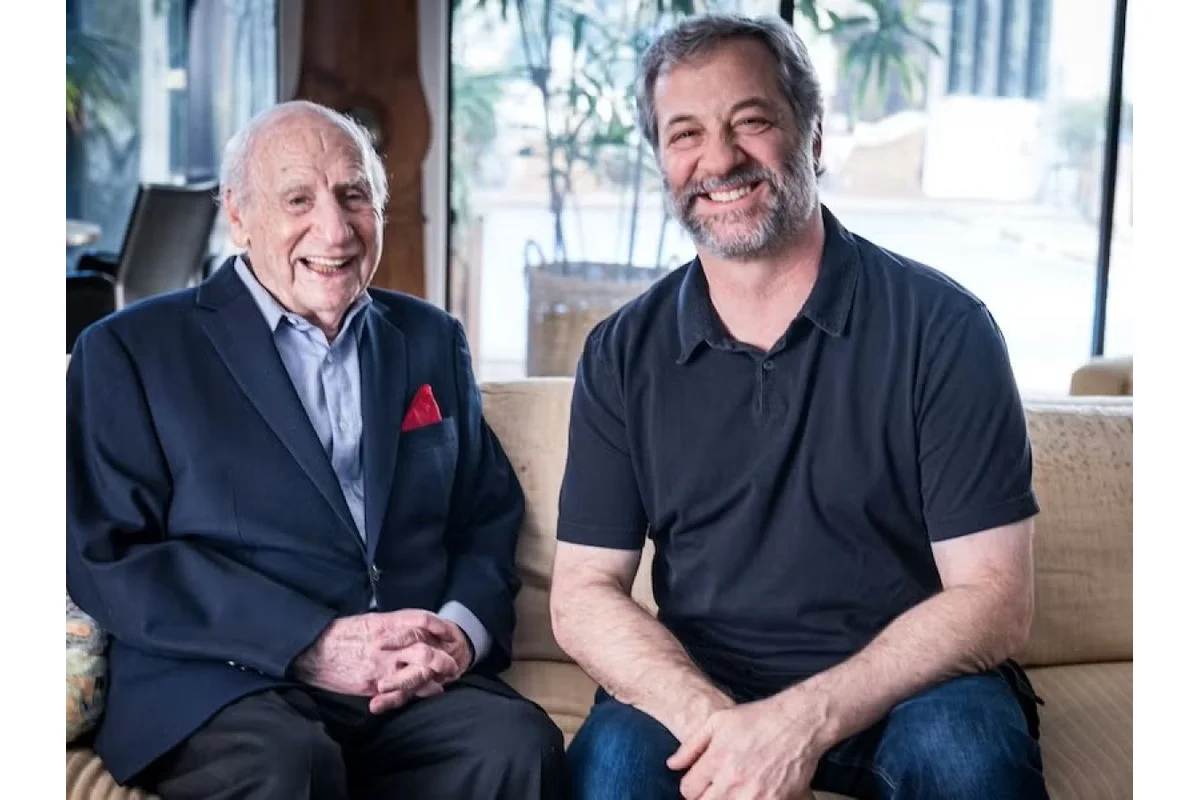
Now in his late 90s, Brooks remains as brilliant, witty, and engaging as ever, becoming the heart of this nearly four-hour documentary divided into two parts, directed by Judd Apatow and Michael Bonfiglio.
Inside the Documentary: Personal Stories and Extensive Archives
The film draws extensively from archival footage and presents candid conversations with Brooks himself, revealing lesser-known facets of his life. Born to a widowed mother in Brooklyn, Brooks discusses how his experiences during World War II deeply shaped him. He tells Apatow,
“War changed me. If you don’t get killed in the Army, you can learn a lot.”
– Mel Brooks
The documentary follows Brooks’ career progression through the electric atmosphere of Sid Caesar’s writers’ room to his eventual filmmaking ventures in California during the early 1960s. It also includes reflections from his family, including his children and former wife Florence Baum, as well as his granddaughter Samantha.
Brooks shares memorable anecdotes, like a well-known story involving Cary Grant, and provides touching accounts of his courtship and marriage to actress Anne Bancroft. Actor Gene Wilder contributes heartfelt insights that reveal the profound bond they shared beyond their collaborations on film. Meanwhile, Brooks’ decades-long friendship with Carl Reiner is explored, highlighting their dinners spent watching Jeopardy together as widowers.
Legacy and Loss: Remembering Friends and Family
The documentary also touches on the personal losses Brooks has endured, including the deaths of Anne Bancroft in 2005 and Carl Reiner in 2020. Brooks’ son Max reflects tenderly on his parents, and filmmaker Rob Reiner talks about one of his final conversations before the tragic December murders of his wife Michele Singer Reiner and his own father, Estelle Reiner’s husband, underscoring the real-life challenges behind Brooks’ laughter.
A Wide Circle of Influences and Collaborators
The film highlights the many renowned figures who worked closely with Brooks across various projects. This includes Richard Pryor, who contributed to the writing of Blazing Saddles and describes Brooks’ approach as rooted in affection:
“He’s a loving man. It’s about love with him.”
– Richard Pryor
Director David Lynch credits Brooks with rescuing his career after hiring him to direct The Elephant Man, following Lynch’s initial cult success with Eraserhead. Through his production company Brooksfilms, Brooks took a measured approach in supporting films such as The Fly, My Favorite Year, and Frances, deliberately avoiding branding that might mislead audiences expecting comedy.
The Enduring Impact of Mel Brooks Among Contemporary Artists
A broad range of contemporary entertainers appears in the documentary to express their admiration, including Ben Stiller, Jerry Seinfeld, Dave Chappelle, Sarah Silverman, Conan O’Brien, Josh Gad, Robert Townsend, Matthew Broderick, and Nathan Lane. Their reflections emphasize Brooks’ unique role in the industry and attest to his widespread influence across comedic generations.
Regardless of a viewer’s prior familiarity with Brooks, this documentary offers a rewarding experience, providing an intimate moment with a figure whose humor continues to resonate deeply.
Mel Brooks’ Wit and Philosophy Revealed
Brooks’ quick wit remains fully intact. When asked by Apatow about losing his father early in life, Brooks instantly corrects,
“No, no. My father died.”
– Mel Brooks
His recollection of names, places, and stories displays his ability not only to remember but to find joy in the memories themselves. This vitality underscores the vibrant spirit that has guided his career and outlook.
In one of his reflective moments, Brooks shares,
“Sometimes my comedy is just to celebrate the joy of being alive.”
– Mel Brooks
He has often described humor as his way to cope with life’s challenges, calling it a defense against the universe. Few have matched his skill in doing so with such generosity of spirit.
Why This Documentary Matters Today
“Mel Brooks: The 99 Year Old Man!”
not only captures the extraordinary life of a comedy legend but also invites audiences to appreciate the resilience, creativity, and warmth behind his laughter. By showcasing his relationships, creative collaborations, and enduring influence, the film illuminates how Brooks’ career has transcended eras while his humor remains timeless.
For those interested in the legacy of comedy and performing arts, this documentary is essential viewing. It provides a rare window into the life of a man who shaped the cultural landscape, inspiring countless performers and audiences alike.
