
Denzel Washington 1990s marked a significant turning point in his career, as he evolved into a true Hollywood leading man with strong audience appeal. Throughout that decade, he starred in a series of box office successes that solidified his status as a bankable actor. Six of his films from the 1990s surpassed $100 million worldwide, including Philadelphia with $201 million, The Pelican Brief at $187 million, Crimson Tide earning $159 million, The Bone Collector reaching $151 million, The Siege with $116 million, and Courage Under Fire hitting $100 million.
In total, Denzel starred in 18 films during the 1990s, grossing approximately $741 million domestically and $1.2 billion worldwide, figures that are not adjusted for inflation. Although these totals rank behind his grosses in the 2000s and 2010s in nominal terms, the 1990s become dominant when inflation is accounted for. Adjusting for inflation, his domestic earnings during this era jump to an impressive $1.9 billion, surpassing the 2000s’ $1.5 billion adjusted total. This achievement is especially notable given that the 1990s largely featured dramas and thrillers rather than the more action-oriented movies that defined his later career.
The 1990s Laid the Groundwork for Denzel Washington’s Oscar Legacy
Beyond box office success, the 1990s were critical in establishing Denzel’s reputation at the Academy Awards. His first Oscar win came at the start of the decade, taking home Best Supporting Actor for Glory, which was released in late 1989 but awarded in 1990. Despite this early triumph, Denzel received only two more Oscar nominations for movies released in the 1990s: one for portraying the civil rights icon in Malcolm X, and another for The Hurricane, which premiered in 1999 but was honored at the 2000 ceremony.
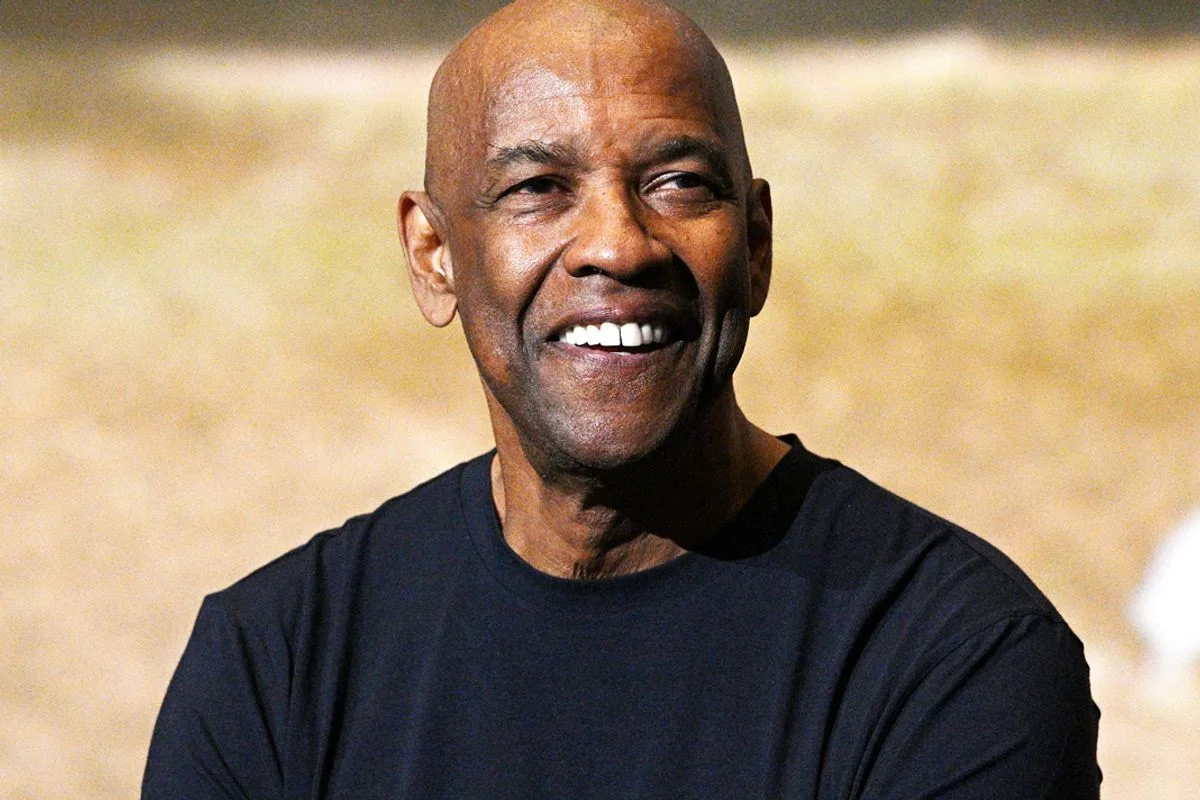
Although he did not win in either case, those nominations reflected the caliber of his performances. The role of Malcolm X is often regarded as one of his finest ever, even though the Oscar went to Al Pacino for Scent of a Woman. Spike Lee, the director of Malcolm X, has described this as an egregious oversight and a classic example of a makeup call by Academy voters. Denzel himself reflected on the experience, telling Ethan Hawke,
“Losing was better.”
— Denzel Washington, Actor
This decade’s Oscar history helped set the stage for his subsequent career as a frequent contender. By the end of the 1990s, he was a three-time nominee and one-time winner, paving the way for his eventual Best Actor win for Training Day in 2001, and multiple nominations in the following decades. The 1990s therefore represent the formative years of what would become one of the most decorated careers in acting.
How the 1990s Shaped the Trajectory of Denzel Washington’s Career
The influence of the 1990s extended beyond box office and awards; the decade forged key professional relationships and demonstrated his versatility. His success enabled him to lead films that balanced commercial appeal with artistic acclaim, allowing him to headline projects that attracted both audiences and critical praise.
During this time, Denzel built memorable collaborations, most notably with director Spike Lee and filmmaker Tony Scott. He worked with Spike Lee on three films—Mo’ Better Blues, Malcolm X, and He Got Game—projects that shaped both their careers and culminated in later successes like the 2006 thriller Inside Man. Meanwhile, his partnership with Tony Scott began with 1995’s Crimson Tide and flourished over the next decade with films such as Man on Fire, Déjà Vu, The Taking of Pelham 123, and Unstoppable in 2010. The foundation laid in the 1990s was crucial to these ongoing collaborations and their shared achievements.
Overall, the remarkable combination of box office achievements, awards recognition, and influential creative partnerships during the 1990s establish this era as Denzel Washington’s best decade. It was during this time that he became not only a prominent movie star but also one of Hollywood’s most respected and enduring artists, setting the stage for sustained success into the 21st century.
