
Jacob Elordi shared with fans the unique method he used to perfect his Yorkshire accent while preparing for his role in Wuthering Heights. The Australian actor revealed at the London premiere that he practiced the accent repeatedly while in the bath to capture the distinct Northern English sound accurately.
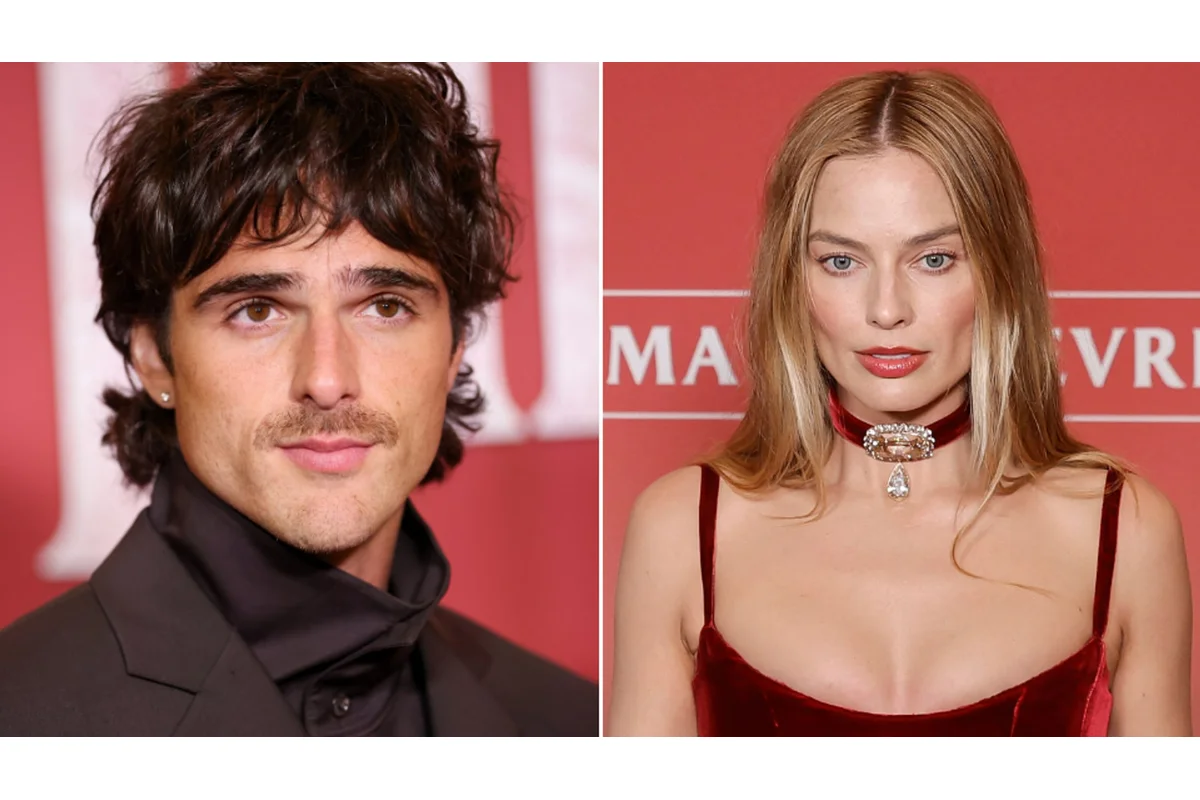
At 28 years old, Elordi stars as Heathcliff alongside Margot Robbie in Emerald Fennell’s daring and unconventional adaptation of Emily Brontë’s classic novel. His focus on mastering the Yorkshire accent is part of his dedication to portraying the complex, passionate character for the film’s February UK release.
The Bath as a Practice Space for the Yorkshire Accent
During the London premiere on Thursday, Elordi explained how he honed the tough Northern English accent required for Heathcliff, describing an unusual but effective technique.
“I just practise it in the bath, over and over and over and over,”
he told BBC News.
“I like the ‘meks’ and the ‘teks’, instead of take. I like the M-E-K, T-E-K.”
This focus on vowel sounds and pronunciation helped him embody the character authentically.
Heathcliff, the orphan taken in by Mr Earnshaw—played by Martin Clunes—and his daughter Cathy, portrayed by Margot Robbie, carries the Yorkshire accent naturally in this retelling. Young Heathcliff is played by Owen Cooper, who brings his own Warrington accent to the role. The contrast between Elordi’s adult character and Cooper’s younger version helps build a layered depiction of Heathcliff’s upbringing in northern England.
Crossover of Accents: From Frankenstein’s Creature to Heathcliff
This is not Elordi’s first time engaging with the Yorkshire dialect. His previous role as the creature in Guillermo del Toro’s Frankenstein also involved adopting the accent, which was intentionally used to give the creature’s speech unique characteristics. Elordi revealed how the transition between two vastly different characters with similar accent requirements brought some amusing confusion.
“It was one of my first scenes. The other actor said something, and I went ‘Wwooouuuugh!’”
Elordi told Variety, laughingly reenacting his initial vocal response.
“Because I had learned to respond to everything with a grunt. Something was still there.”
His playful reflection highlights how deeply his preparation for the creature role affected his performance habits.
In del Toro’s adaptation of Mary Shelley’s 1818 novel, Elordi’s creature learns to speak with a voice influenced by Yorkshire, incorporating vowel sounds heard in words like “blood” and “pumping.” This was inspired in part by David Bradley, who portrays a blind man and is from Yorkshire himself.
Yorkshire Influences in Del Toro’s Frankenstein
At the Venice Film Festival press conference, Elordi elaborated on the presence of Yorkshire elements in his character’s voice.
“David Bradley, who plays the blind man, is from that part of the world – so when the creature learns to speak, there are little bits and bobs [in there],”
he explained.
Elordi and del Toro were both pleasantly surprised that British journalists immediately recognized these regional nuances upon the film’s premiere, a sign of the careful linguistic attention given to the role.
“I’m glad you noticed it, that’s very cool,”
said Elordi, expressing appreciation for the observation.
Connecting with the Creature: A Deep Personal Role
Elordi described the creature in Frankenstein as “more me than I am,” emphasizing a profound emotional connection to the character.
“The reason I was drawn to it, is it’s a vessel that I can put every part of myself into, everything that’s unconscious from the moment I was born to being here with you today, all of it is in that character. And in so many ways, the creature that’s on screen in this movie is the purest form of myself,”
Elordi shared candidly.
He reflected on the unexpected beauty of finding oneself in a role that initially feels like a transformation, noting,
“As a performer, if you can achieve that in something that you think you’re going to get lost in, if you can find yourself in a character that you plan to get lost in, I think that’s a really beautiful thing that can happen – and that’s what happened to me. I’m only realising that now, in hindsight.”
This intense engagement contributed to Elordi’s first Academy Award nomination in the Best Supporting Actor category, marking a milestone in his career.
An Artistic Reimagining of Frankenstein’s Creature
Del Toro’s visual interpretation of the creature aimed to break away from traditional horror portrayals. The design rejects the usual imagery of stitched-together accident victims, instead emphasizing “a newborn” inspired by alabaster statues.
“A lot of the interpretations of the creature visually are almost like accident victims – and I wanted beauty,”
Elordi explained. He specified that one of his conditions for the character was “no stitches.” The creature’s hair draws on 19th-century phrenology diagrams, while the body balances surgical lines with aesthetic symmetry, a nod to Victor Frankenstein’s artistic ambitions.
Just as much care was taken in shaping the creature’s persona as its look. Elordi’s approach reflects the film’s wider theme of creation as art, and the complexity of bringing a new life into the world—both literally and metaphorically.
Oscar Isaac’s Take on Victor Frankenstein and Tribute to Del Toro
Oscar Isaac, who plays Victor Frankenstein, described his character as a mad scientist more akin to an artist. He revealed the challenge of stepping into such a pivotal role and working with Guillermo del Toro, noting the creative synergy involved.
“I’m creating this banquet for you, you just have to show up and eat.”
— Oscar Isaac, actor
Isaac praised del Toro’s dedication to the project:
“It really is a testament to how much you were personal and poured your heart into it, and that allowed all of us to want to do the same thing.”
The collaborative spirit helped shape a film that del Toro described as a lifelong passion.
Guillermo del Toro’s Lifelong Passion for Frankenstein
Del Toro shared insights into his dedication to the story of Frankenstein, describing the project as “a religion” for him. Growing up Catholic, he related to the imagery of saints and messiahs through classic portrayals like Boris Karloff’s, which influenced his understanding of the creature’s symbolism.
“I was raised very Catholic and I never quite understood the saints. And then when I saw Boris Karloff on the screen, I understood what a saint or a messiah looked like. I’ve been following the creature since I was a kid, and I always waited for the movie to be done in the right conditions, both creatively and in terms of achieving the scope that it needed for me to make it different, to make it at a scale that you could reconstruct the whole world,”
del Toro explained.
Now having realized this vision, del Toro joked about his post-production state:
“And now I’m in postpartum depression.”
This represents the emotional investment he carried throughout the project’s development.
Upcoming Release and Public Anticipation
Wuthering Heights, featuring Elordi’s Yorkshire accent, is set for release in UK cinemas on Friday, February 13. Following the evolution of this adaptation promises to ignite strong reactions, especially given its bold directorial choices by Emerald Fennell and the intensified performances by Elordi and Robbie.
Meanwhile, del Toro’s Frankenstein is now available exclusively on Netflix, continuing to attract discussions about its artistic and narrative reinterpretations.
Fan Reactions to the New Wuthering Heights Adaptation
- “Yes, I can’t wait to see it, it looks so exciting!”
- “No, I’m really anxious about the changes.”
- “I’m reserving judgement either way until I’ve seen it.”
Audiences remain divided about the ambitious vision for Wuthering Heights, reflecting the passion surrounding this classic’s new incarnation. Elordi’s devoted accent work and intense character embodiment are expected to be key talking points once the film premieres.
