
Ryan Coogler, the acclaimed filmmaker known for his groundbreaking work, has achieved historic milestones with his latest film, Sinners, cementing his place in Hollywood history. The Oakland, California native has long drawn inspiration from his hometown, sharing recommendations for local coffee spots like Aint Normal and Highwire, and treasured experiences at landmarks such as the Black-owned Marcus Books and the Grand Lake Theatre. Coogler’s connection to the Bay Area remains strong as he works deeply on his craft, currently immersed in writing for the upcoming reboot of The X-Files series.
Coogler’s recent accomplishments have been unprecedented. With Sinners receiving 16 Oscar nominations, he shattered the longstanding record of 14 set by the classic film All About Eve in 1950—a record also held by Titanic and La La Land. Distributed by Warner Bros., Sinners has also become the top-grossing original film in North America since Inception in 2010, marking another remarkable achievement in Ryan Coogler Oscar achievements.
Oscar Nominations and Breaking Barriers
Coogler stands on the brink of further accolades; he is nominated not only for directing, potentially becoming the first Black filmmaker to win in that category but also contends for best picture as producer and for best original screenplay. As only the seventh Black director ever nominated for the directing Oscar, this moment carries extraordinary significance in Hollywood’s ongoing push for diversity and representation.
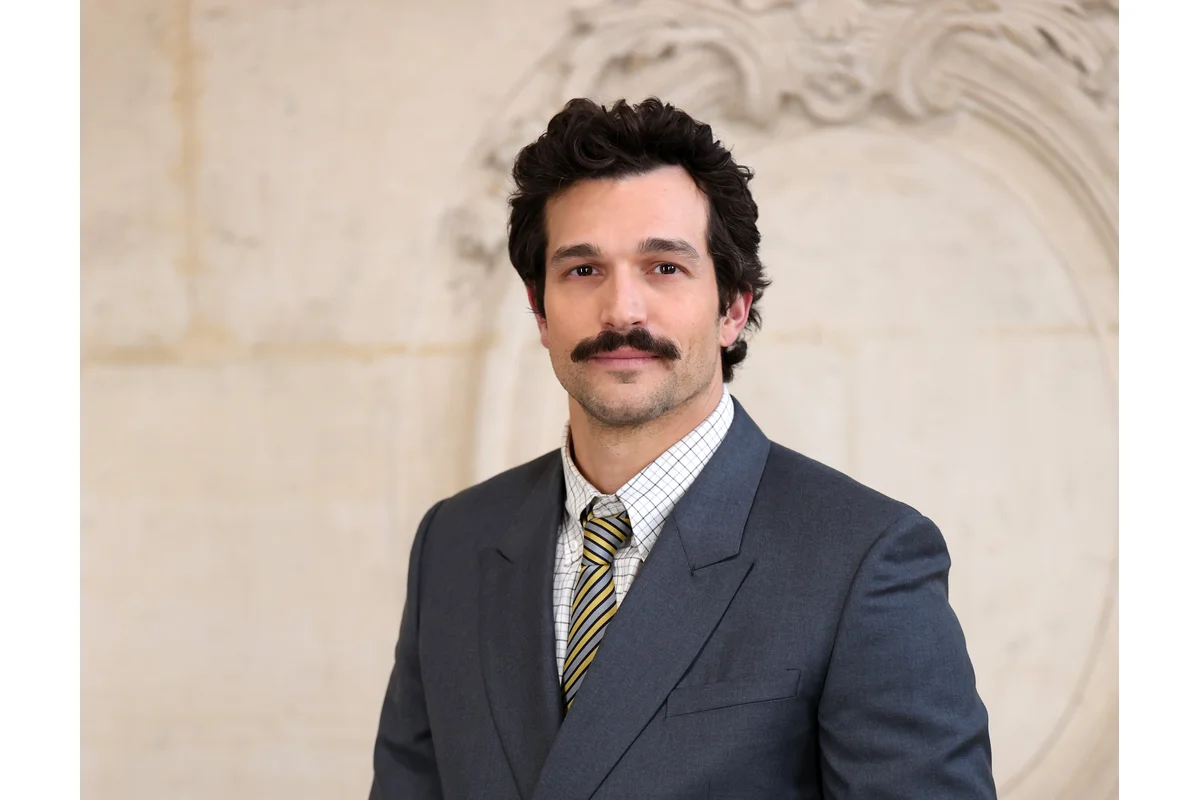
Throughout the awards season, Coogler has openly discussed his battles with imposter syndrome and anxiety, yet his modest demeanor contrasts with his palpable pride. Joined by his team of collaborators, many newly Oscar-nominated themselves, Coogler embraces recognition while maintaining humility, underscoring the collective nature of his successes.
A Decade of Impact Through a Varied Filmography
Since his debut with Fruitvale Station, Coogler’s filmography showcases a determined artist unafraid to tackle complex themes and genres. Fruitvale Station, a Sundance hit and a poignant portrayal of the 2009 police killing of Oscar Grant, was a critical breakthrough. Coogler’s work on Creed revitalized the Rocky franchise with fresh vitality and deep emotional resonance, while Black Panther and its sequel Wakanda Forever became cultural landmarks that reshaped superhero cinema with authentic African influences and stunning visual storytelling.
Sinners stands apart as an original genre mash-up, boldly addressing historical trauma through the lens of a vampire story set in 1930s Mississippi. This film marked Coogler’s first time also producing a directorial project alongside co-founders of Proximity Media, his wife Zinzi Coogler and longtime friend Sev Ohanian.
Collaborative Relationships and Personal Influences
Coogler’s creative journey has been shaped by collaborations with artists such as Michael B. Jordan, who has worked with him from the beginning. Jordan reflects on Coogler’s evolution through the filmmaking stages:
“To go through every stage of filmmaking and creation — writing through the studio system and independent film, from preexisting IP to making original IP — this entire journey just feels full. It feels complete. To see everybody embrace him, for him to get his flowers this way, it’s just a tremendous sense of joy.”
Michael B. Jordan
Working alongside late star Chadwick Boseman profoundly affected Coogler’s growth. He recounts intense artistic exchanges with Boseman during Black Panther’s production:
“Engaging with him on an artistic level, conversations that will forever just be between me and him — I was about 30 years old, stressed, completely out of my mind, sleep-deprived, convinced that the movie wasn’t going to work,”
and reflects on how grief after Boseman’s death taught him to embrace his achievements without destructive self-doubt:
“I’m going to take the lessons from Chad for the rest of my life, bro … I have to see the good in things, see the value in things, and not let impostor syndrome or guilt or negativity rob me of moments with my cast who I love — or with folks who want to say, ‘Hey, good job.’”
Ryan Coogler
Roots in Oakland and Family Background
Coogler’s upbringing in North Oakland fits deeply into his identity. His grandfather and uncle were longshoremen working under the International Longshore and Warehouse Union (ILWU), imbuing Coogler with an early exposure to union values and working-class culture. His mother’s role as a community organizer and his father’s work as a probation counselor at juvenile hall shaped a grounded yet complex perspective on community and social justice.
His wife Zinzi, whom he met in his early teens, remains a pivotal figure personally and professionally. A co-founder of their production company, she shares in the creative vision that propels their work forward. As Coogler puts it: “Whenever I’m here, everybody’s here.” Oakland is more than a hometown; it’s the foundation of his life and art.
From Football Scholarships to Film School Fulfillment
Initially pursuing athletics, Coogler attended Saint Mary’s College on a football scholarship before shifting focus to filmmaking following graduation. His passion for cinema was seeded early, bolstered by Zinzi gifting him professional screenwriting software, Final Draft. This marked a turning point, steering him towards USC’s prestigious film program, where he entered with the ambition to dismantle stereotypical portrayals and speak authentically for his generation, inspired by pioneers like John Singleton and Spike Lee.
Michelle Satter, co-founder of the Sundance Institute’s Screenwriters Lab, where Coogler developed Fruitvale Station, observed:
“You need that hunger — without it, movies don’t get made.”
Michelle Satter
Fruitvale Station: A Story of Tragedy and Social Awakening
Fruitvale Station dramatizes the fatal 2009 police shooting of Oscar Grant, a story amplified in its release by coinciding with high-profile events like the killing of Trayvon Martin and subsequent national unrest. The film garnered critical acclaim at Sundance, secured prominent producers and cast, and earned over $17 million worldwide from a modest $900,000 budget.
Despite the film’s success, Coogler encountered an intense emotional toll. He reflects on feelings of isolation and doubt, common to artists confronted with systemic challenges:
“I did have a need to make that movie, but I was not convinced that I belonged in what comes after that … You can convince yourself that none of this is real: ‘I don’t deserve to be here. This place isn’t for me.’”
Ryan Coogler
He carried the heavy burden of hoping his film would spark meaningful change, a responsibility that weighed heavily on his young shoulders and foreshadowed the ongoing struggles artists face in addressing societal issues through their work.
Reflection on the Continuing Struggle for Justice
Revisiting Fruitvale Station amid current events like the shooting of ICU nurse Alex Pretti by an ICE agent in Minneapolis deepened Coogler’s awareness of the persistent realities of violence against marginalized communities. He emphasizes the urgency and importance of youthful creativity and optimism in filmmaking:
“This is why we need films from people who are naive, the reason why we need films from people who aren’t old enough or jaded enough to understand that art can only do so much … There’s a place for optimism. There’s a place for youthful ignorance. It’s a vital place.”
Ryan Coogler
He speaks poignantly about the trauma inflicted when violence is perpetrated by those entrusted to protect, a powerful theme that echoes throughout his films.
The Influence of Octavia Spencer and Directing Insights
Oscar-winning actress Octavia Spencer, who portrayed Oscar Grant’s mother in Fruitvale Station, recounts the emotional intensity of filming a morgue scene where she had to confront her co-star Michael B. Jordan as her deceased son. Spencer admits:
“It was so realistic that it scared me and I froze. I looked away,”
recalling how Coogler encouraged her to confront the scene head-on:
“Ryan came up to me and he said, ‘I need you to see him. I need you to see him.’”
Octavia Spencer
Coogler credits Spencer with teaching him the importance of creative freedom, recalling how he learned to give actors room to express themselves:
“I was trying to direct her too much … It was perfect. It went straight into the movie.”
This approach influences his direction on later projects, including Wakanda Forever and Sinners.
Taking on Franchise Filmmaking with Creed and Black Panther
Soon after Fruitvale Station’s release, Coogler was tapped to direct Creed. The project’s large scale required navigating studio demands and balancing legacy figures like Sylvester Stallone with a fresh narrative voice. Co-star Tessa Thompson speaks to Coogler’s skill in this environment:
“Watching Ryan navigate that [studio] system, it didn’t feel like he was making the concessions that you think about when you think of smaller indie filmmakers moving into that space … It felt seamless and homegrown and tender.”
Tessa Thompson
Coogler’s meticulous attention to setting and authenticity carried over to his work on Black Panther. He made immersive trips to Africa, learning from cultures in Kenya and South Africa to create the fictional nation of Wakanda with depth and respect. Collaborators like costume designer Ruth E. Carter and production designer Hannah Beachler, both Oscar winners for their work on Black Panther, have continued to be close creative partners.
Ruth E. Carter shares a lighter memory involving Coogler’s wedding attire:
“He was getting married, and he wanted me to see what he was wearing to his wedding and give him some tips … He liked that athletic fit. He didn’t want to wear a tie. I said, ‘Well, just think that your wedding photos will be around forever. Everybody will look at ’em.’”
Carter does not know if he ultimately wore the tie, but Coogler laughs and confirms he did, acknowledging the advice of a legend in costume design.
Honoring Legacy Amid Tragedy in Wakanda Forever
Following Black Panther’s unprecedented global success—with box office earnings surpassing $1.35 billion and an Academy Award nomination for best picture—Coogler faced the heartbreaking loss of Chadwick Boseman in 2020. This tragic event forced a reimagining of the sequel, Wakanda Forever, which acknowledges Boseman’s passing within its narrative.
Coogler reflects on the emotional toll:
“I would look around to people who had been making movies as long as I had been alive, bro, sometimes longer, and they would say: ‘I’ve never seen anything like this,’ … We had to work from the place of being brokenhearted, or else it wouldn’t have got done. … Me and Chad were getting closer, so it was like a wound to the heart. It was like somebody had taken the sun away and we were all these planets floating.”
Ryan Coogler
Angela Bassett, whose portrayal of T’Challa’s mother garnered an Oscar nomination, speaks of Coogler’s unwavering dedication during this time:
“You could just see [Coogler’s] heart, and every day in every way I wanted to give in full measure … Something about him makes you show up for him — and for yourself.”
Angela Bassett
Coogler acknowledges newfound resilience and the deep emotional connection audiences have found with the film:
“I learned that I was more resilient than I give myself credit for — I’ll say that was the biggest thing … And that movie gets watched at home so much more than the other Panther did. I think about that: People may be watching when they want to feel something specific.”
Ryan Coogler
Exploring Family History through the Mississippi Blues Trail
In a more personal journey, Coogler traveled to Mississippi, confronting feelings of shame and unresolved history connected to his great-uncle James Edmonson, who introduced him to blues music and whose life inspired Sinners. Alongside composer Ludwig Göransson, Coogler explored the Mississippi Blues Trail, delving into the complexities of his ancestry and the brutal realities of slavery and Jim Crow.
He admits:
“I had to ask myself, ‘Why is that?’ … Shame had a lot to do with not getting to the South.”
Ryan Coogler
Sinners: A Bold New Chapter
Sinners presents a daring narrative that blends vampire mythology with American blues culture in 1932 Mississippi, becoming a cultural tapestry reflecting ancestry, art, and historical pain. The film also marks Coogler’s debut as a producer on his own directorial work, alongside his wife and co-producer Zinzi and Sev Ohanian.
Michael B. Jordan remarks on the film’s personal imprint:
“I see Ryan the most in this movie.”
Zinzi Coogler adds:
“This film is deeply reflective of him. It’s personal in a way that’s woven into the DNA of every character and every choice.”
Negotiating to reclaim the film’s rights from Warner Bros. 25 years after its initial release reflected Coogler’s strong industry standing, though it sparked debates about studio relations amid Warner Bros.’ recent business challenges. Despite industry skepticism during its release, Sinners proved its value decisively.
Defying Industry Doubts and Engaging Audiences
Coogler welcomed the challenge of releasing Sinners during a turbulent period for Warner Bros., stating:
“I admired Mike and Pam and what they were doing, so I didn’t mind that our film was the one coming at a time when they needed something to work — I actually liked that.”
He further expressed excitement at the prospect of taking risks on original films:
“If somebody said, ‘Do you want it to be your movie?’ Yes! I’d be excited.”
Coogler’s careful attention to the audience experience was evident, involving discussions about technical details like aspect ratios with his cinematographer Autumn Durald Arkapaw, who may soon become the first woman to win the best cinematography Oscar. A Kodak video explaining these choices went viral, viewed by over 17 million people on social media.
He explains:
“I wanted people to know we were thinking about them — that’s it … Sometimes it is nice to know that you were thought of, you know what I mean?”
The Artistic Heart of Sinners and Industry Praise
The film’s surreal montage, intertwining musical genres spanning centuries, has drawn widespread acclaim for its intricate blending of sound, costume, and movement, embodying a collective artistic spirit.
Costume designer Ruth E. Carter highlights the collaborative creative process:
“Everyone who read it from a different discipline could hear the music, could see the movement, could see the costumes … That is the beauty of allowing your team to understand the material but also give them room for their own vision.”
Ruth E. Carter
Marvel Studios president and Black Panther producer Kevin Feige praised the film’s relevance and impact:
“The music was incredibly meaningful to me, and I told Ryan that my jaw was on the floor. It should win best picture for that alone … The Academy doesn’t always, in my opinion, recognize the movies that are most relevant for audiences today. But, boy, did they hit it with this one.”
Kevin Feige
Embracing Leadership and Industry Challenges
Approaching his 40th birthday, Coogler is increasingly recognized as a leader within Hollywood. He cautiously addresses concerns about Warner Bros.’ impending acquisition by Netflix, stressing the importance of job security and union strength:
“What I’m going to always be advocating for is jobs. Strength of opportunity for our union membership and our sister unions. We don’t want to see consolidation lead to less buyers, less jobs, less opportunity — and that tends to be the pattern when these things happen. It is never good for the working filmmaker.”
He acknowledges the uncertain future yet remains hopeful:
“We are eyes and ears open and hoping for the best in a situation that’s not ideal, it looks like.”
Ryan Coogler
Looking Forward: The X-Files Reboot and Future Projects
Currently, Coogler dedicates himself to writing the reboot of The X-Files, a project personally meaningful due to his childhood memories of watching the original series with his mother. The process, though fulfilling, comes with its pressures:
“There are times when I wish that I could separate and have a day where I’m not anxious about having to deliver the draft,”
he admits.
His path echoes early moments in his career when he connected with Vince Gilligan at the Deauville American Film Festival in 2013, learning from the Breaking Bad creator’s experience with The X-Files.
Coogler recounts:
“Vince gave me a couple hours of advice over Zoom and answered all the questions I had — I’ve got them all in my notebook, and I go back to it often.”
Ryan Coogler
Legacy of Mentorship and Breaking Boundaries
Coogler’s impact extends beyond his own work, elevating collaborators who have achieved long-overdue recognition such as Sylvester Stallone, Angela Bassett, Ruth E. Carter, and Delroy Lindo. Demonstrating a mix of modesty and pride, Coogler attributes guidance and inspiration to his mentors, recalling a conversation with Chris Nolan about the enduring youthfulness in collaboration:
“I remember my first conversation with Chris Nolan — he was talking about his experiences with Michael Caine, and how they work together all the time … These people, bro, they have a youthfulness to them. It is so clear. They are ageless. It is so infectious, and it gives you hope.”
Ryan Coogler
Looking ahead, Coogler expresses a desire for longevity in his career rivaling those he admires:
“I realized with that conversation: I’d be blessed to work as long as Sly or Delroy … I want to work for a long time.”
Ryan Coogler
