
Dwayne Johnson sci-fi flop Southland Tales, released in 2006, remains one of the most bewildering films in the actor’s career. Directed by Richard Kelly, the movie baffled audiences and critics alike, including esteemed Chicago Sun-Times critic Roger Ebert, who expressed deep frustration with its convoluted plot and chaotic execution.
The Ambitious Yet Polarizing Sci-Fi Vision of Southland Tales
Richard Kelly, known for the cult hit Donnie Darko, returned to science fiction with Southland Tales, a sprawling film set in a dystopian America reeling from Middle Eastern wars that escalated into World War III. The story unfolds within a nation teetering toward a police state, where political chaos intertwines with surreal elements. The film uses multiple protagonists to weave a complex, often perplexing narrative.
The central character, Boxer Santaros, is a Republican movie star who vanishes and later reappears with amnesia. Another key figure, Krysta Now, is an adult film actress who seeks to exploit Boxer’s obliviousness for personal gain. The plot also follows apparent twin brothers Roland and Ronald Taverner: one a cop and the other a neo-Marxist revolutionary. Overseeing much of the political intrigue is Baron Von Westphalen, an oligarch leveraging control over Fluid Karma, a new source of perpetual energy.
Boxer’s amnesia leads him to option a screenplay mirroring his lost days, blurring fiction with reality. Meanwhile, Westphalen maneuvers to maintain sway over presidential hopeful Bobby Frost. The neo-Marxists, seeking to ignite unrest, plot against the Republican establishment. Krysta’s attempt to use a sex tape to expose moral hypocrisy pulls her deeper into the staggeringly complex revolutionary plot. Amid escalating tensions, the film reveals a time travel scheme and overlapping realities, mirroring narrative styles that echo Kelly’s earlier work.
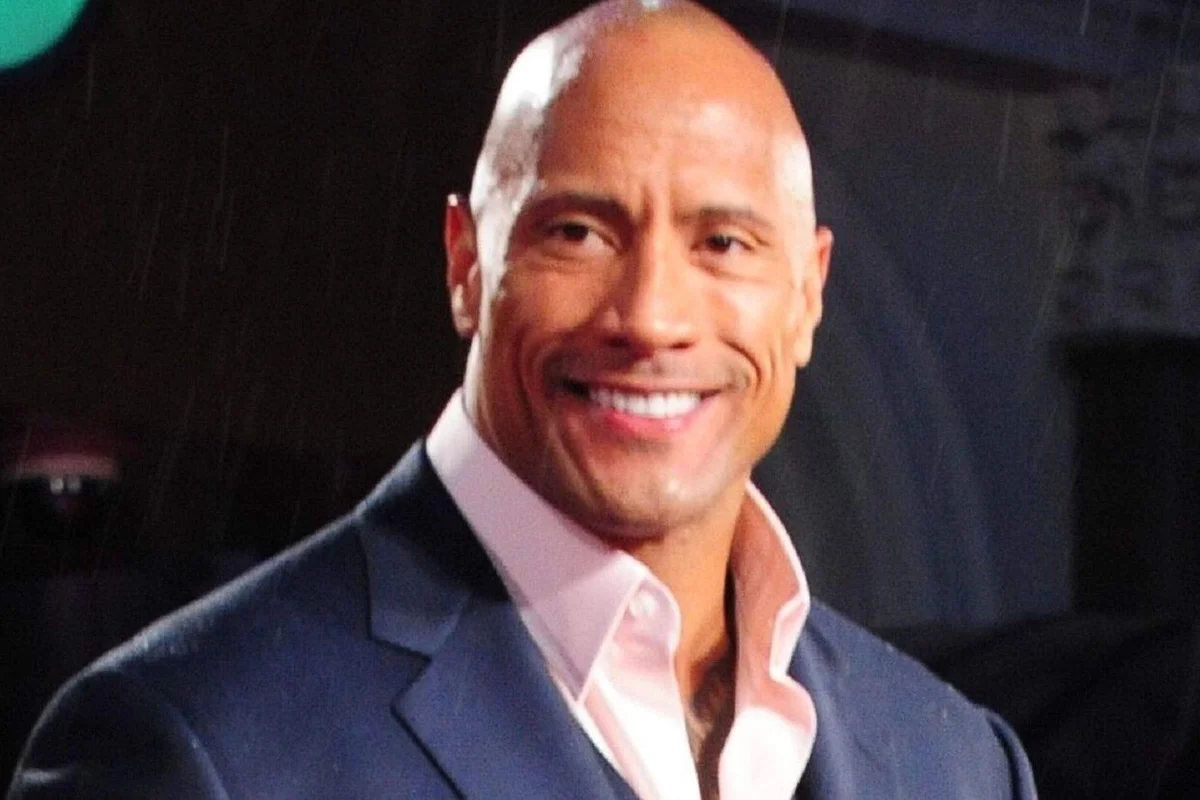
Despite the ambitious premise, Southland Tales struggled tremendously upon release, failing to resonate with critics and viewers. It grossed a mere $374,000 against a $17 million budget, underscoring its commercial failure.
Roger Ebert’s Harsh Critique of a Messy Production
Roger Ebert’s response to Southland Tales was one of disbelief and disappointment. After viewing the film at the 2005 Cannes Film Festival, he described the experience as disorienting and frustrating, highlighting the disastrous screening atmosphere filled with boos. Ebert compared it to the notorious reception of The Brown Bunny.
After I saw the first cut of Richard Kelly’s Southland Tales at Cannes 2005, I was dazed, confused, bewildered, bored, affronted and deafened by the boos all around me, at the most disastrous Cannes press screening since, yes, The Brown Bunny.
– Roger Ebert, Film Critic
Ebert viewed the theatrical cut, which trimmed down some of the film’s elaborate characterizations, as an even greater mess. He acknowledged Kelly’s free-spirited approach but found the story impossible to follow, conceding defeat in attempting to summarize the plot.
I give up. A plot synopsis would require that the movie have a plot.
– Roger Ebert, Film Critic
His disdain extended to the dialogue, which he described as mostly unintelligible and awkwardly timed, as if aiming for wit but missing the mark.
The dialogue consists largely of statements that are incomprehensible, often delivered with timing that is apparently intended to indicate they are witty.
– Roger Ebert, Film Critic
The script’s strange and sometimes lewd lines—including those delivered by Krysta Now and Boxer Santaros—often resembled the camp of adult parody more than traditional sci-fi, which polarized viewers. For fans expecting a work in the vein of Donnie Darko, the film’s sprawling ambition led to confusion rather than clarity. Ebert admitted his response was
“no more than a fevered rant,”
making clear he was not among the viewers who could appreciate the film’s eccentricities.
The Film’s Lynchian Influences and Stylistic Parallels
Southland Tales exhibits clear influences from the films of David Lynch, particularly Mulholland Drive. Themes such as dual identities, amnesia, time travel, and surreal blue artifacts evoke Lynch’s signature style. Kelly seemed to channel the enigmatic atmosphere of Lynch’s work, producing a narrative heavy with symbolic imagery and shifting realities.
Some critics noted this as a bold, if flawed, homage to one of the most mind-bending directors in cinema. Even Roger Ebert, despite his overall condemnation, recognized the film’s vision and ambition.
One notable scene mirrors Mulholland Drive’s key narrative moments, showcasing a woman holding a mysterious blue orb reminiscent of Lynch’s signature artifacts. This connection invites interpretation that Southland Tales was Kelly’s effort to grapple with similar complexities seen in Lynch’s storytelling.
While David Lynch’s films are renowned for their deliberate ambiguity and dreamlike logic, Southland Tales struggles under the weight of its own complexity. Still, it remains a unique entry in Dwayne Johnson’s filmography—a cerebral and apocalyptic comedy thriller that contrasts sharply with his typical action roles.
Additionally, Southland Tales highlights the chemistry between Johnson and co-star Seann William Scott, recalling their earlier collaboration in 2003’s The Rundown.
A Cult Movie Full of Contrasting Moments and Cultural Tidbits
Despite its many flaws, Southland Tales offers moments that have endeared it to certain viewers over time. The film’s fragmented style results in scattered comedic beats, such as the dry exchanges between Johnson and Scott, a surreal music video drug trip featuring Justin Timberlake, and Sarah Michelle Gellar’s quirky portrayal of an adult actress who feigns superficiality.
The finale’s apocalyptic vision continues to divide audiences, eliciting bafflement decades later. Interestingly, some of the film’s social commentary about political unrest and media manipulation has aged in a way that feels more relevant than many 2000s contemporaries.
For fans open to its oddball tone, Southland Tales becomes less a puzzle to solve and more an experience to absorb. Mixing sci-fi, mystery, philosophy, satire, and political allegory, the film acts more like a mood or vibe than a conventional story.
This status has turned the film into something of a Hollywood meme, emblematic of what happens when a director’s ambition outpaces their ability to craft a coherent narrative. Taking it as a surreal comedy vehicle for Johnson rather than a Donnie Darko successor allows the movie to work on a different level, one Roger Ebert clearly did not embrace.
Legacy of Southland Tales in Dwayne Johnson’s Career
Southland Tales stands out as the most unusual project in Dwayne ‘The Rock’ Johnson’s otherwise mainstream and action-heavy filmography. It remains a bold, if deeply flawed, attempt at a cerebral sci-fi thriller that challenges viewers with its dense plot and unconventional style.
Although it failed at the box office and frustrated critics like Roger Ebert, the film has maintained a cult following intrigued by its surreal narrative and offbeat elements. As Johnson’s career continued to rise with major franchises such as Jumanji and Fast and the Furious, Southland Tales serves as a reminder of the risks he has taken, occasionally stepping far outside the typical action genre.
Its divisive reception and status as an infamous flop underscore the difficulties of balancing experimental storytelling with audience expectations—especially when contrasting a star known for blockbusters with a complex, unconventional script.
Ultimately, Southland Tales endures as one of Hollywood’s most perplexing sci-fi films of the 2000s, capturing a restless period in Johnson’s career and leaving a lasting impression on viewers willing to engage with its chaotic vision.
