
Emerald Fennell’s adaptation of Emily Brontë’s Wuthering Heights brings a raw, urgent energy to the timeless story of love and vengeance, set amid the misty moors of Yorkshire. The film, released in 2026, highlights the tumultuous passion between Catherine Earnshaw, portrayed by Margot Robbie, and Heathcliff, played by Jacob Elordi, exploring their dark desires and emotional cruelty with an intensity rarely seen in previous versions. This reworking of the novel’s first half aims to expose hidden fantasies beneath the traditional narrative, making “Emerald Fennell Wuthering Heights” a distinct cinematic experience.
Plot and Character Dynamics in Fennell’s Vision
The story begins in Cathy’s childhood when her father brings an impoverished Heathcliff home, raising him as both a sibling and a pet, creating a complex foundation for their bond. Their love remains unspoken into adulthood until Cathy chooses to marry the wealthy Edgar Linton, inciting Heathcliff’s bitter departure. Years later, he returns transformed—affluent and refined but driven equally by love and desire for revenge. Fennell’s adaptation makes explicit the tangled cruelty and raw sexuality between Cathy and Heathcliff, clarifying the push and pull of their relationship in a way previous adaptations have left subdued.
The film credibly portrays this painful dynamic, underscored by the brooding Heathcliff who leans more toward contemplative darkness than unrelenting nastiness. Margot Robbie’s Cathy radiates fierce energy and vulnerability, while Shazad Latif’s Edgar is a steady, practical counterforce, whose devoted love unfortunately invites harshness rather than gratitude. Additionally, Alison Oliver’s portrayal of Isabella Linton stands out, capturing a theatricality that balances comedic charm with the tragic elements of lust and degradation. Meanwhile, Nelly, played by Hong Chau, steps forward from her traditional narrator role to become integral in depicting the cycle of abuse, driven by her own quietly felt love.
Visual Style and Cinematic Approach
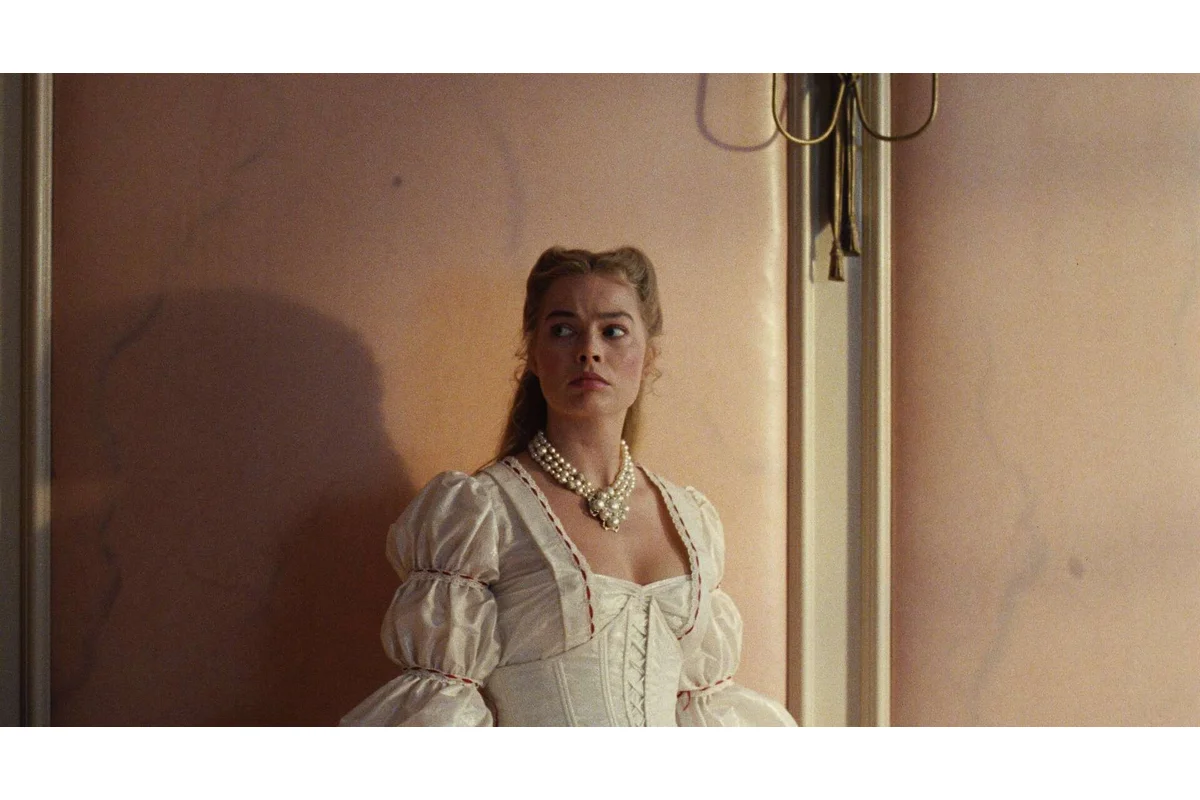
With Linus Sandgren’s lush cinematography bathing the film in cool, blue tones, and Suzie Davies’s artfully artificial set design, the movie evokes a dreamy, almost surreal atmosphere reminiscent of classic Hollywood adaptations, including William Wyler’s 1939 Wuthering Heights. Yet Fennell’s work intentionally breaks from tradition, incorporating anachronisms and Brechtian theatrical elements to create a deliberately modern, even playful, sensibility. This mixture often pushes the film toward camp, flirting with humor without fully surrendering to irony, giving it an idiosyncratic tone that can range from poetic to provocatively loud.
Despite these rich visual and stylistic choices, Fennell’s direction encounters limitations, particularly in the film’s early sequences. These segments rely heavily on creative blocking and pacing to carry emotional weight but occasionally disappoint due to uneven scene construction and muted tonal variety. The deliberate, muted color palette combined with sometimes awkward cuts causes the first act to feel slow and conventional. It is only as Cathy’s life becomes more colorful and fraught with tension post-marriage that the visuals and camerawork fully come alive, though the film’s latter half still struggles against overextension.
Explicit Exploration of Desire and Power
Unlike previous adaptations that emphasized the novel’s emotional nuances through restrained passion, Fennell’s Wuthering Heights unapologetically foregrounds sexual tension, transforming lust into a central narrative force. Where Brontë’s writing often suggested desire with careful subtlety, this version reveals it with unvarnished boldness, illustrating the characters’ torment through literal physicality. The film portrays Cathy and Heathcliff’s consummated relationship repeatedly, fusing cruelty and eroticism in a way that is both unsettling and magnetic.
This directness removes subtext in favor of an in-your-face intensity that heightens the film’s conflicted atmosphere—an emotional cocktail that is at once primal and brutal. The infamous love story becomes one of ugliness and pain, marked by petty vengeance and inhumanity, reflecting a doomed devotion that feels urgent but fraught. Fennell’s approach forces viewers to confront the sordid depths of these characters’ passions without romanticizing them.
Modern Soundscapes and Musical Texture
Enhancing the film’s contemporary sensibility, the score by Anthony Willis layers lush electronic textures with an atmospheric depth, complementing the sharp contrast between old and new that permeates the production. In addition, pop artist Charli XCX contributes songs that infuse the story with modern rhythms, marrying the historical setting to twenty-first-century concerns and emotions. These auditory elements help underscore the film’s aesthetic goals, solidifying its place as a bold, modern reinterpretation rather than a traditional period piece.
Memorable Performances Amid Directorial Challenges
The cast delivers compelling portrayals that elevate the film’s complex emotional terrain. Margot Robbie’s Cathy is unpredictable and fierce, capturing the character’s volatility and deep yearning convincingly. Jacob Elordi’s Heathcliff, more brooding than monstrous, conveys the lingering pain of rejection and the magnetic pull of obsession. Shazad Latif’s Edgar provides a measured counterpoint with a love that is earnest but powerless, often met with cruelty. Alison Oliver’s Isabella offers a scene-stealing mix of theatrical flair and tragic complexity, while Hong Chau’s Nelly adds gravitas through her role as a witness to abuse shaped by unresolved affection.
Despite these strong performances, Fennell’s direction sometimes lacks the refinement necessary to balance the film’s ambitions. Her background in television becomes apparent through uneven pacing, occasional clunky blocking, and a lack of cinematic rhythm, particularly in the film’s earlier scenes. These flaws leave the narrative feeling extended and laborious at times, weakening the film’s overall impact despite its striking visual ambition and narrative boldness.
The Enduring Appeal of a Dark, Passionate Classic
Emerald Fennell’s Wuthering Heights extends the legacy of Brontë’s novel by exploring the obsessive and destructive aspects of love with unprecedented candidness. This adaptation’s deliberate excess in style and sexuality marks it as both a creative risk and a statement about how classic stories can be reexamined for modern audiences. While its uneven execution may divide viewers, its passionate core captures the essence of Heathcliff and Cathy’s doomed relationship in a way that feels urgent and contemporary.
As audiences engage with the film’s exploration of desire, vengeance, and cruelty, the continued fascination with Brontë’s novel is reaffirmed, proving the power of its emotional extremes. For those invested in the story’s broader generational saga, hopes remain that future adaptations will bring the later chapters of the novel to life with equal boldness, further enriching this enduring literary heritage.
