
The Sydney premiere of Emerald Fennell Wuthering Heights showcased an impressive spectacle featuring stars Margot Robbie and Jacob Elordi, with Hailey Bieber making a brief appearance. Anticipation had built for over a year and a half as trailers, interviews, and detailed costume design teased the film’s unique interpretation, generating widespread debate even before its release.
The adaptation sparked a wave of pre-release controversy reminiscent of the reaction to Baz Luhrmann’s 2013 The Great Gatsby, fueled by moral panic toward the film’s content and style prior to public viewing.
Early Reactions Focus on Fidelity and Sensuality
Now in cinemas, the central question shifts from whether the film is good or bad to how faithfully it reflects Emily Brontë’s 1847 novel. Many early opinions criticized the film for being overly sexualized, heavily stylized, and insufficiently reverent to the 19th-century Gothic classic. Online discourse suggested that experiencing Wuthering Heights first through Fennell’s provocative lens might constitute a cultural misstep.
Despite rising concerns about a literacy crisis, viewing this sensuous and stylized adaptation without immediately reading Brontë’s 416-page novel does not equate to a moral failing.
A Bold, Theatrical Opening Sets the Film’s Tone
Fennell begins the film with an unsettling scene that signals her unconventional approach: breathy, animal-like noises initially seem sexual but resolve into the sounds of a public hanging witnessed by a young Cathy Earnshaw and her housekeeper, Nelly. The scene is grotesque, theatrical, and staged amid jeering crowds and Punch and Judy puppetry. This introduction firmly establishes the film as a feverish, almost fairytale-like reimagining rather than a restrained Gothic adaptation, warning viewers against expecting strict fidelity.
Adapting Memory Over Text: Fennell’s Personal Interpretation
The film distances itself from faithful adaptation, instead presenting Brontë’s story as filtered through adolescent obsession, erotic intensity, and romantic extremity. It condenses the novel’s sprawling generational saga to spotlight the destructive relationship between Cathy and Heathcliff, compressing complex themes like class anxiety and cyclical violence into a more immediate and cinematic narrative.
Where Brontë’s characters often embody moral corruption, Fennell elevates them to operatic figures defined by doomed desire. This reinterpretation shifts the emotional core of Wuthering Heights, making it less a social tragedy and more a stylized exploration of romantic obsession.
Character Portrayals Highlight Emotional Extremes
Following the initial shock, the film adopts a Gothic pantomime style. Cathy and Nelly return to Wuthering Heights and encounter Heathcliff, who was brought home by Cathy’s volatile father. Their childhood friendship deepens into an intense fixation.
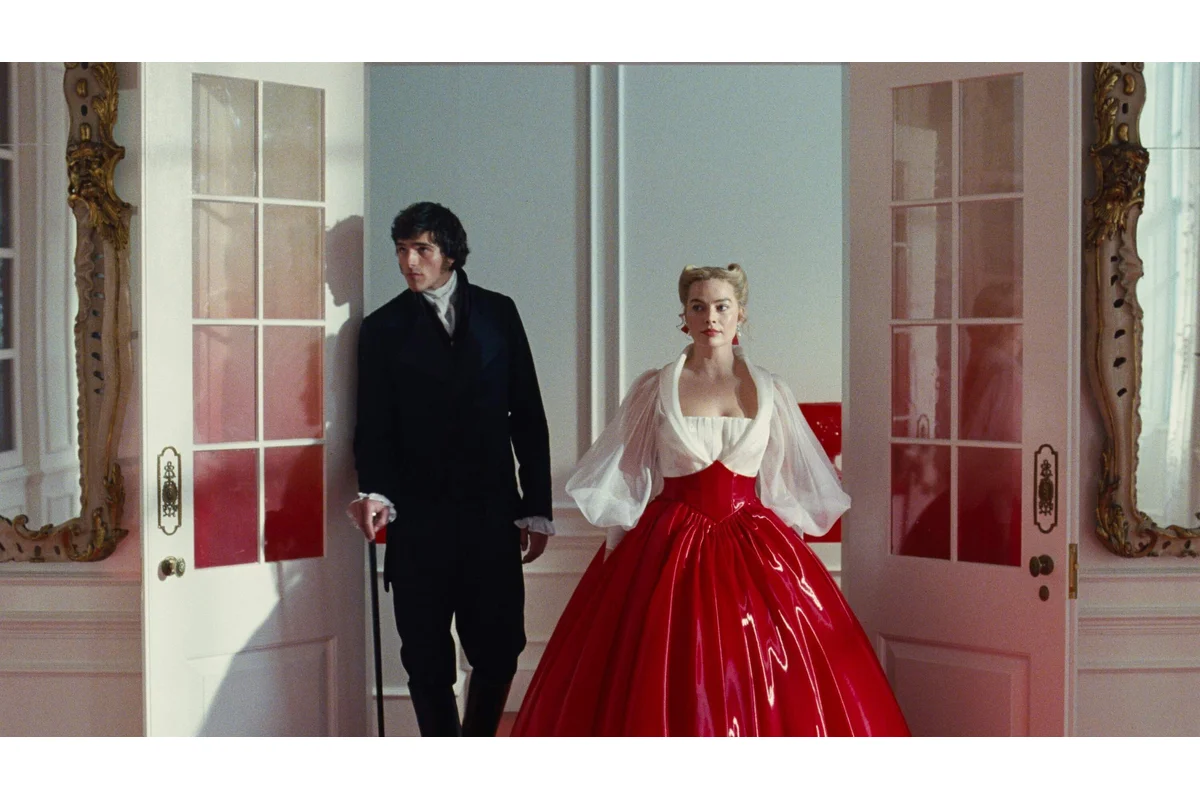
As the story progresses, Margot Robbie and Jacob Elordi assume the roles. Robbie’s depiction of Cathy leans into vanity and volatility, portraying her as a tragic heroine rather than a morally destructive force. Elordi’s Heathcliff is crafted as a romantic antihero, contrasting with the novel’s depiction of him as a wild outsider.
Visual Storytelling Embodies Fantastical Elements
The film’s visual world departs sharply from Brontë’s social realism. Thrushcross Grange appears as an exaggerated symbol of luxury, filled with lacquered furniture, fur-lined staircases, and walls that resemble padded skin. The moors lose their socio-economic significance, instead serving as theatrical settings for heightened emotional exchanges.
This adaptation focuses less on inheritance and class conflict, centering instead on the visceral themes of bodies, sexuality, death, and longing performed in vivid, often overwhelming ways.
Artistic Risks and Audience Reactions
The film’s success is less about fidelity and more about its mood and vision. It stages Brontë’s central lovers as figures in a delirious fantasy rather than as tragic agents caught in social forces. A notable inconsistency is the film’s tone: after a sexually charged start, it shifts abruptly in the final act from camp excess to sincere tragedy, a move likely to divide viewers.
For a director known for the provocative Saltburn, the film’s eroticism is surprisingly muted, suggesting a tentative embrace of the sensual over the explicit.
The Enduring Power of Brontë’s Story Through Adaptation
Emerald Fennell’s Wuthering Heights stands out for its strangeness and commitment to a singular artistic vision, resisting dismissal as mere style without substance. Concerns that younger viewers will accept this controversial film as the definitive version misunderstand the nature of adaptation. Classic works endure because they can absorb and survive radical reinterpretations.
No film can capture all facets of Brontë’s novel—its gothic horror, critique of class, generational trauma, and romantic turbulence exist in tension with one another, each element pulling the story in different directions.
Fennell’s version is not faithful to the entire novel, nor does it claim to be. Instead, it captures the essence of one thread in the book’s cultural afterlife: the intoxicating memory of youthful passion and the myth of doomed love. It invites viewers to embrace the film as a fever dream, while allowing the novel to remain the complex, unruly masterpiece it has always been.
Implications for Future Adaptations and Audience Engagement
This bold adaptation challenges viewers to reconsider how classic literature can be retold through modern sensibilities. By blending stylized aesthetics with intense emotional focus, Fennell broadens the conversation around Gothic romance and its relevance today. The film may spark renewed interest in Brontë’s original text, encouraging audiences to explore beyond the cinematic version.
Though provocative and polarizing, Emerald Fennell Wuthering Heights reasserts the enduring power of literary classics to inspire fear, desire, and artistic reinvention across generations.
