
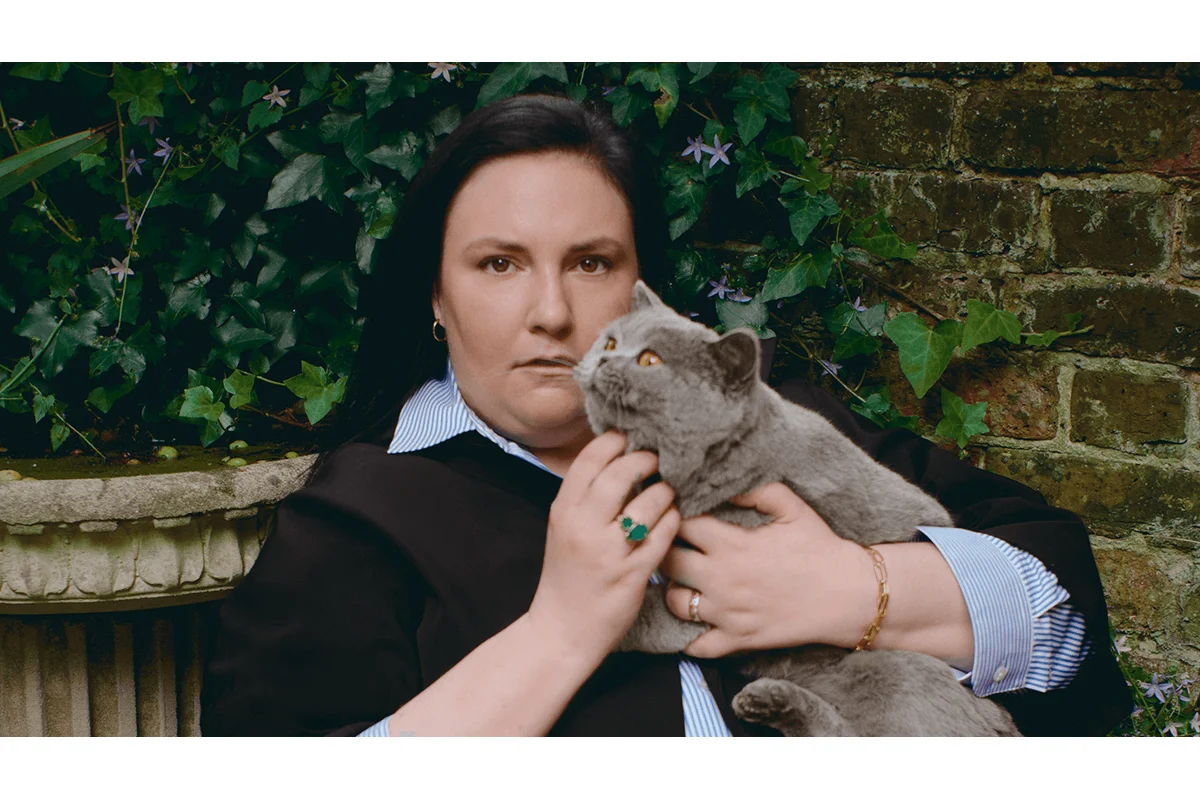
After moving to London, Lena Dunham found herself confronting loneliness amid unfamiliar surroundings, which led to an unexpected realization triggered by her pets. Experiencing a void left by the absence of close friendships, Dunham’s story illustrates how her evolving relationship with her cats provided a much-needed perspective, capturing the essence of her “Lena Dunham cats reality check.”
Loneliness and the Search for Genuine Connections
In her first full year in London, Dunham noticed the quiet hours replacing the chaotic noise she once knew from family and friends back home. Rather than engaging in lively social interactions, her days increasingly involved watching confrontations unfold on TV shows and social media, filling her with a sense of emotional toxicity. While she managed to build professional relationships, the kind of genuine friendships depicted in films like Four Weddings and a Funeral—where platonic bonds like those of Hugh Grant’s character with a female friend stand out—eluded her.
Crafting a New Social Circle: The Role of Her Pets
Dunham recognized that friendships don’t always have to be between humans. Observing reality TV girl groups known for their backstabbing and drama, she acknowledged similar traits among cats—disdainful stares and theatrical temperaments—that seemed to mirror those dynamics. Already sharing her home with two dogs, Ingrid and Cornichon, she aimed to create an equally varied circle of companions, complete with diverse personalities. However, she quickly learned that British cats operate very differently from American ones, adding a new layer of complexity to her domestic life.
The Search for the Perfect Cat Led to a Croydon Encounter
The first cat came from a local animal rescue in Croydon, an area famed for being the birthplace of both Kate Moss and the “Croydon Facelift” hairstyle. Dunham’s husband, Luis, was skeptical about the trip but agreed to drive her there for her birthday after noticing her repeated attempts to arrange social plans. Upon arrival, they were greeted by a woman—a figure exuding heavy day-drinking vibes—who presented a mismatched group of kittens in a box, far from the Maine coon breed advertised. Luis immediately noticed, “That’s not a Maine coon.”
The seller, however, defended the claim, insisting, “Actually, there are 33 kinds,” while conveniently omitting the substantial £380 adoption fee.
The Influence of Public Apologies in Modern Culture
Dunham reflects on the prevalent culture of public apologies among influencers, characterized by the phrase,
“We’re all human, we all make mistakes.”
This defense often surfaces when controversies arise, such as feuds, infidelity, or business missteps. Her observation highlights how commonplace such statements have become, echoing a sentiment of flawed humanity that permeates both public figures and private lives alike.
“We’re all human, we all make mistakes.” – Lena Dunham
How Her Cats Helped Ground Her Perspective
Amid the emotional turbulence, Dunham discovered that the daily realities of caring for her animals provided grounding. The unpredictable behavior, independence, and attitude of her cats served as poignant reminders that relationships, whether with humans or pets, come with challenges and lessons. This experience became a catalyst for her personal growth, offering a way to cope with feelings of isolation and to reevaluate her understanding of companionship.
Significance of Dunham’s Experience and What Lies Ahead
Lena Dunham’s journey from grappling with social disconnection to embracing her “friend group” of animals illustrates a broader commentary on human relationships, especially in times of change and uncertainty. Her story suggests that redefining companionship, including the acceptance of unconventional friendships, can have therapeutic value. Moving forward, Dunham’s adaptation to life abroad, reflected in her interactions with pets, may inspire others facing similar challenges to find solace beyond traditional social circles.
