
Bill Murray‘s attempt to establish himself as a serious actor with the historical drama The Razor‘s Edge nearly derailed his career two decades before he received praise for his dramatic roles. Released in 1984, the film was a commercial failure and sharply criticized, including by prominent critic Roger Ebert, despite Murray’s efforts to reshape his identity beyond comedy.
Though Murray’s dramatic aspirations stumbled, this misstep ironically paved the way for his iconic role in Ghostbusters, which debuted just months earlier, helping solidify his status as a beloved comedic star.
The Ambitious Yet Unsuccessful Bid to Break Dramatic Ground with The Razor’s Edge
The Razor’s Edge was adapted from W. Somerset Maugham’s celebrated 1944 novel and marked its second film version following the 1947 rendition starring Tyrone Power. Bill Murray co-wrote the screenplay alongside director John Byrum during an 18-month period filled with cross-country travel across the United States. His dedication reflected a personal passion to depart from his comedic image and demonstrate his range as a serious actor.
Murray took on the protagonist Larry Darrell, a World War I veteran struggling to recover from combat trauma while seeking spiritual enlightenment. Larry travels from Paris to the Himalayas, reflecting the film’s central theme centered around the Hindu maxim:
The path to salvation is narrow and as difficult to walk as a razor’s edge.
This spiritual quest formed the emotional core of the story.
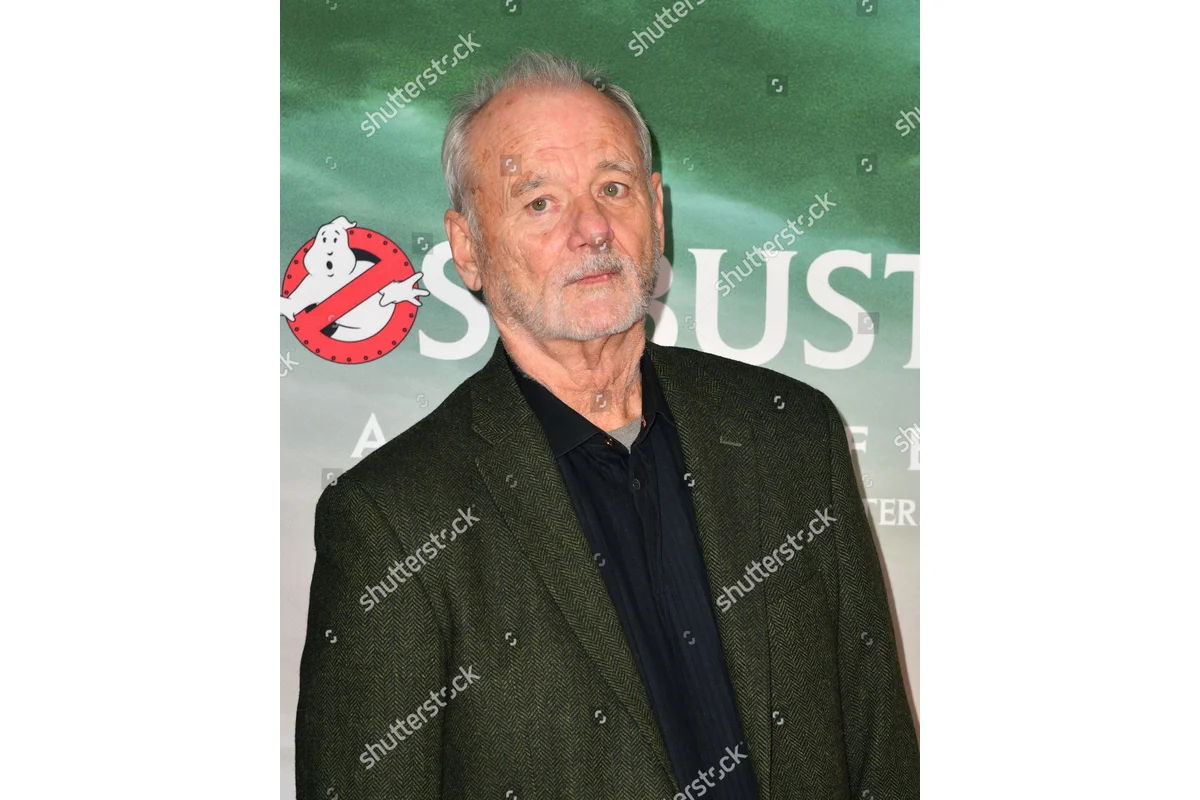
Determined to feature prominently in the film’s release, Murray reportedly refused to appear in the blockbuster Ghostbusters unless the studio agreed to distribute The Razor’s Edge. Columbia Pictures consented to this condition, and Ghostbusters premiered in June 1984, becoming an enormous box office success and firmly establishing Murray as a comedic icon. However, when The Razor’s Edge hit theaters four months later, it failed both commercially and critically, grossing only $6.6 million against its $12 million budget and receiving mixed reviews.
Analyzing Roger Ebert’s Dissection of Murray’s Dramatic Turn
Roger Ebert awarded The Razor’s Edge two and a half stars out of four, framing the film as somewhat anachronistic—more akin to a 1960s hippie drama misplaced in an earlier era. He critiqued Murray’s portrayal of Larry Darrell, describing his approach as too passive and overly self-ironic to fully engage the audience. Ebert observed,
But the flaw in this movie is that the hero is too passive, too contained, too rich in self-irony, to really sweep us along in his quest. And that, I’m afraid, is the fault of Bill Murray, who plays the hero as if fate is a comedian, and he is the straight man.
Ebert further elaborated on Murray’s performance, highlighting the dissonance between Murray’s dramatic intentions and his delivery:
“Murray, who is usually such a superb actor, has taken the wrong path in this performance, giving us moments when everybody in the film and in the audience is moved, except Murray. There are times when he seems downright obstinate in his performance, giving us a ramrod posture, a poker face, and eyes that will not let us inside.
Perhaps, in his desire to make a break with the comic roles we know him for, he was overreacting. That makes even more curious the moments in the film when he allows himself to be funny: The comic side of his character doesn’t seem to be coming out of anything.”
Despite being one of the relatively more favorable reviews, Murray took Ebert’s feedback as a personal attack, misunderstanding the nuance of the critique.
Bill Murray’s Reaction and Ongoing Exchange with Roger Ebert
Murray later spoke about his frustration with the film’s reception in a 2010 interview with NJ.com, revealing lingering resentment over Ebert’s commentary. He stated:
“A lot of work went into that, and nobody saw it. But if you haven’t had an experience like that, you haven’t had a career. I don’t know, what are you going to do? Razor’s Edge came out, Roger Ebert said there should be a law that Bill Murray can only do comedies.” – Bill Murray
While Ebert had criticized Murray’s performance style, he never advocated for barring the actor from dramatic roles. Years earlier, in a 1993 interview with Entertainment Weekly, Murray admitted in hindsight that trying to perform a period drama likely clashed with audience expectations and studio preferences for a contemporary adaptation at the time.
Murray confronted Ebert in person, joking about the criticism and leveraging their shared Chicago roots for a playful exchange:
“I saw him a while ago. I said, ‘Oh yeah, Roger? Oh yeah?’ But we know each other; he’s a Chicago guy, too, so I can do that.” – Bill Murray
This lighthearted interaction did not prevent future disagreements. In his one-star review of the 1988 Christmas comedy Scrooged, Ebert described Murray’s character Frank Cross as:
“[Frank] Cross is a thoroughly miserable wretch, played by [Bill] Murray in a thoroughly miserable mood. What seems to be missing are the lightness and good cheer that lurk beneath the surface of most Murray performances. He’s often gruff in his movies, but in a way that lets you know he’s just kidding. This time, he doesn’t seem to be kidding.”
When Murray responded on Rogerebert.com, he challenged the harshness of the review, suggesting the film was not as bad as portrayed:
“How do you plan to explain your one-star review of Scrooged? It wasn’t that bad. It had some good stuff in it. Watch it on video, and you’ll see…I thought maybe you had some inside information, you know, about an unhappy set or something.” – Bill Murray
From Early Setbacks to Established Dramatic Success
Despite the initial critics’ rebuke especially surrounding The Razor’s Edge, Bill Murray’s career trajectory later shifted toward critical acclaim in dramatic roles. Films such as Ed Wood, Rushmore, Lost in Translation, The Royal Tenenbaums, Broken Flowers, Get Low, Hyde Park on Hudson, Moscow on the Hudson, and On the Rocks showcased his versatility and depth, winning both audience and critical praise.
In fact, Ebert himself lauded Murray’s performance in Lost in Translation, conceding Murray’s skill in creating complex characters far removed from his comedic persona. Ebert praised the nuanced portrayal, writing:
“These are two wonderful performances. Bill Murray has never been better. He doesn’t play ‘Bill Murray’ or any other conventional idea of a movie star, but invents Bob Harris from the inside out, as a man both happy and sad with his life — stuck, but resigned to being stuck.”
Murray’s career embodies the challenge and risk inherent in walking a metaphorical “razor’s edge” between comedy and drama, underscoring how his artistic persistence ultimately reshaped his legacy in Hollywood.
