
Elle Fanning rose to prominence in the recent film Rosebush Pruning, a high-gloss satire directed by Karim Aїnouz that premiered at the Berlin Film Festival. The movie explores the twisted dynamics of the Taylor family, affluent American expatriates living on the Catalonian coast, blending sharp social commentary with a dark, unsettling tone marked by intense character conflicts and unsettling family secrets.
A Dysfunctional Family Set Against a Glamorous Backdrop
The Taylor family relocated from New York to the Catalonia coast six years ago but remains estranged from their surroundings, trapped in a bubble of privilege and self-absorption. Their late mother, portrayed by Pamela Anderson, was drawn to the region by her fascination with Antonio Gaudí’s architecture. Her widower, Tracy Letts, along with their four adult children—Ed (Callum Turner), Anna (Riley Keough), Jack (Jamie Bell), and Robert (Lukas Gage)—venerate the area as the fictional birthplace of Spanish designer Cristóbal Balenciaga, an ironic mistake highlighting their detachment, since Balenciaga was actually from the Basque Country on Spain’s opposite coast.
Plot Inspired by Classic Italian Cinema and Greek Absurdism
The movie draws loose inspiration from Marco Bellocchio’s 1965 film Fists in the Pocket, which criticized bourgeois family structures, and features a screenplay by Efthimis Filippou, known for his work with Yorgos Lanthimos. The film follows the same darkly absurdist vein, with a dysfunctional family revolving around a blind father figure, a young man suffering from epileptic seizures, and a scheme involving multiple murders driven by the desire to liberate Jack (Jamie Bell) so he can live freely with his girlfriend Martha (Elle Fanning).
Complex Family Dynamics and Social Satire
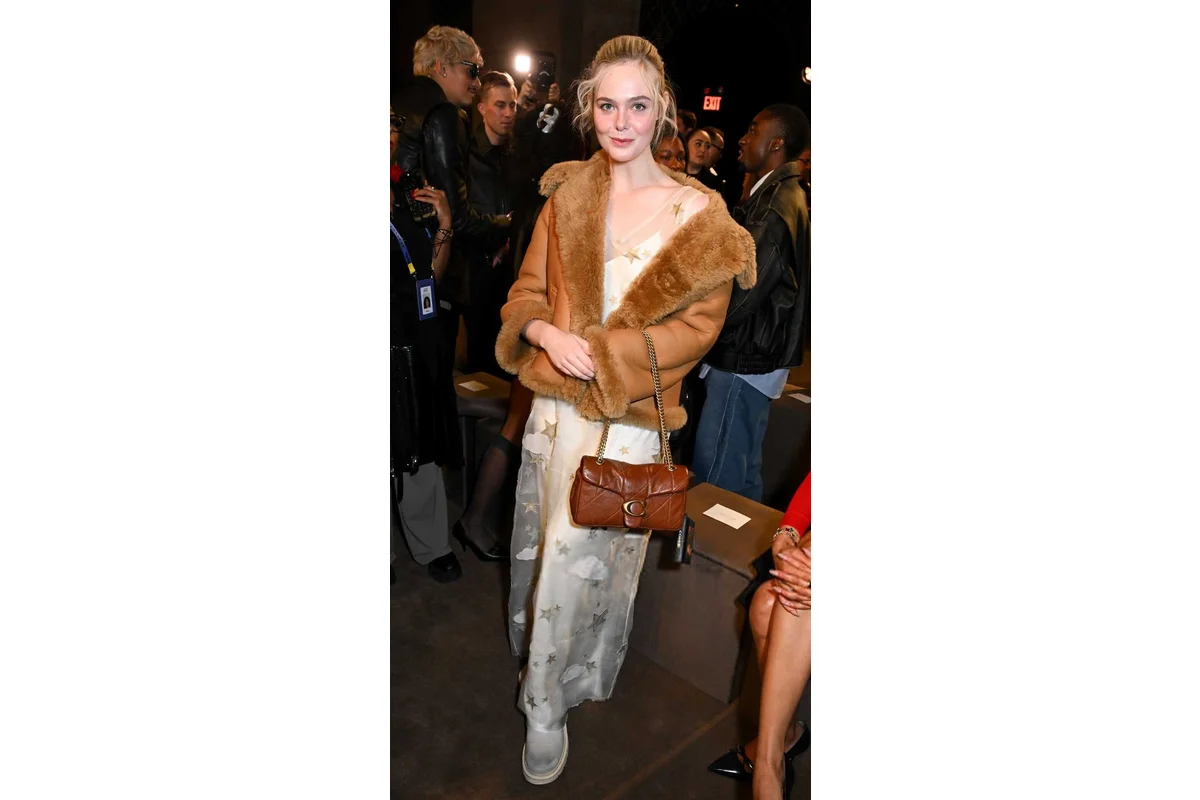
Martha’s arrival creates palpable discomfort, especially as the blind father probes into her appearance and fashion choices, fixated on the luxury labels she carries. Anna, his daughter, offers sharp yet biting commentary on Martha’s outfit, labeling it average and insinuating gold-digging motives without explicitly saying so. The family’s obsession with high-end fashion brands such as Bottega Veneta, Cartier, Zara, and Cos underscores their shallow and materialistic values.
Ed’s introduction of Martha is equally bizarre, aimed at convincing her to accept their dysfunctional environment, including a story about the grief caused by searching for a rare Comme des Garçons bag that was lost due to a payment glitch, only to be replaced by a better Raf Simons bag. Turner’s portrayal of Ed captures the character’s earnest shallowness perfectly, reflecting a lifestyle consumed by consumerist desires and status symbols.
Martha’s Relationship Within the Taylor Household
Despite Jack’s hesitance to fully commit, Martha exhibits similar materialism, demonstrated during a lavish real estate tour boasting panoramic sea views. Frustrated by the family’s demands, she vents to Jack,
“I’m sick of having to beg for basic things!”
Her stunning wardrobe amplifies this persona, which aligns with the family’s self-absorbed and status-obsessed attitudes.
Uneasy Humor Overshadowed by Cold Ambiguity
The film balances moments of dark humor and provocative discomfort but often falls short of making its unsympathetic characters relatable. Although Karim Aїnouz’s earlier work revealed a flair for sensual storytelling, here the emotional intensity is dampened by Efthimis Filippou’s detached and cerebral writing style, which lends the film a colder, more calculated tone reminiscent of but inferior to Yorgos Lanthimos’s films.
Symbolism and Dark Family Secrets
One focal metaphor is the concept of “rosebush pruning,” introduced by Ed through his invented proverb:
“People love roses. Families are rosebushes. Rosebushes need pruning.”
The violent methods the family employs to enforce this ‘pruning’ unravel throughout the story, with an edge of calculated cruelty and emotional abuse. The disturbing details in the Taylors’ rituals, such as Mrs. Taylor’s unnaturally white teeth and the father’s strange tooth-brushing habits, add to the film’s eerie atmosphere.
Performances That Illuminate and Disturb
Riley Keough’s Anna captivates with playful provocations, from flirtations with a local butcher to her candid banter with her brother Jack. Lukas Gage’s Robert contributes to the film’s unsettling tone through his overt sexual expression and boundary-pushing behavior, creating moments charged with tension. Jamie Bell and Callum Turner balance charm and menace as Jack and Ed, with Ed practicing an eerie imitation of Jack’s voice foreshadowing grim events. Visual storytelling by cinematographer Hélène Louvart complements these performances, contrasting rich, shadowy scenes with bright, lavish settings.
Technical Craft and Musical Composition
The film is visually arresting, with lavish costumes designed by Bina Daigeler that emphasize extravagant fashion statements, including memorable pieces like Robert’s sheer mesh shirt. The score by Matthew Herbert intensifies the narrative, especially during animal sacrifice scenes in the forest, where a swelling orchestral hysteria heightens the tension and dread.
Ultimately Stylish but Fails to Connect Emotionally
While Rosebush Pruning offers moments of wicked delight and startling imagery, the characters’ lack of genuine humanity prevents the audience from fully investing in their machinations. Despite the impressive performances and artistic craft, the film’s excessive glibness and cold tone leave behind an acrid aftertaste, undermining its potential impact as a brutal family satire.
