
Emerald Fennell‘s new adaptation of Wuthering Heights, released in 2026 and starring Margot Robbie and Jacob Elordi, has stirred significant debate due to its questionable costume choices, explicit erotic scenes, and the casting of Elordi as the “dark-skinned gypsy” Heathcliff. The controversy surrounding the film reflects the continued tension over this story, which has provoked strong reactions since its original 1847 publication.
Why the New Adaptation Has Divided Audiences
Fennell’s version of Wuthering Heights has reignited discussions about the story’s graphic content and its portrayal on screen. The film presents intense and sometimes unsettling scenes, much like the novel’s original shock factor, which captivated and outraged Victorian readers. Juliet Barker, author of The Brontës, Lucasta Miller, author of The Brontë Myth, and Claire O’Callaghan, Editor-in-Chief of Brontë Studies, discussed this enduring controversy and shared insights into how the novel’s difficult themes translate into modern cinema.
The scenes of violence, they’re so graphic that they almost go beyond realism,
Lucasta Miller explained.
Which is why I don’t think they can really be represented on screen unless it became a Tarantino-esque cartoon.
Miller elaborated on the disturbing nature of some scenes, saying:
If you imagine literally portraying on-screen a grown man rubbing a child’s wrist up and down on a broken window until the blood runs down. People would be running out of the cinemas.
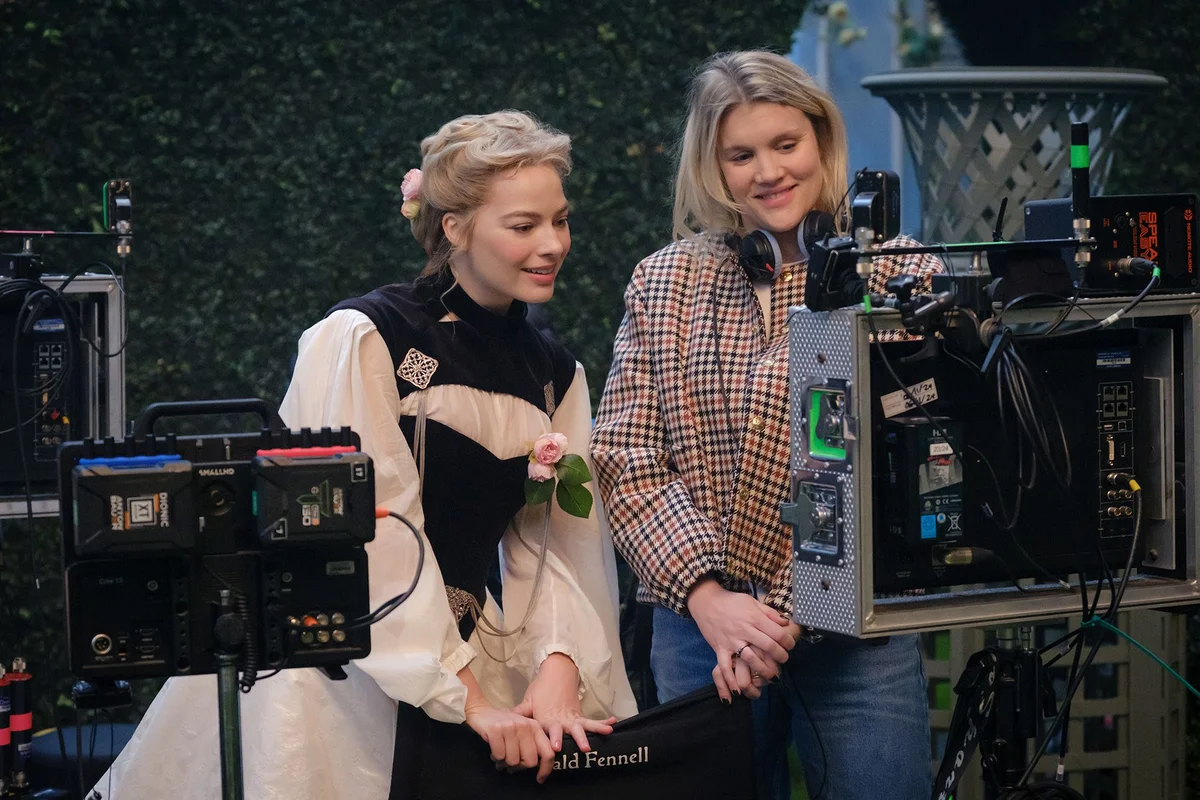
The film’s hypersexualization reflects the original novel’s provocative nature, as noted by Claire O’Callaghan, who works alongside the Brontë Parsonage Museum.
The hyper sexualisation of the film right now and the controversy that that’s created is a complete echo of the controversy that came about when Emily published the book.
O’Callaghan emphasized that the film’s provocations are consistent with the novel’s intentions, pointing out:
There are really provocative scenes in the book. We can’t get away from that, even if it’s written in code. She’s working within Victorian conventions and alluding very, very strongly to just how comfortable and connected these two characters are with one another. And that’s the way the Victorians wrote about sex and desire and eroticism.
Despite the uproar, O’Callaghan remarked on the difference in cultural reaction:
One of the most famous reviews was ‘Read Jane Eyre, burn Wuthering Heights’. I haven’t seen anyone calling for people to burn Emerald Fennell’s film.
Initial Reception to the Novel’s Violence and Morality
Upon its release, Wuthering Heights shocked readers with its brutal depictions of cruelty and amorality. Juliet Barker highlighted the harshness presented in the novel, particularly through characters like Heathcliff, who commits acts of casual violence such as setting a trap near a lapwing’s nest and cruelly hanging Isabella’s dog.
Barker explained:
It’s the fact that it’s amoral. There’s all this casual violence in it, casual cruelty. Heathcliff setting the trap over the lapwing’s nest, completely unnecessary. When he hangs Isabella’s dog. There’s all these incidents of casual cruelty, and the way he treats Isabella when she’s his wife. You’ve got all this awful cruelty that’s completely casual and brutal.
The theme of unnecessary violence also extends to Hindley Earnshaw, another figure in the book. A contemporary reviewer from The Atlas in 1848 wrote:
The same thing with Hindley Earnshaw and the way he treats Heathcliff, too. There’s this theme of unnecessary violence. Reviewers were particularly alarmed by that. One reviewer said there is not ‘a single character which is not utterly hateful or thoroughly contemptible’.
A January 1848 review in Douglas Jerrold’s Weekly Newspaper described the novel’s reception bluntly:
The reader is shocked, disgusting, almost sickened by details of cruelty, inhumanity and the most diabolical hate and vengeance.
The novel’s controversy endures, and O’Callaghan observed it remains
one of the most provocative books
more than a century later. Miller reflected:
“The ways in which Wuthering Heights is shocking and it certainly was found shocking by its first critics who reviewed it when it came out in 1847, and it’s still shocking today. But it’s not shocking because of the sex, because there is no sex. Clearly some sex has to be going on offstage because these children get born.”
The Shock of Emily Brontë’s Hidden Identity
The discovery that Emily Brontë, a woman writing under a pseudonym, authored the novel caused a moral uproar. Juliet Barker explained:
The fact that the Brontës wrote under androgynous pseudonyms fuelled the speculation about, and criticism of, the sex and morality of the author,
adding,
Bad enough that ‘violent and uncultivated men’ might have written the Brontë novels, but far worse if the authors were women!
Following the reveal of Brontë’s gender, the moral backlash intensified. Some even speculated that Emily’s brother Branwell was the true author, arguing that a woman could not have written such a fiery novel. Barker said:
It was because a group of Branwell’s friends claimed (after his death) that he had read some of his novel to them and they thought it was Wuthering Heights,
clarifying,
“In fact it was likely the beginning of a story with a similar setting which Branwell had started but never finished.”
She added:
The claim was seized upon by those who couldn’t (or wouldn’t!) believe that a woman could have written such a book and received a lot of mileage.
On the origins of Heathcliff, Barker stated:
Everybody always asks, where does Heathcliff come from? Did Emily have a passionate love affair? Of course, she didn’t. And this isn’t a love affair.
The shock was heightened by Emily’s background, as the daughter of a clergyman. O’Callaghan recalled:
The Bell brothers, who were then discovered to be women, and not just women, the daughters of a clergyman, absolutely shocked the Victorians,
and explained,
Emily as a writer, when she is discovered to be a woman, there’s a question mark over why and how are young women, the daughter of a clergyman, writing material like that? And not layering in any kind of moral agenda.
How Earlier Film Versions Shaped Perceptions
Wuthering Heights has captivated audiences through numerous film adaptations, beginning with a lost silent movie from 1920 that billed itself as Emily Brontë’s “great novel of hate.” O’Callaghan observed:
The first adaptation on film, actually billed it as Emily Brontë’s great novel of hate, and that was the silent film that came out.
Subsequent retellings increasingly emphasized the passionate relationship between Catherine and Heathcliff, positioning it as a love story above all else. O’Callaghan said:
But one of the things that’s happened increasingly over the years, particularly with Hollywood, and I guess we’re seeing that again now, is this focus on the passionate elements of the narrative, and the bond between Catherine and Heathcliff and how that is positioned as a love story above all else.
The 1939 Laurence Olivier film remains one of the most influential adaptations, reframing the novel as a tragic romance rather than the darker tale originally told. Barker explained:
You can date it all back to that film,
and detailed,
“The really interesting thing about the Laurence Olivier version [is that] it turns Wuthering Heights, Heathcliff in particular, into a romantic figure. And it becomes a romantic love story.”
Barker emphasized how this interpretation diverged significantly from the source material:
It’s so far away from the book that it actually turns it into a tragic love affair, which it very much isn’t. That is a seminal moment, when that film comes out. I saw somewhere somebody described Heathcliff in the book as being an all-American hero.
She added:
He goes away, he comes back and he’s a wealthy man. And that’s the American story.
On the difficulty of adapting the novel, Barker noted:
It’s a really difficult book to put on screen. It has to be in your head because if it isn’t, there are bits of it that are so over the top that they do become ridiculous.
She summarized Hollywood’s sanitization of the narrative this way:
That’s why I’m sure they sanitised it for the 1939 version. So many people talk about it as a love story but that’s not really what the book is about. It’s about destructive passion and about what happens when that passion spills over.
Andrea Arnold’s 2011 adaptation offered a stark contrast to both the original novel and Fennell’s approach. Miller said:
[Arnold’s version] is completely the opposite of what this new Hollywood blockbuster is doing. It’s very gritty. It’s very downbeat. It’s no make-up, no music.
Miller continued:
Candlelight, with a hand-held camera. It works well. It doesn’t mean a completely different take is going to work. No single version is going to get the full Wuthering Heights.
Choices Behind Modern Adaptations and Their Reception
Many adaptations, including Arnold’s 2011 film, the 1970s movie with Timothy Dalton, and Olivier’s classic, have omitted the novel’s second half. Fennell has also chosen to exclude this portion, a decision often contested by literary purists familiar with the Brontë legacy.
Barker underscored the importance of the latter part of the novel:
It doesn’t make sense in any way,
she said.
The whole second generation is the redemption. And the redemption comes through education, because there is the second generation Cathy, Catherine, teaching Hareton, who has been brutalised and treated like Heathcliff had been.
She teaches him to read. And that’s how it ends up. He builds her a garden up at Wuthering Heights. That whole sense of redemption comes through in those really important chapters.
Nearly two centuries since its release, Fennell’s film is poised to be one of the most debated versions, fueled by bold directorial choices and modern cinematic liberties. Lucasta Miller expressed measured acceptance:
I don’t mind if Emerald Fennell wants to put lots of sex in it. As long as she makes a good film. It’s impossible to do a version of Wuthering Heights that is faithful to the text… I’m going to judge it on whether or not it works on its own terms.
Ranking the Most Controversial Novels in History
Claire O’Callaghan shared a list of five novels that have caused significant scandals throughout their publication history, highlighting the role of societal norms in shaping reactions:
1. The Well of Loneliness by Radclyffe Hall (1928) – The book faced a high court obscenity trial due to its depiction of lesbian relationships, resulting in a ban.
2. Lady Chatterley’s Lover by D.H. Lawrence (1928) – Famous for its explicit sexual content and subsequent obscenity trial.
3. Madame Bovary by Gustave Flaubert (1856) – Criticized for its portrayal of adultery as an outrage against public morality and religion.
4. Jane Eyre by Charlotte Brontë (1847) – Accused of promoting rebellion through its outspoken children, a governess falling in love with her employer, a hidden wife, and attempted bigamy.
5. Wuthering Heights by Emily Brontë (1847) – Shocked the Victorian public with its defiant immorality, extreme violence, social upheaval, and destructive passion.
The latest adaptation of Wuthering Heights is currently in UK cinemas, carrying forward the legacy of controversy and fascination that has surrounded the story for generations.
