
Sir Ian McKellen, at age 86, has openly reflected on his harrowing fall from the stage two years ago, acknowledging the stark reality that he is “not immortal.” The incident occurred in 2024 during his performance as Sir John Falstaff in Shakespeare’s Henry IV at the Noel Coward Theatre in London’s West End, resulting in a chipped vertebra and fractured wrist. This traumatic event has led McKellen to a profound acceptance of mortality, a theme he now confronts with greater clarity.
The Impact and Experience of the Fall on McKellen
During interviews, McKellen described how the accident forced a change in his outlook. Reflecting on the experience, he said,
“I have accepted that I’m not immortal. Yet I still function. And really the inevitability of mortality comes not just from what you are feeling about yourself, but the simple fact that your friends die – all the time.”
This realization comes as a poignant acknowledgment of aging, reinforced not only by his physical vulnerability but also by the loss of those close to him over time.
He elaborated on how death, once a distant and almost abstract concept during youth, becomes increasingly unavoidable:
“When you are young, death is astonishing, a fascinating thing, but it’s a feature of getting older. Death becomes ever present.”
The actor’s reflections reveal the conflicted emotions he faces—intense awareness of life’s fragility combined with a continuing engagement in his craft.
Pursuing New Artistic Ventures Amid Recovery
Following his recovery, McKellen has embraced innovative forms of theatre that accommodate his circumstances, including participation in An Ark at the Shed, an experimental virtual reality production. Alongside actors such as Bridgerton’s Golda Rosheuvel, he appears via mixed reality glasses, allowing the performers to engage with individual audience members in an intimate, immersive experience.
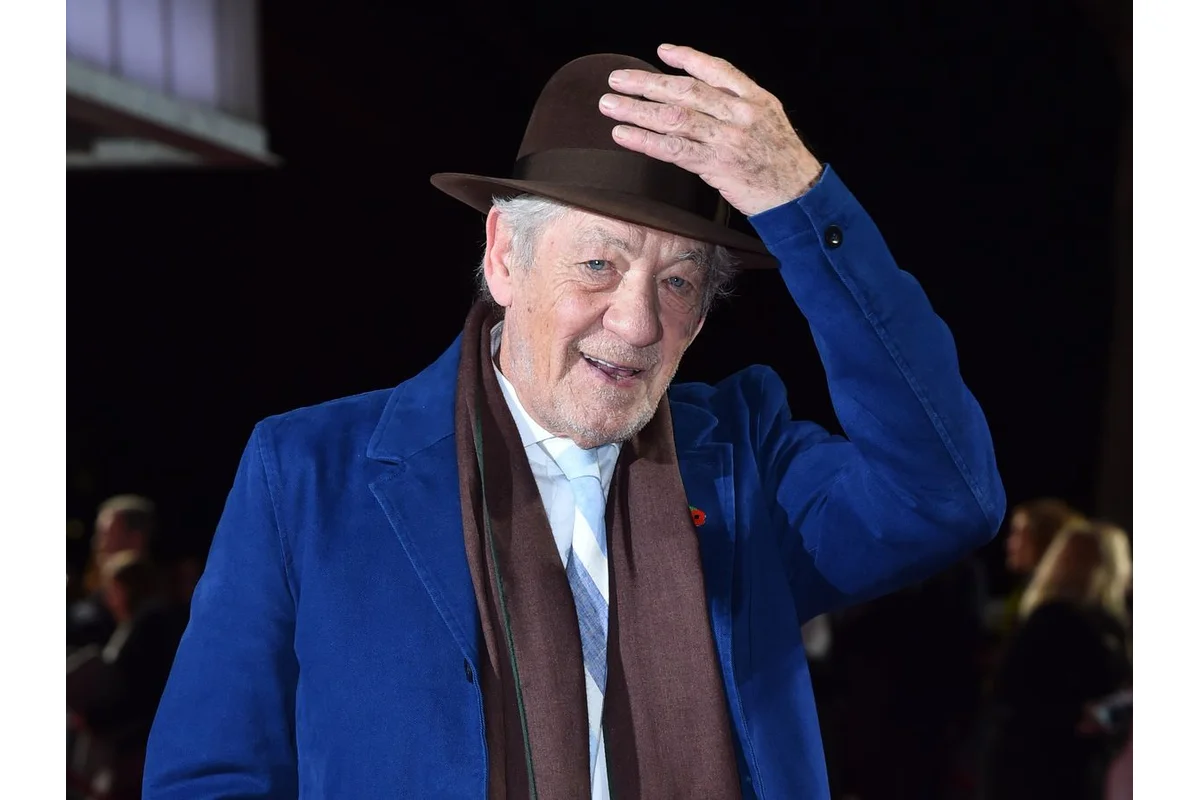
Talking about this project, McKellen highlighted its suitability given his physical condition, explaining to The Times,
“Because if something goes wrong with your body, mind or disposition, you can just stop while filming and say, ‘Can I have a tea?’ You can’t stop live theatre.”
This new format offers him a safer way to return to his passion for performance while respecting his health constraints.
Despite the shift, McKellen confirmed his enduring enthusiasm for stage work:
“I still love doing live theatre and being on stage. I can still remember lines and so, considering my age, all is well.”
The actor’s dedication to his craft remains strong, even as the risks and demands of live theatre have become clearer to him.
Reflections on the Accident and Its Aftermath
McKellen’s 2024 fall abruptly ended his tenure as Falstaff, a role that initially thrilled fans but required him to withdraw due to his injuries. The incident, which he described as falling
“into the lap of someone on the front row,”
had a significant emotional impact on him.
“Thanks to that lap, and thanks to the padding I was wearing, I did very little damage, but I thought I was a goner,”
he recalled.
The actor expressed feelings of shame and emotional vulnerability following the accident, particularly for having to disappoint West End audiences. He spoke candidly about the experience, acknowledging that such moments serve as somber reminders of limited time:
“It had made me aware there isn’t much time left.”
In a conversation with The Mirror, McKellen further reflected on the fragility of theatre compared to film, noting,
“Well, I am in the sense that however hard you are working on a film, it’s not as hard work as being in the theatre or, as I now realise, anywhere near as dangerous… I think if I had been a bit younger, I might have jumped up or sat down or something to stop it. There was something in my head that was saying, ‘This is the end’….”
McKellen’s Commitment to Future Roles Despite Health Challenges
Despite the physical setbacks and growing awareness of mortality, McKellen is determined not to slow his career pace. Last November, he confirmed plans to return to the iconic role of Gandalf, which he famously portrayed in Peter Jackson’s The Lord of the Rings film trilogy released between 2001 and 2003.
He conveyed his enthusiasm for continuing his work in Middle Earth, saying,
“Next year, I’m talking about going back to Middle Earth and reprising a little bit of Gandalf, I am not slowing down.”
This announcement underlines the actor’s resilience and his refusal to let age or health issues curtail his artistic ambitions.
The upcoming live-action project, provisionally titled The Lord of the Rings: The Hunt for Gollum, is slated for release on December 17, 2027, with filming scheduled to begin in New Zealand in May 2026. McKellen’s involvement connects his past legacy with the future of this beloved franchise.
The Broader Significance of McKellen’s Journey
Ian McKellen’s reflections on his stage fall and ongoing career highlight the complex relationship between aging, mortality, and artistic commitment. His candid acknowledgment of vulnerability contrasts with his determination to adapt and continue performing, illustrating both the physical risks involved in live theatre and the personal resilience required to face them.
His embrace of cutting-edge formats like mixed reality productions represents an innovative pathway for aging actors to engage with audiences while managing health concerns. Meanwhile, his plans to revisit Gandalf suggest that his creative spirit remains undimmed.
McKellen’s experience serves as a powerful reminder that even established icons confront mortality and change, yet through adaptability and passion, they can continue to contribute meaningfully to their craft and inspire audiences worldwide.
