
Margot Robbie Wuthering Heights has stirred intense conversations since its premiere around Valentine’s Weekend 2026, drawing attention for its striking visuals and emotional depth. Set against the dramatic backdrop of the Yorkshire Dales and directed by Emerald Fennell, the film reimagines Emily Brontë’s classic novel with notable alterations to its plot and characters, leading to widespread discussion among fans and critics alike.
Storyline Differences Between the 2026 Film and Emily Brontë’s Original
The 2026 adaptation of Wuthering Heights, starring Margot Robbie and Jacob Elordi, presents a version of the story that focuses primarily on the youthful romance and tragic fate of Catherine Earnshaw and Heathcliff. Unlike the novel, which extends well beyond Catherine’s death to explore the lives and relationships of the next generation—including Catherine’s daughter, Cathy, Heathcliff’s son, and Hindley Frances’ child—the movie stops short of this continuing narrative. This truncation removes the original’s exploration of love’s redemptive and healing qualities.
The relationship between Catherine and Heathcliff is portrayed with a more explicit and physical intensity in the film than in Brontë’s book. While the novel emphasizes the emotional yearning and complex psychological connection between them, the movie depicts their bond through tangible displays of passion. Margot Robbie, appearing on The Jimmy Kimmel Show, pointed out a striking detail:
They never even really kiss (in the book).
This shift highlights a more sensual dimension to their interactions, contrasting sharply with the book’s subtler depictions.
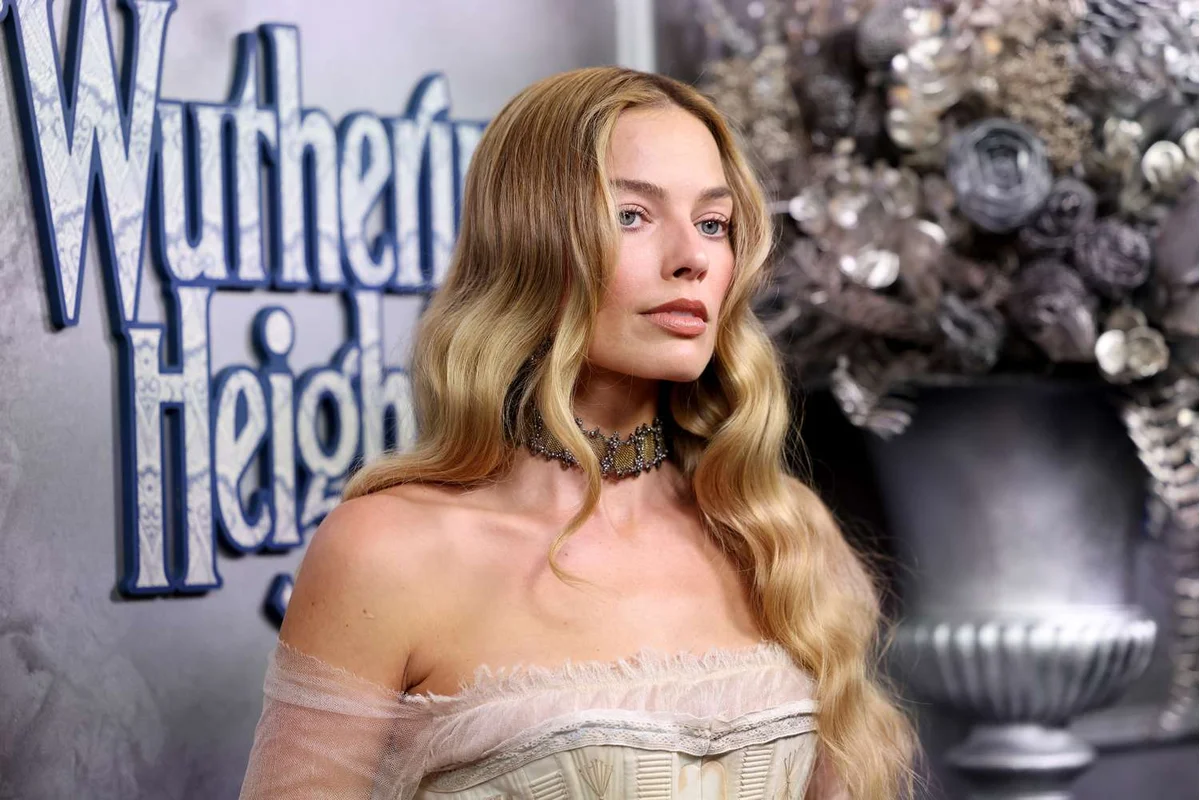
Further diverging from the novel, the film shows both Catherine and her daughter dying by the story’s end. In contrast, the original continues with Cathy surviving and playing a pivotal role in the unfolding of subsequent events. Additionally, the filmmakers altered key plot points, including the climax and emotional trajectory of Heathcliff’s character, reinforcing the film’s departure from the source material.
Emerald Fennell, the film’s director, addressed these creative choices in an interview with Fandango, stating,
I can’t say I’m making ‘Wuthering Heights.’ It’s not possible. What I can say is I’m making a version of it.
This response acknowledges the adaptation’s reimagining rather than a faithful reproduction of Brontë’s work.
Visual and Casting Interpretations Stir Controversy
The film has also attracted debate regarding its casting decisions and character appearances, especially concerning Heathcliff’s portrayal. Emily Brontë’s novel suggests Heathcliff is likely dark-skinned or of foreign descent, a characteristic fundamental to his status as an outsider and the discrimination he faces. However, Jacob Elordi’s appearance in the film does not reflect this description, a choice that sparked discussions about erasing an essential layer of the character’s identity.
The production maintained high standards in costume and set design, emphasizing a Victorian aesthetic enhanced by filming in the atmospheric landscapes of the Yorkshire Dales. Despite this, the deviation from the original depiction of Heathcliff’s ethnicity remained a point of contention. Emerald Fennell defended the decision, explaining that Jacob’s portrayal fitted her visual vision of the character. This defense highlighted the subjective nature of adapting literary characters for the screen, especially when filtering through a contemporary lens.
Premiere, Production Details, and Cast Highlights
Wuthering Heights 2026 premiered at Grauman’s Chinese Theatre in Los Angeles before releasing globally, supported by Warner Bros in its theatrical distribution. The film combines the efforts of a notable cast including Margot Robbie as Catherine Earnshaw, Jacob Elordi as Heathcliff, along with Hong Chau, Shazad Latif, Alison Oliver, and Martin Clunes occupying significant roles. The picturesque Yorkshire Dales setting provided a modern yet authentic environment intended to capture the novel’s haunting atmosphere, even as the narrative took creative liberties.
Audience Reception and Ongoing Debate
Since its release, the film’s deviations from Brontë’s classic text have sparked intense discussions about the liberties adaptations should take and the balance between honoring source material and reinterpreting it for new audiences. While some viewers appreciate the fresh perspective and the film’s visceral emotional portrayal of the central romance, others question the alterations to character identities and narrative arcs.
The divergence in Heathcliff’s appearance and the omission of the novel’s multi-generational storyline, in particular, have drawn criticism for diminishing the complexity of the original themes. These choices have fueled heated debates about cultural representation and fidelity in adaptations.
Significance of Changes and Their Potential Impact on Viewers
The film’s transformation of Wuthering Heights presents an intense and turbulent retelling that prioritizes immediate emotional impact over the novel’s extended exploration of family legacy and social marginalization. By concentrating on Catherine and Heathcliff’s youthful passion and tragic deaths, the 2026 version offers a more streamlined but arguably more chaotic narrative experience.
Such interpretations may influence how new audiences perceive the story, potentially overshadowing the broader familial and societal dynamics central to the book’s commentary on cycles of love, loss, and redemption. While some may welcome the film’s visceral dramatization, others may find the reworking diminishes the novel’s enduring psychological depth.
Margot Robbie’s involvement as both lead and producer, combined with Emerald Fennell’s direction, signals a desire to craft a vivid, contemporary homage rather than a strict adaptation, a choice that could inspire similar reinterpretations of classic literature in future cinematic endeavors.
