
In hindsight, decisions that seem wise at one time don’t always prove to be so later, a truth that applies to Matthew McConaughey’s choice to decline a role in the Marvel Cinematic Universe. Specifically, McConaughey reportedly passed on playing Ego, the father of Star-Lord, in Guardians of the Galaxy Vol. 2, a part eventually taken by Kurt Russell. This decision meant McConaughey avoided joining the expansive Marvel universe, a franchise many actors have embraced.
Had he accepted, McConaughey might have become a recurring figure in the MCU canon, including appearances in animated spin-offs like What If…? Instead, he has remained largely detached from superhero franchises, aside from lending his voice as a cowboy Deadpool in animated specials. Alongside him, only a few major stars have yet to participate in either Marvel or Star Wars projects, suggesting McConaughey’s MCU decision aligns with a consistent career path.
What Motivated McConaughey’s Turn Away from Marvel?
Though the extent of negotiations remains unclear, McConaughey elected to star in a different project: the adaptation of Stephen King’s ambitious series The Dark Tower. Directed by Niklaj Arcel, the film attempted to merge elements of science fiction, horror, and Western genres. McConaughey took on the role of The Man in Black, also known as Walter or Randall Flagg, a central antagonist in several Stephen King stories, most notably The Stand.
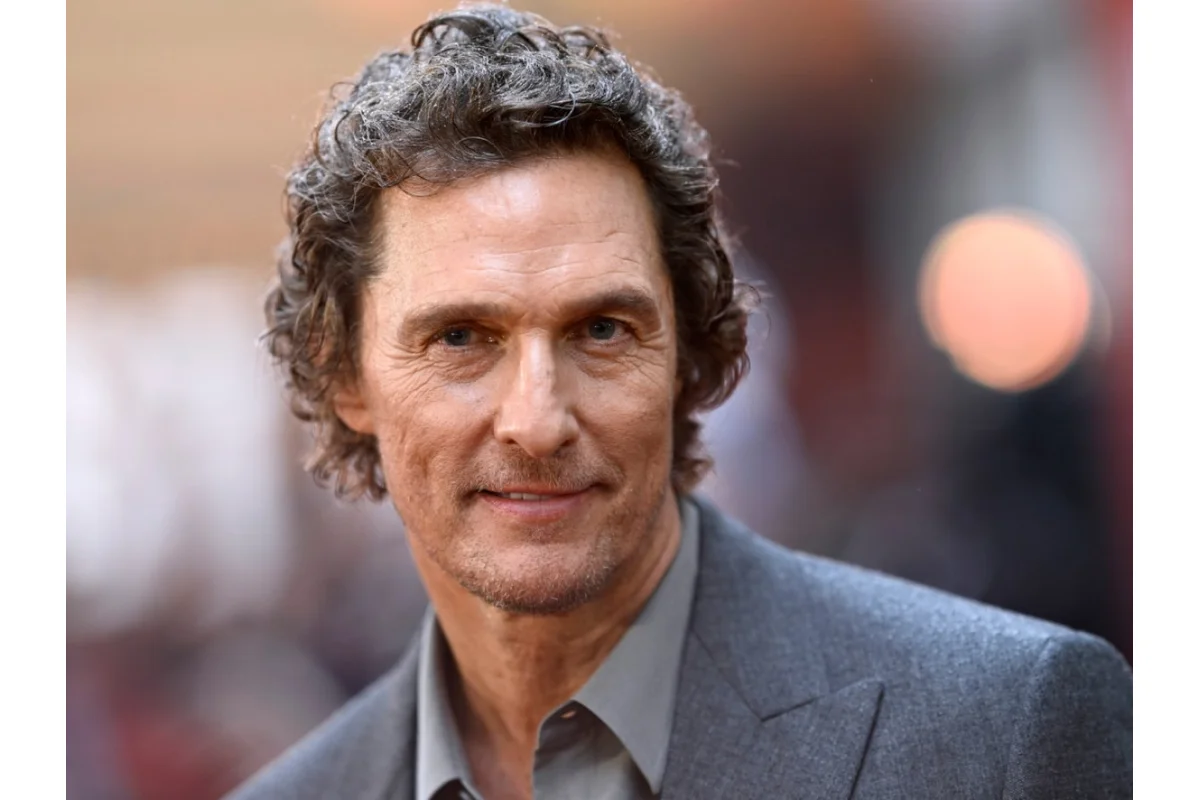
McConaughey’s casting as a villain was well-received in concept, alongside Idris Elba’s portrayal of Roland Deschain, the heroic gunslinger. On paper, McConaughey’s decision seemed reasonable: rather than appearing as a recognizable but secondary character within a large franchise, he chose to embody a major, complex antagonist, potentially within an original series adapting a sweeping literary saga.
Reflecting on his choice in 2017, McConaughey explained,
“I like Guardians of the Galaxy, but what I saw was ‘It’s successful, and now we’ve got room to make a colorful part for another big-name actor.’ I’d feel like an amendment. The Dark Tower script was well written, I like the director and his take on it, and I can be the creator, the author of the Man in Black — a.k.a. the Devil — in my version of this Stephen King novel.”
—Matthew McConaughey, Actor
This perspective framed McConaughey’s role not just as an acting opportunity but as a chance to shape a significant character from a beloved series in his own way. While the description of Walter as “the Devil” is somewhat simplified, it captures the essence of his sinister persona, especially when adopting the Randall Flagg identity, a more theatrically malevolent figure.
McConaughey further described his performance approach:
“as if I were the Devil having a good time, getting turned on by exposing human hypocrisies wherever he finds them.”
—Matthew McConaughey, Actor
This interpretation highlights a deliberate effort to take ownership of the character’s complexity and dark charm, suggesting McConaughey valued a distinctive creative role over a high-profile but less central part in a blockbuster franchise.
The Fallout and Legacy of The Dark Tower Film
Despite the promising intentions behind The Dark Tower, the film’s reception was underwhelming, earning only a 16 percent rating on Rotten Tomatoes, with a slightly more generous 44 percent approval from users. The critical failure was largely due to condensing seven dense, genre-blending novels into a single feature-length movie, which resulted in a confusing and disappointing experience for many viewers. This outcome was not a reflection on McConaughey’s acting, but rather the film’s ambitious scope and execution challenges.
Ultimately, McConaughey’s choice can be seen as a gamble that did not pay off critically, but from a career standpoint, it did not harm his standing or financial success. Avoiding the MCU has kept him apart from one of the most lucrative film franchises, but it has preserved his autonomy in selecting roles that fit his artistic preferences.
The decision to forgo a Marvel role in favor of leading a Stephen King adaptation offers insight into McConaughey’s priorities as an actor: seeking complex, creator-driven roles rather than joining established franchises. While The Dark Tower’s failure was disappointing, the actor remains a prominent figure with a distinct career path, underscored by deliberate choices about the projects he undertakes.
