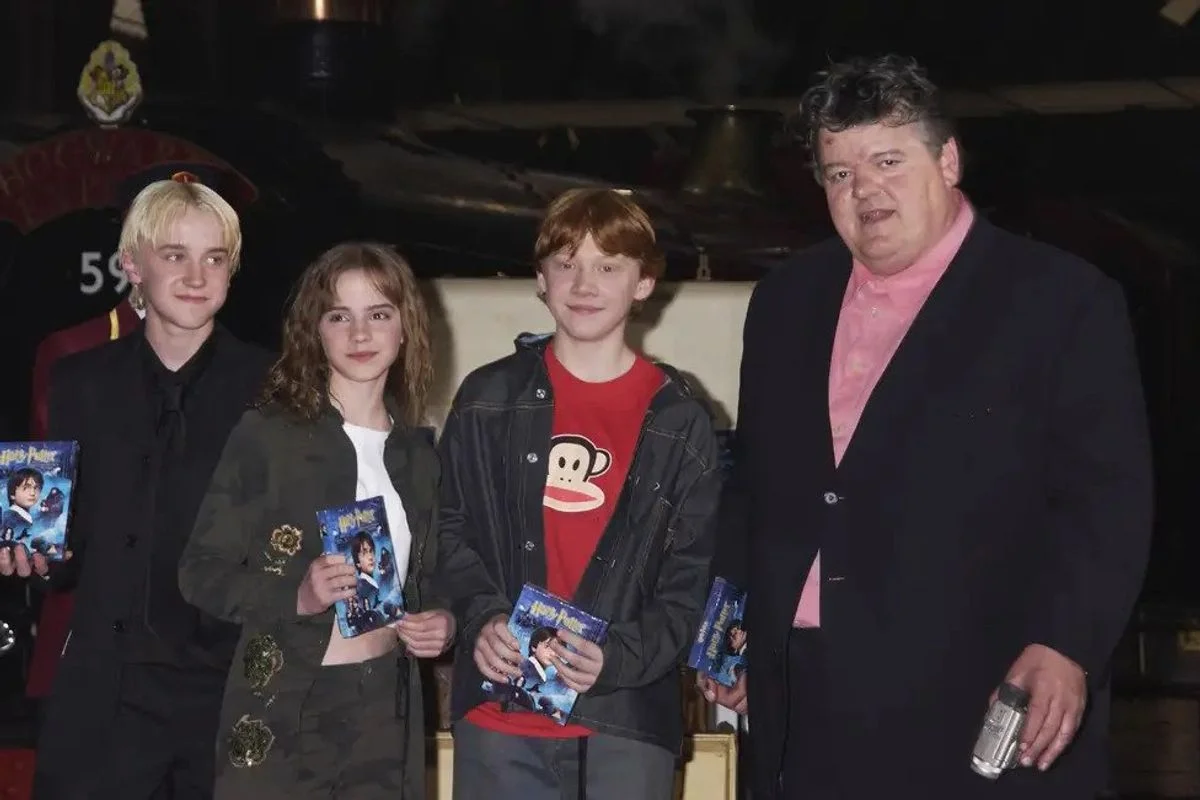
Rupert Grint sparks fascism controversy at Berlin Film Festival. [Image Source: YIMG]
Tom Harwood has publicly criticised actor Rupert Grint for his statements about an alleged increase in fascism within UK politics, urging the Harry Potter star to educate himself by reading a book on the subject. Grint’s remarks came during a press event at the Berlin Film Festival, where he expressed concern about what he sees as a rise in far-right ideology in Britain.
Known for his role as Ron Weasley in the Harry Potter franchise, 37-year-old Grint has largely stayed distant from political debates throughout his career, but recently voiced opposition to JK Rowling’s stance on transgender issues. This context led journalists at the Berlinale to question whether he would also speak out against far-right movements in his home country. Grint responded that “Obviously, I’m against it,” while noting he chooses carefully when to publicly express his views and indicated he plans to speak further on the issue.
Rupert Grint Highlights Concerns About Fascism in UK Politics
During the Berlin Film Festival, Rupert Grint faced questions linking his previous criticism of J.K. Rowling to a broader political context, specifically regarding fascism’s alleged rise in the UK. Speaking alongside the Nightborn cast and crew, Grint acknowledged his opposition to fascism but emphasised a cautious approach about when to comment publicly, stating,
Image of: Rupert Grint
“But I choose my moments when to speak. But I think yeah, it’s obviously hugely relevant now. You’ll hear from me.”
The discussion also touched on the wider role of artists engaging politically. Finnish director Hannah Bergholm, who wore a watermelon pin as a symbol of solidarity with Palestine, stressed the duty for creative professionals to speak out against violence and injustice. She said,
“As grown-up human beings, I think we have a responsibility to speak up against violence and injustice,”
further adding,
“it’s important that we don’t tell other film artists that they shouldn’t speak up.”
Co-writer Ilja Rautsi supported this view, highlighting the power of cinema to reflect and address contemporary issues. Referencing conflicts in Ukraine and Palestine, he remarked,
“I think it is important to shine a light on whatever issues we are facing because art is all about empathy,”
underscoring the emotional connection film can foster.
Tom Harwood Challenges the Validity of Grint’s Fascism Claims
Despite these perspectives, Tom Harwood, presenter on GB News, expressed sharp criticism of Rupert Grint’s comments, questioning the actor’s knowledge of what fascism truly entails. Harwood called on Grint and others to gain accurate information by reading, saying,
“Fascism? I’m literally begging people to read a single book.”
Harwood described fascism as a specific political ideology with characteristics that do not simply equate to right-wing views. He clarified,
“Fascism is a particular ideology and it doesn’t just mean ‘right wing’. It is expressly collectivist, identitarian, militaristic, anti-parliamentarian, and totalitarian.”
Pointing out that no major British political party fits this definition, Harwood added,
“There is no serious political party with a paramilitary wing playing street politics.”
He further noted the lack of serious parties advocating economic self-sufficiency aside from perhaps the Greens and said,
“There is no serious political party clamping down on speech forums or supporting the cancellation of elections (except maybe the Labour Party).”
In his critique, Harwood also referenced nationalist groups, stating,
“There is no serious political party with roots in Nazi-adjacent nationalism (except maybe the SNP and Sinn Féin).”
He used these points to challenge the appropriateness of labeling current UK political trends as fascist.
Berlin Film Festival Faces Backlash Over Political Questioning
The Berlin Film Festival has become a focal point for political controversy, with journalists pressing filmmakers and actors on contentious issues. German director and jury member Wim Wenders was probed regarding the Gazaconflict and the impact films might have on political change. Wenders stated cautiously,
“movies can change the world but not in a political way,”
and argued that filmmakers
“have to stay out of politics because if we make movies that are dedicatedly political, we enter the field of politics.”
He elaborated by saying,
“But we are the counterweight of politics, we are the opposite of politics. We have to do the work of people, not the work of politicians.”
These remarks sparked significant controversy, prompting Arundhati Roy, a chief juror at the festival, to withdraw her participation.
In response to the backlash, the festival issued a statement defending the rights of jury members and filmmakers to abstain from politically charged discussions during press interactions. Tricia Tuttle, the festival head, emphasized that
“Artists are free to exercise their right of free speech in whatever way they choose,”
and argued that
“artists should not be expected to comment on all broader debates about a festival’s previous or current practices over which they have no control.”
She added,
“Nor should they be expected to speak on every political issue raised to them unless they want to.”
Context and Continuing Debate Surrounding UK Political Climate
The Rupert Grint fascism controversy occurs amid a wider public debate concerning political ideologies within the UK, with some commentators suggesting a right-wing shift while others dispute such claims. Grint’s recent vocal stance comes after his distancing from JK Rowling, particularly around her comments on transgender issues, adding complexity to his public image.
Tom Harwood and other commentators on GB News have taken a critical approach, emphasizing precise definitions and warning against conflating different political movements. Meanwhile, the cultural sector, represented by figures such as Bergholm and Rautsi, advocates for artists using their platforms to address social and political topics. This tension reflects broader anxieties about the roles of public figures and artists in political discourse and the accuracy of claims about fascism in modern Britain.
The Berlin Film Festival’s experience highlights challenges arising when art and politics intersect, raising questions about freedom of speech and political engagement among creative professionals. It also underscores the sensitivity surrounding accusations of fascism and the complexities inherent in addressing contentious topics at high-profile events.
Fascism? I’m literally begging people to read a single book.
Fascism is a particular ideology and it doesn’t just mean ‘right wing’. It is expressly collectivist, identitarian, militaristic, anti-parliamentarian, and totalitarian.