
Director Emerald Fennell has responded to questions about her adaptation of Emily Brontë’s Wuthering Heights, explaining why she made significant alterations in the movie released earlier this year. Fennell’s interpretation focuses on a condensed, personal vision of the gothic novel, highlighting her intent rather than striving for a faithful retelling.
Fennell’s Personal Interpretation Shapes the Film
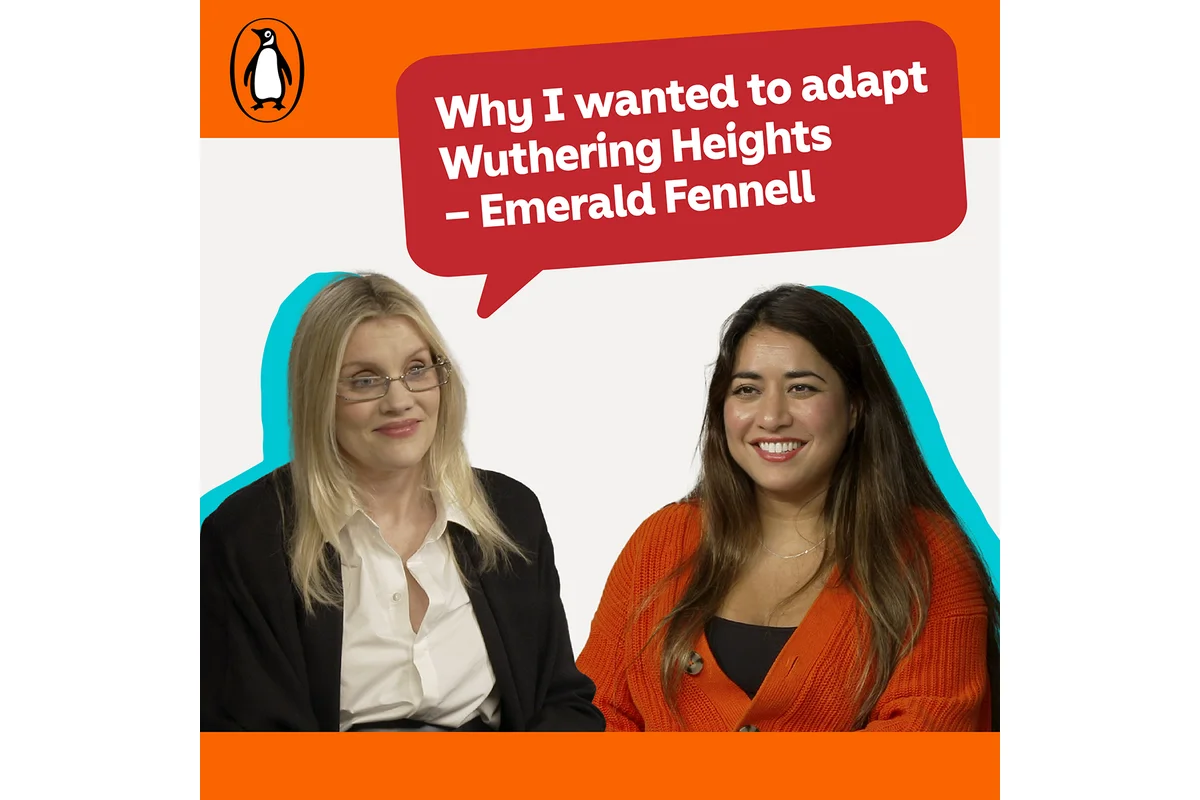
Rather than producing a traditional adaptation, Emerald Fennell created her own version of the 1847 classic, inspired by her memories of reading the book in her youth. During a February 13 interview with Entertainment Weekly, she described how this approach involved both recalling concrete details and blending them with imagined elements.
“were both real and not real,”
Fennell said of her memories.
“So there was a certain amount of wish fulfillment in there, and there were whole characters that I’d sort of forgotten or consolidated,”
she added.
Focusing on the Central Romance Over the Full Narrative
The film primarily concentrates on the intense relationship between Catherine Earnshaw, played by Margot Robbie, and Heathcliff, portrayed by Jacob Elordi. Fennell deliberately narrowed the story to mostly cover the initial half of Brontë’s novel, omitting supernatural elements like Cathy’s ghost and leaving out several characters, including Catherine’s brother, Hindley Earnshaw.
“I think, really, I would do a miniseries and encompass the whole thing over 10 hours, and it would be beautiful. But if you’re making a movie, and you’ve got to be fairly tight, you’ve got to make those kinds of hard decisions,”
Fennell explained regarding these choices.
The movie concludes with Catherine’s death, a notable deviation from the novel’s latter section where her spirit haunts Wuthering Heights, and the story shifts focus to the next generation residing at both Wuthering Heights and Thrushcross Grange estates.
Ending Reflects Themes of Love’s Persistence and Cycles
Fennell described her choice to end the film at this point as reflective of her understanding of the novel’s core emotional truths.
“It begins where it ends and ends where it begins. And that’s the thing about love, and it’s the thing about the book, right?”
“It’s that it’s forever and it’s cyclical, and so there’s no stop — even when there’s a terrible, sad, tragic stop, it’s not really a stop — because that’s what the book feels so much about.”
She emphasized the depth of human emotion portrayed in the story beyond physical presence, which shaped her decision on the film’s conclusion.
“It’s about the depths of human feeling and how it exists in a profound way, not just a physical one. And so that, I don’t know, that felt like the right way to end it for me.”
Adaptation Alters Character Roles and Story Structure
Fennell’s version excludes characters like Hindley Earnshaw and Mr. Lockwood, one of the original novel’s narrators, adjusting character roles for cinematic coherence. Catherine’s father, Mr. Earnshaw—played by Martin Clunes—takes on traits attributed to Hindley, merging multiple dynamics into one.
“Hindley still exists, I believe, but in the form of Earnshaw,”
Fennell explained.
“I tried to, wherever I could, gather people together in the same way that we don’t have Lockwood, either. It’s such a complicated structure, the novel, that really it would have been very, very difficult to turn that into a coherent movie because it would just be much more time.”
She elaborated on the complexity of Hindley’s character as intertwined with family relationships and emotional influence.
“It was [about] taking, ‘What is it about Hindley? What is it about his relationship with his sister and his half-brother, I suppose, in Heathcliff? And how does it shape their lives? How did the love of their father shape their lives?’”
“And so what we have instead is a character who is both, who is like, I think, a lot of people who know alcoholics… extremely, deeply loving and charismatic, and on the other hand, extremely abusive and cruel.”
The Film’s Place in Contemporary Cinema
Wuthering Heights, as reimagined by Emerald Fennell, presents a concentrated exploration of Brontë’s themes through a modern cinematic lens, prioritizing human emotion and relationships over a complete narrative retelling. This approach has sparked discussion on adaptation strategies and the challenges in condensing complex literary works into feature-length films.
The film is currently available in theaters, inviting viewers to experience Fennell’s distinctive vision that melds classic literature with personal reflection and cinematic economy.
