
Emerald Fennell’s latest film, a reinterpretation of Emily Brontë’s classic novel ‘Wuthering Heights’, has sparked intense debate since its release. While largely panned by critics for its distinctive approach and controversial changes, the film’s unique style has drawn fascination and divided audiences, reflecting the polarizing nature of Fennell’s work.
Moments of Cinematic Flair Amid Mixed Reviews
Midway through ‘Wuthering Heights’, a two-minute sequence stands out as an extraordinary display of cinematic artistry. The scene features Margot Robbie’s character Cathy adorned in Elton John sunglasses, engaging with surreal surroundings like flesh-colored walls and a manicured garden evocative of Monty Don’s vivid imagery. Accompanied by Charli XCX’s reverberating soundtrack, the segment evokes a striking, if fleeting, sense of filmic brilliance. Yet this atmosphere abruptly shifts when Robbie’s Cathy, now styled after Whitney Houston circa 1988, performs peculiar actions such as sitting on eggs and interacting with a jellyfish, deflating the moment’s magic. This oscillation captures the essence of what many view as the quintessential Emerald Fennell film style—bold, provocative, and unpredictably offbeat.
Fennell’s Rising Influence and Polarizing Persona
Emerald Fennell has become increasingly prominent, not only for her films but also for the intense conversations they provoke. Her 2020 debut, ‘Promising Young Woman’, featuring Carey Mulligan in a confrontational role targeting perpetrators of sexual violence, was hailed by some as a vital post-#MeToo statement and dismissed by others as lacking full commitment to its revenge narrative. Her 2023 film, ‘Saltburn’, polarized audiences further, interpreted as either a daring exploration of social class tensions and provocative content or criticized as an ineffective “eat-the-rich” drama. However, no film of hers has ignited more controversy than ‘Wuthering Heights’.
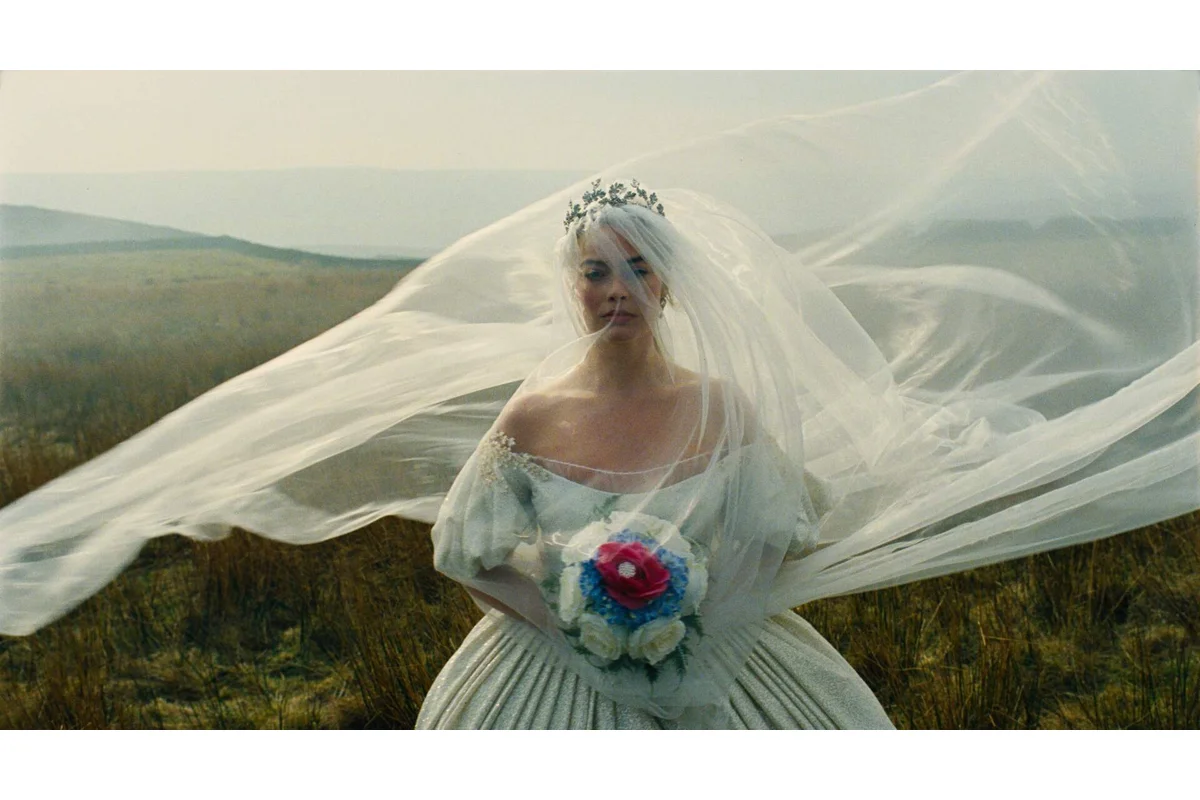
Transforming a Literary Classic Into Sensual Pop Fantasy
From the initial announcement until its cinema release, ‘Wuthering Heights’ faced significant backlash for its radical departure from Brontë’s complex novel. Among the most contentious choices was the whitening of Heathcliff’s character, traditionally understood as having ambiguous racial origins, which stripped away much of the source material’s depth. The volatile relationship between Heathcliff and Cathy Linton devolves into a simplistic depiction reminiscent of contemporary kink culture, likened by some to ‘Fifty Shades of Grey’. Critical reception has been harsh, with some reviewers describing the film as “astonishingly hollow,” while others were even more scathing. Yet, some viewers find themselves drawn to the film’s flamboyant, pop-infused energy and the very qualities that others deride.
A Distinct Voice in British Cinema
Emerald Fennell’s outspoken personality complements her idiosyncratic filmmaking style. She once described her role as Queen Camilla in the television series ‘The Crown’ by saying,
“I’m basically playing a chain-smoking posho standing in a corner making cutting remarks,”
reflecting a mix of class awareness and sardonic wit. Despite critiques of her scripts—sometimes criticized for faltering in the latter acts—her films are undeniably engaging, filled with lush production design and bold costume choices that contribute to a captivating visual experience.
Polarization Rooted in Class and Unconventional Style
Fennell has become a figure widely criticised within social and cultural circles, often compared to divisive celebrities such as Chris Pratt or Meghan Markle. Some attribute the backlash to her posh background, while others suggest it stems from her unconventional position in the cinematic landscape. Few filmmakers today operate on her scale with such a distinctive voice attuned to contemporary sensibilities. A recent public event in London, where dozens queued to participate in a ‘Wuthering Heights’ installation by adding love locks to an artificial trellis, demonstrated the enthusiastic, if somewhat puzzling, audience engagement surrounding her work.
Pop Culture Pastiche and Visual References
Fennell’s films often feel like curated supercuts of popular culture from her formative years, repurposed into elaborate cinematic collages. ‘Wuthering Heights’ includes clear homages to iconic moments such as Keanu Reeves’ rain-soaked scene in ‘Point Break’, Sofia Coppola’s anachronistic costumes in ‘Marie Antoinette’, and the sultry aesthetic of the 1990s Chanel No 5 advertisements. Characters like Isabella Linton become exaggerated caricatures with quirky traits reminiscent of characters in ‘Cruel Intentions’, a favourite film of Fennell’s. These playful, sometimes bizarre stylistic choices lend the film a deliberately surreal and at times juvenile quality, provoking laughter and disbelief in equal measure.
A Master of Stylish, Sensual Visuals
Fennell excels at crafting scenes designed for visual impact and social media appeal, making her a modern equivalent of Adrian Lyne, who was known for sleek erotic dramas in the 1980s and ‘90s. Scenes reminiscent of Kim Basinger’s iconic striptease in ‘9 ½ Weeks’, set to Joe Cocker’s cover of
“You Can Leave Your Hat On,”
share the same impulse: indulgent eye candy with no apology for flamboyance. This aesthetic is apparent in Fennell’s ‘Saltburn’, especially in its finale featuring Barry Keoghan dancing nude through a country estate to playful pop music, emphasizing spectacle over narrative subtlety.
Covid’s Impact on Fennell’s Career Trajectory
The Covid-19 pandemic inadvertently amplified the prominence of ‘Promising Young Woman’ by reducing the volume of competing films in 2021 awards season, propelling the film into the spotlight with five Oscar nominations and a Best Original Screenplay win for Fennell. This success placed her among a group of Millennial Auteurs, such as Jordan Peele, Greta Gerwig, and Robert Eggers—filmmakers noted for their distinctive styles and storytelling. Yet, her work often stands apart, marked by a preference for sensory excess and stylistic bombast rather than the thematic depth typically associated with her peers.
Fennell’s Place in Contemporary Cinema and What Lies Ahead
While Jordan Peele’s ‘Get Out’ and Greta Gerwig’s ‘Lady Bird’ deliver layered narratives laden with social commentary, Fennell’s films embrace spectacle, cheek, and overt iconography. She prioritizes surface thrills and directness over subtext, likening her approach to that of William Castle, known for gimmicky, audience-engaging horror films. The potential for even more immersive experiences is hinted at, imagining ‘Wuthering Heights’ enhanced by technologies like Smell-O-Vision, where cinemas would pump evocative scents such as freshly mown grass or strawberry lubricant during key scenes.
A Bold, Polarizing Voice in Popcorn Cinema
Emerald Fennell remains firmly rooted in what she does best: creating vivid, entertaining, and often polarizing popcorn movies that prioritize immediacy and sensory engagement over nuanced storytelling. She is unapologetic about rejecting subtlety and expressed discomfort with traditional auteur veneration, stating in response to a question about visiting the Criterion Collection’s curated ‘Closet’ of classic films,
“They won’t let me in that closet,”
and
“They know I’ll be, like, ‘what is this?’”
Her candidness underscores a commitment to commercial glamour and originality in its own right.
‘Wuthering Heights’ as a Manifestation of Fennell’s Style
The film epitomizes Emerald Fennell’s unapologetically extravagant and sometimes absurd aesthetic, described as simultaneously dazzling and flawed. It is likened to a birthday cake that looks sumptuous but tastes poor or a grand mansion built from fragile materials—both adored and despised in equal measure. Despite its imperfections, it captivates and provokes, embodying Fennell’s unique creative vision and ensuring continued discussion and engagement with her work.
‘Wuthering Heights’ is currently screening in cinemas.
