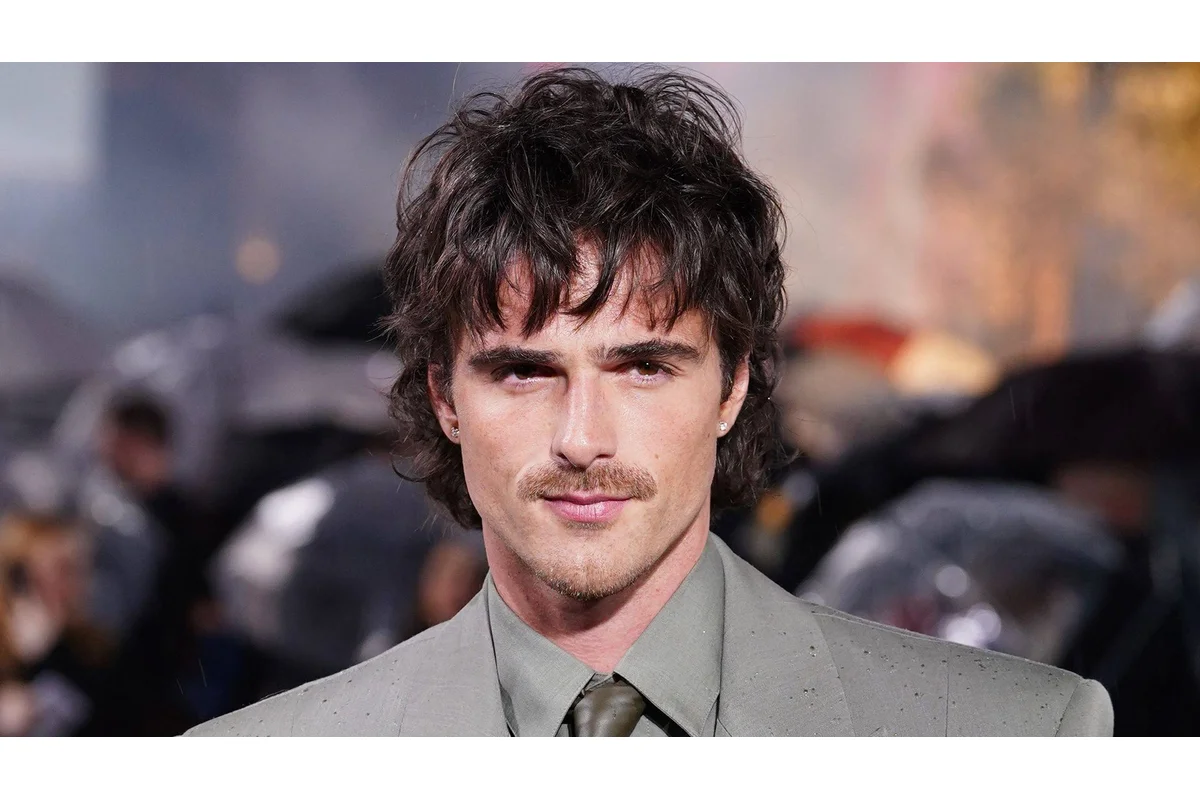
Jacob Elordi portrays intense Heathcliff in new Wuthering Heights. [Image Source: ARCHITECTURALDIGEST]
Jacob Elordi and Alison Oliver have shared their perspectives on one of the most unsettling moments in the new adaptation of Wuthering Heights, directed by Emerald Fennell. The film, inspired by Emily Brontë’s classic novel, dramatizes the intense and troubled relationships among the central characters, focusing especially on Heathcliff, played by Elordi.
The story centers on Cathy (Margot Robbie) and Heathcliff, childhood lovers torn apart when Cathy marries the affluent Edgar Linton (Shazad Latif). In a retaliatory move, Heathcliff marries Edgar’s ward Isabella (Alison Oliver), though his obsession with Cathy makes the marriage doomed from the start.
The Harshness of Isabella’s Captivity
Near the film’s conclusion, the housekeeper Nelly Dean (Hong Chau) finds Isabella in a disturbing situation at Wuthering Heights: chained to a fireplace wearing a dog collar, with the house in disarray. Elordi described this scene as intense yet compelling during his interview with Entertainment Weekly.
He explained that the film’s director, Emerald Fennell, integrated dark aspects of the original novel such as the killing of Isabella’s dog and other violent scenes by transforming them into this powerful visual. Elordi said,
“That was so much fun, that scene,”
and added,
“I think that was Emerald kind of taking the killing of the dog and these really dark parts of the novel and putting them into this scene,”
followed by,
“Isabella and Heathcliff are completely off the deep end. They’re living in a kind of hell, you know?”
Heathcliff’s Torment and Obsession
Heathcliff’s suffering stems from his inability to be with Cathy, and his extreme actions fail to regain her attention. Elordi described this progression as Heathcliff descending into “a self-generated hell.” He noted,
Image of: Jacob Elordi
“For him, it’s a self-generated hell. It’s the moment that his obsession clicks over into something else — into a rabid desperation — and he loses any semblance of composure,”
and added,
“And it’s not working anymore, and the joke is over, which means it’s real, you know? And they have to face it.”
Isabella’s Psychological State Portrayed by Alison Oliver
Alison Oliver elaborated on Isabella’s fragile mindset in the same discussion, emphasizing the character’s repression and infantilization. Oliver described the complexity by saying,
“Because [Isabella’s] actually quite a repressed person, and because she’s been so infantilized, anything that is repressed, when it comes out, it’s messy and unorganized,”
and further explained,
“And she’s in a very unknown, strange, different place. A lot of that was just playing out the mess of the new place that she’s in.”
Critical Reception and Divergence from the Original
Both Elordi and Oliver previously starred in Fennell’s film Saltburn. Critics have drawn particular attention to Oliver’s performance in Wuthering Heights. Although some reviews have been largely unfavorable, such as Gregory Nussen’s critique for ScreenRant, he praised Oliver, stating,
“Oliver is the film’s clear winner, as the only actor that seems perched at the right fever pitch for Fennell’s wonky vision.”
However, the film’s portrayal of Isabella deviates sharply from the 1847 novel. In the movie, Isabella may appear to somewhat accept the troubling relationship with Heathcliff, a depiction that has drawn criticism. The Guardian remarked,
“Fennell makes light of [Heathcliff’s] cruelty to her by casting Isabella as a smirkingly consenting sub.”
In contrast, the novel depicts Isabella fleeing the abusive marriage and later having a son.
Additionally, the film changes Isabella’s connection to Edgar Linton; she is his ward rather than his sister, as in the book. These alterations underline the film’s departure from the source material, with Fennell exploring a drastically different interpretation of Isabella and her survival within her marriage to Heathcliff. The film maintains a dark tone and takes multiple unexpected narrative turns before concluding.
Current Status of the Film
The updated Wuthering Heights is currently screening in theaters, inviting audiences to witness Fennell’s reinterpretation of this classic tale through a tense and somber lens.