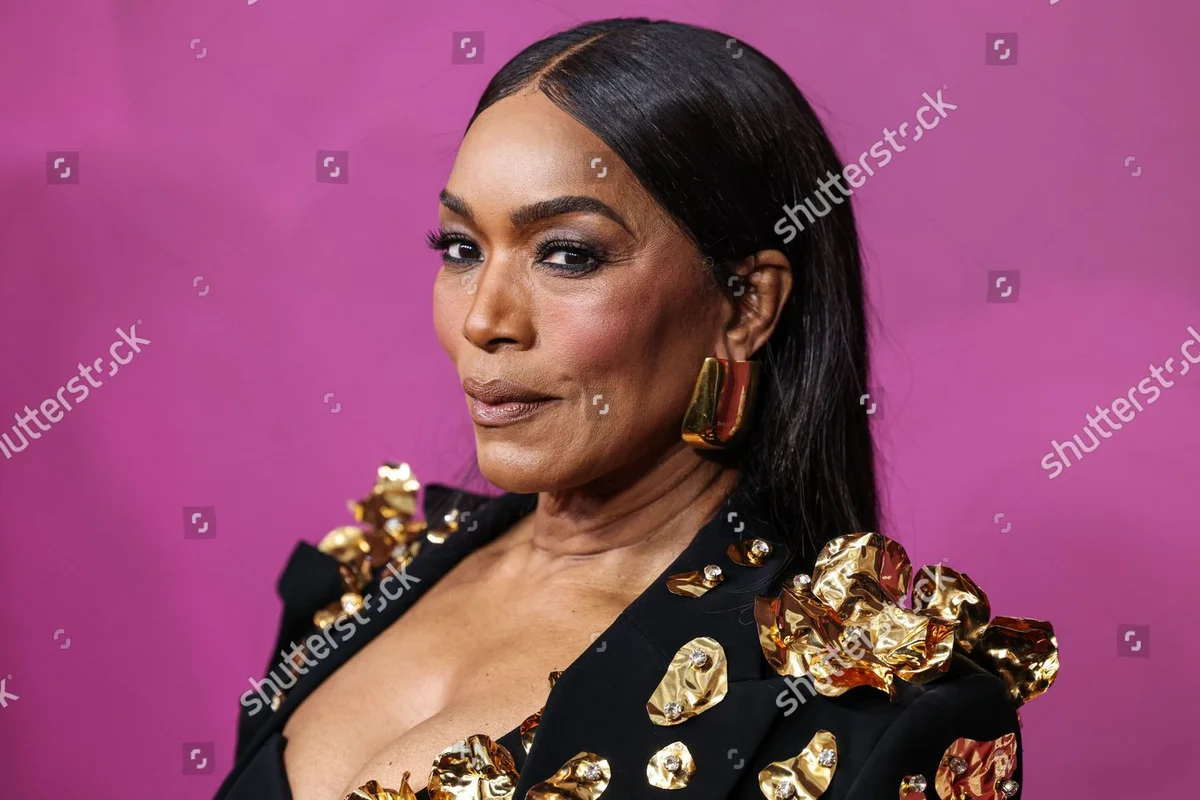
Angela Bassett delivers an inspirational speech on resilience and dreams. [Image Source: PARADE]
The American Black Film Festival (ABFF) continues to play a crucial role in elevating Black filmmakers and artists, as it did for Ryan Coogler in 2011 when his short film Fig gained recognition. This year’s ABFF Honors ceremony celebrated key figures in the Black entertainment industry, spotlighting their resilience and creative breakthroughs. Angela Bassett’s inspirational speech at the event highlighted the ongoing challenges and triumphs faced by Black creatives in Hollywood.
Ryan Coogler’s Early Breakthrough at ABFF Sparks Career and Personal Milestones
Ryan Coogler’s rise to prominence began at ABFF when his short film Fig was selected as a finalist in the festival’s collaboration with HBO’s annual short film competition. This opportunity not only connected him to a broader audience but also provided crucial financial assistance early in his career. Coogler described the prize money as both a vote of confidence and essential support that enabled him to focus on producing his debut feature film, Fruitvale Station.
Reflecting on that pivotal moment during the ABFF Honors ceremony held at the SLS Hotel in Beverly Hills, Coogler recalled,
“I didn’t know that we had a festival like that, that had a relationship with HBO, where your short film could get put on television. And that was what I was after, the opportunity for access. And I didn’t know that that prize came with a little cash reward,”
Coogler said, sharing a laugh with the audience.
He humorously acknowledged his financial struggles at the time.
“Y’all are laughing, but I was extremely broke at the time. The only one not laughing is Zinzi because she knew how broke I was,”
he added, with a grin,
“It’s a lot of work having a woman that hot when you’re that broke.”
Coogler credited the $40,000 award as a turning point.
Image of: Angela Bassett
“With that $40k, I immediately went home, back to the Bay, put a down payment on an apartment, you know, slick-talked this cutie into moving in with me, and we was off to the races, for real,”
he recounted. But beyond finances, it was the encouragement from ABFF and its founders that left an enduring impact. Coogler expressed gratitude to Jeff and Nicole Friday, co-founders of ABFF, for cultivating a community that values Black stories.
“That was the first time that was a vote of confidence in me that came with some capital that enabled me to really focus and get ‘Fruitvale [Station]’ made. I’ll be forever indebted to you guys for being such incredible cultivators. Whenever I make a film, I think about y’all. I think about this community. It’s got to work for us first, before it works for anybody else. And it means so much when it connects.”
The Collective Celebration of Black Creative Excellence at ABFF Honors
This year’s ABFF Honors showcased not only Coogler’s journey but also celebrated other luminaries whose work uplifts Black culture and history. Founders and supporters of Proximity Media, including Coogler and his wife Zinzi, were introduced to the crowd by Michael B. Jordan and Wunmi Mosaku, stars of Coogler’s critically acclaimed film Sinners. The standing ovation led by Dwayne Johnson underscored the event’s spirit of admiration and solidarity within the Black creative community.
Zinzi Coogler spoke movingly about the personal ties the film had to her family’s history. Her ancestors’ roots in Mississippi during the early 1930s provided a powerful backdrop for exploring deeper narratives. She honored filmmakers who paved the way for storytellers like herself.
“Working on ‘Sinners’ allowed me to dive into the history of my family, my not far-distant ancestors, and imagine a fantastical life they might have lived — despite,”
Zinzi said, concluding with praise for trailblazers including Spike Lee, Ava DuVernay, Oscar Micheaux, John Singleton, and Euzhan Palcy.
“Thank you for bearing the burden of paving a path for filmmakers like ourselves to dream big so that our history, our myths and our legends may carry on across the biggest screens,”
she affirmed.
Proximity Media co-founder Sev Ohanian also acknowledged the importance of cross-cultural allyship. Reflecting on his own family’s history as Iranian political refugees, Ohanian expressed respect for the connections built across communities.
“My family immigrated here to America from Iran as political refugees when I was very young,”
he shared. Lightening the mood with humor, he added,
“All of which is a long way of saying, in case you guys were not aware, I’m not Black. But what I am is deeply honored to stand here as an ally to my Black colleagues and friends to help them bring their stories to life, and I’m extra proud not to be the first Armenian American to do so.”
Ohanian recounted learning about Charles Garry, an Armenian American lawyer who defended the Black Panther Party during turbulent civil rights struggles.
“He connected first-hand with their struggle for dignity and civil rights. Charles fought beside them at great personal risk, and that example always stayed with me,”
said Ohanian. He believed that sharing cultural stories grounded in lived experiences can foster empathy across diverse backgrounds.
“When we tell specific stories rooted in culture and lived experience, I believe they, too, can help connect with people across cultures, to show everyone our shared humanity.”
Honoring Veteran Achievers and Rising Stars in Black Film
Veteran actor and director Salli Richardson-Whitfield accepted the Evolution Award, reflecting on her longstanding connection with ABFF, spanning over three decades. Beginning as a young actress with aspirations, she underscored the festival’s role as a historical platform supporting Black narratives and creators.
“ABFF isn’t just a film festival. It’s history. It’s proof that Black stories matter and that Black artists endure,”
Richardson-Whitfield stated. She emphasized that growth continues beyond recognition.
“Evolution doesn’t stop when you’re recognized. It continues when you’re brave enough to imagine what’s next.”
Meanwhile, British actor Damson Idris was honored with the Horizon Award in acknowledgment of his emerging status as a major talent. Presented by acclaimed producer Jerry Bruckheimer, Idris’s career was reminded of its humble beginnings at ABFF. His special screening of the FX series Snowfall pilot in 2017 had a small attendance but a profound effect. He recounted advice from late series creator John Singleton:
“Damson, remember, as long as Black people love you, you’ll always have a home.”
Idris reflected on his personal and professional growth, from early auditions and setbacks to the challenges of working within Formula One’s exacting environment.
“The early auditions, the rejections, the small wins that meant everything,”
he shared.
“And now to be here, the past few years, stretching me in ways I didn’t expect. Stepping into the world of Formula One recently, the scale of precision working alongside some of the absolute greats sharpens you. It reminds you to stay a student no matter where you are.”
Keke Palmer Honors Angela Bassett, Who Delivers a Rallying Speech on Persistence
Keke Palmer introduced Angela Bassett as the recipient of the Excellence in the Arts award, praising Bassett’s profound influence both on and off screen. Palmer described the experience of learning acting techniques from Bassett during the filming of Akeela and the Bee.
“I got more starstruck than you’d expect a 10-year-old to be,”
Palmer shared.
“She was teaching me not just how to cry on cue, but how to not tear myself apart to get there.”
Beyond acting skills, Palmer admired Bassett’s resilience navigating the entertainment industry’s challenges, particularly as a Black woman.
“She has survived, not only to share her gift with the world, but with her spirit intact,”
Palmer said.
“Clarity on who you are as a person and a performer in an industry that’s built on perception is the greatest thing she’s taught me of all. And she never had to say a word for that one; all I had to do is watch. I’m still watching you, Ms. Angela Bassett, and imitating you is the greatest form of flattery I can show for the inspiration that you have been to me.”
Bassett then took center stage, delivering an intense and heartfelt speech about endurance, commitment, and continuing to show up despite upheavals in society and the entertainment world. She acknowledged the current challenges facing notions of inclusion and belonging, with language around promise and possibility being challenged or erased.
“We are living in a moment where the language of inclusion and belonging is being challenged, rebranded, and in some cases, erased altogether. Words that once felt good — ‘promise’ and ‘possibility’ — are now treated as words to avoid,”
Bassett observed.
“At the same time, our industry is transforming at lightning speed. Technology is moving faster than wisdom. Business models are shifting under our feet. Stories are being shortened, flattened and sometimes stripped of their soul in the name of efficiency and projected progress.”
Bassett recounted the scarcity of examples for Black women to portray complex lives on screen or to influence storytelling behind the camera. The strength to persevere came from the community of Black artists and their determination to share authentic narratives.
“Those peers who told the truth, those audiences who showed up anyway, and a persistent sacred belief that our stories are not trends. They are truths,”
she asserted.
“Targets are being put on our backs as people by those at the highest heights of power in the world, and the only way to combat such vitriol and racism and misinformation about who we are is to keep telling our own stories. By showing the power of our individual and collective journeys. To not just show the world the kings and queens that we have always been, but to also show them that we do belong, we do matter, and we are not going anywhere because we are home. No one gets to determine or define our own humanity.”
Closing her address, Bassett invoked the spirit of abolitionist Harriet Tubman to inspire continued dreaming and striving.
“Every great dream begins with a dreamer,”
Bassett said, quoting Tubman.
“Always remember that you have within you the strength, the patience and the passion to reach for the stars and to change. Thank you for continuing to dream. Thank you for believing and pushing forward our stories and thank you for imagining a future where excellence includes not just some, but all of us.”
Jennifer Hudson and Dwayne Johnson Highlight Dreams, Resilience, and Breaking Boundaries
Jennifer Hudson, honored with the Renaissance Award and introduced by Sheryl Lee Ralph, spoke about the power of dreams and inspiring future generations. She recounted bringing her son David to the ceremony and the significance of manifesting goals.
“When they got here, I said, ‘You manifested that. Look at the power of the brain and what you can do,’”
Hudson noted.
“Take these moments in. This is why I bring you around, so you can see all the greatness that we can possess.”
The evening’s final tribute went to actor and producer Dwayne Johnson, who received the Entertainment Icon award. Director Jon M. Chu, who worked with Johnson on G.I. Joe: Retaliation, recalled a moment of shared cultural awareness on set.
“He put his arm around my puny little shoulders, and said, ‘Can you believe a person who looks like you and a person who looks like me can be directing and starring in this giant movie from a big ass studio for the world to enjoy? I just want you to know I got you. We’re gonna kill this shit together,’”
Chu shared.
“I never really thought about my cultural identity on a Hollywood set — at least not out loud. He immediately called it out. And that whisper never left me and inspired me in all my work going forward.”
Johnson reflected on his late father Rocky Johnson, a pioneering Black professional wrestler in the 1960s and ’70s, recognizing the endurance required to pursue excellence amid adversity.
“He came up as a black man in the ‘60s and the ‘70s, here in the States, in professional wrestling. That’s a different crowd back then; it’s a different audience. And he still chased that excellence and that greatness that this whole room embodies,”
he said.
Connecting endurance to resilience and survival, Johnson emphasized the shared warrior spirit of the gathered creatives.
“And what endurance is connected to is resilience, and that’s this room — resilient men and women,”
he stated.
“Then, I started to think that resilience is connected to survival. And that’s what we are. Survivors, who have that warrior spirit in us [from] our ancestors and our loved ones. … It’s in us. It’s in our DNA.”
Johnson spoke about defying Hollywood’s conventions that tried to confine him.
“When someone says, ‘Hey, you should do it like this,’ or ‘You can’t do it like that,’ or, ‘Stay in your lane. It’s working.’ I want to take a brass ring and take it to places that it’s never been taken before,”
he declared.
“And if I fail, that’s okay, because I failed being myself, and that’s important.”
Ending on a note of determination, Johnson encouraged innovation and breaking new ground.
“Just because something has never been done doesn’t mean that it can’t be done. Just means that we haven’t figured out how to do it yet. And we will figure out how to do it.”