
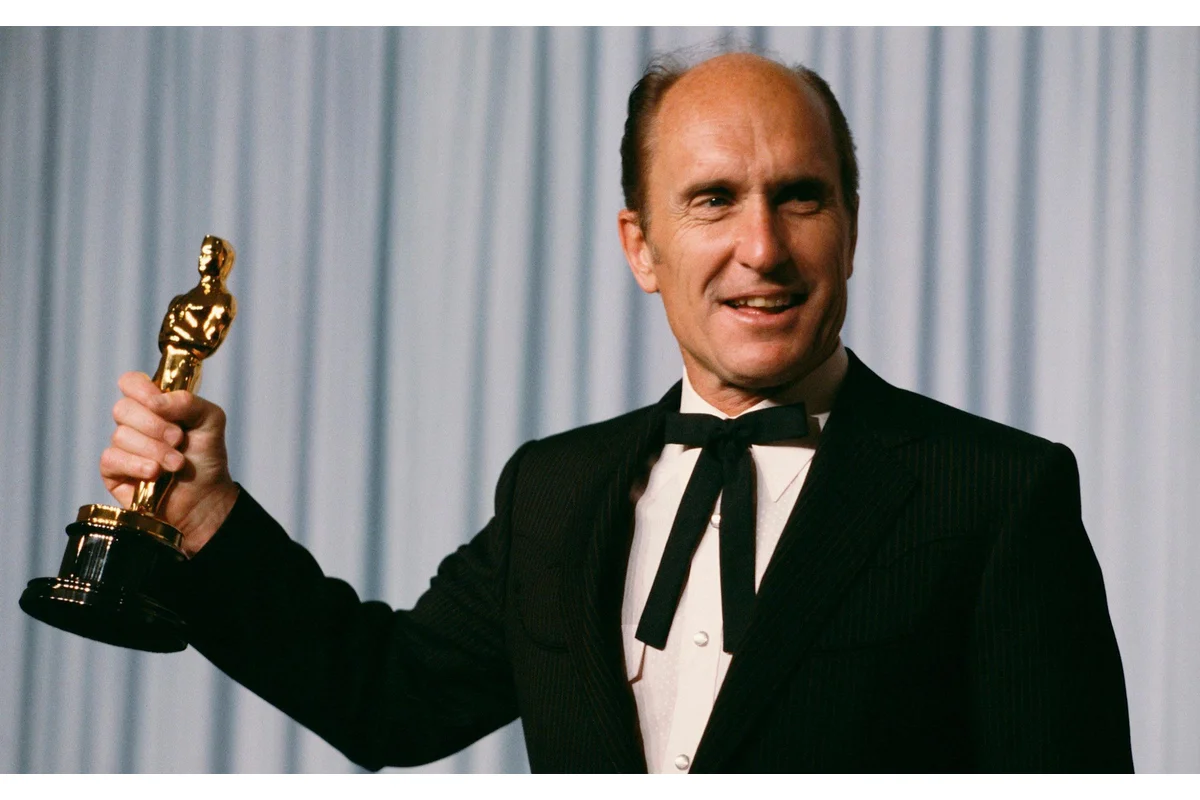
Robert Duvall, acclaimed for iconic roles such as Tom Hagen in The Godfather and Bull Meecham in The Great Santini, held a special place in Billy Bob Thornton’s life as a mentor and surrogate father. Until Duvall’s passing at 95, his influence shaped Thornton’s career and personal growth, a relationship Thornton openly shared in a candid recount of their years together.
For Thornton, who faced a difficult childhood with an unsupportive father, Duvall provided the grudging approval and complex kindness he needed to navigate the acting world. Their bond extended beyond professional collaboration into a lasting personal connection that deeply impacted Thornton’s artistry and outlook.
The Beginning of a Unique Mentorship
Billy Bob Thornton’s relationship with Robert Duvall began in the 1980s through their shared representation and rapidly grew into a mentor-mentee friendship. Despite coming from different backgrounds—Thornton hailing from Arkansas and coping with anxiety, OCD, and dyslexia, while Duvall, born in San Diego, was the son of a Navy admiral—they found common ground in their struggles and love for acting.
Thornton recalls their first meeting during Toronto‘s International Film Festival when Ivan Reitman introduced them. Duvall’s wry initial comment stuck with him:
“you look like a pulling guard to me.”
—Billy Bob Thornton mentor
That dry wit reflected the humor that would define many of their interactions. Thornton described a recent visit to Duvall’s Virginia farm, where Duvall’s humor remained sharp, even as his wife Luciana captured a moment on video of the two bantering:
“Bobby, aren’t you happy that Billy came by to see you?”
“Why would I be happy about that?”
—Billy Bob Thornton mentor
Influence Rooted in Early Screenwork
Duvall’s impact on Thornton’s understanding of acting traces back to his haunting performance as Boo Radley in To Kill a Mockingbird. Thornton recognized a reflection in his own character Carl from Sling Blade, remarking,
“There’s definitely a little bit of Boo Radley in Carl on Sling Blade.”
—Billy Bob Thornton mentor
Thornton admired Duvall’s honesty and forthrightness, noting that if Duvall disliked something—be it a director or fellow actor—he would not hesitate to say so. He once warned friends about sharing personal details with Duvall, cautioning that
“there is a good chance he’ll tell David Letterman about it on national television.”
—Billy Bob Thornton mentor
Creative Collaborations and Behind-the-Scenes Stories
Thornton and Duvall worked together on multiple projects, including the films Sling Blade, A Family Thing, and The Apostle. Their rapport was marked by mutual respect and a blend of professionalism with honest, sometimes cutting humor.
Duvall once challenged Thornton and co-writer Tom Epperson to create a screenplay with a daring twist:
“I want to play a Black man.”
—Billy Bob Thornton mentor
This idea led to A Family Thing, a film exploring family and identity featuring James Earl Jones. Thornton described how Duvall’s commitment extended to visiting the set of Sling Blade despite the production’s modest means—showing up in a stretch limousine to perform a pivotal scene.
On set, Duvall’s unpredictable yet masterful approach demanded order:
“He doesn’t want you to be screwing around while he’s trying to do a scene. So everybody, be quiet, be respectful.”
—Billy Bob Thornton mentor
Thornton recounted a humorous incident where a car unexpectedly started during filming, prompting him to lose his calm:
“I kicked the sandbag, nearly broke my ankle and started yelling at everybody.”
—Billy Bob Thornton mentor
He later repaid Duvall by appearing in The Apostle, where Duvall’s focus on supporting emerging talent became evident. Thornton recalled a moment of friendly teasing when Duvall gave a larger role to their mutual acquaintance Rick Dial, saying,
“He’s a natural… I don’t want you playing the deejay. I want him playing the role.”
—Billy Bob Thornton mentor
On-Location Experiences and Duvall’s Passion for Detail
Filming The Stars Fell on Henrietta in Texas revealed Duvall’s unique passions. Thornton described Duvall’s fixation on meat, barbecue, and tangos, as well as his fascination with watching local rattlesnake wranglers—a vivid insight into the actor’s private interests.
During shooting, Duvall’s immersive performances captivated castmates to the point of forgetting their own cues. Thornton reflected on how this demonstrated Duvall’s ability to draw everyone deeply into a scene, stating,
“If a guy can take you so deep into a scene that you just think you’re watching and listening to him, that’s my guy right there.”
—Billy Bob Thornton mentor
Lessons on Acting and Mentorship Philosophy
Duvall rarely lectured on acting technique, preferring instead to share stories and gossip, according to Thornton. He gave nicknames like “Mighty Billy Bob” and “the Hillbilly Orson Welles,” combining humor with respect. Their dialogue often revolved around experiences on set and colorful anecdotes rather than direct training.
Thornton recounted a tense on-set moment with Brian Dennehy, describing how Duvall’s silent judgment made the other actor uncomfortable during a long monologue about Irish theater. Duvall’s blunt dismissal,
“I don’t like plays. I never did.”
—Billy Bob Thornton mentor
Despite Duvall’s strong personality, Thornton claimed they never had outright disagreements, noting their exceptional understanding developed while working together. He praised Duvall’s improvisational approach in The Apostle, where a key scene was performed spontaneously, enhancing its authenticity.
Thornton highlighted Duvall’s teaching on emotional truth in acting:
“If it says cry in the script, I’m not going to cry if I don’t feel it.”
—Billy Bob Thornton mentor
This advice remains one of the most enduring gifts Duvall passed on, influencing performances even in Thornton’s recent roles, such as in Landman, where his character struggles to hold back tears.
Shared Journeys and Late-Blooming Success
Both men experienced success later in life, a fact that bonded them. Thornton reflected,
“He and I both were probably in our thirties before we became a household name… We’d had that life experience of the struggle and figuring out who the hell you are before anybody ever knows who you are.”
—Billy Bob Thornton mentor
This perspective helped them appreciate their journeys and shaped their approach to fame and artistry.
Working With Duvall on Major Productions
Thornton recalled difficulties directing Duvall in the courtroom drama The Judge, where Duvall’s fiery temperament clashed with the director’s instructions. He vividly described the moment when Duvall exploded at director David Dobkin for trying to micromanage his performance:
“So you’re telling me how to do my job?”
—Billy Bob Thornton mentor
Despite the tension, Thornton reassured the production team that this was typical behavior and that Duvall would return, which he did shortly after calming down with Luciana.
Such instances showcased Duvall’s strong will and confidence in his craft, traits that sometimes caused strain but also elevated his performances.
Duvall’s Impact on Thornton’s Career and Personal Life
Thornton described Duvall as a fundamental influence on his ability to provide for his family, crediting him with the opportunities that allowed him to live comfortably and support his children. The mentor’s presence extended beyond film sets into personal traditions and shared habits.
One amusing secret Thornton revealed concerned their shared love for steak and barbecue. Though advised by a doctor to stop eating meat, Thornton kept this hidden from Duvall, who was passionate about exceptional barbecue spots across the country. Thornton admitted,
“For probably about 26, 28 years, I had to pretend I liked meat around Bobby. Because it would’ve devastated him if he’d known I hadn’t eaten a steak since 1995.”
—Billy Bob Thornton mentor
This playful deception underlined the depth of their bond and Thornton’s desire not to disappoint his mentor.
The Complex Father Figure Duvall Represented
For Thornton, whose real father showed little support, Duvall embodied the father figure he longed for. He shared how their collaborations highlighted themes of fatherhood and family conflict, often mirroring his own life experiences.
In Jayne Mansfield’s Car, where Duvall played a father dealing with the loss of his wife, Thornton saw echoes of his own strained relationship with his dad, expressing:
“There seems to be a father thing running throughout my career… I never got over being terrified with these older guys that I was around. I’m so nervous around them and yet want their acceptance so much.”
—Billy Bob Thornton mentor
This underlying tension and desire for approval defined much of Thornton’s work and his connection to Duvall.
Unspoken Bonds and Lasting Respect
Although Thornton once wrote Duvall a heartfelt letter expressing how much the actor meant to him, Duvall never acknowledged receiving it openly. Thornton recounted using this silence in Jayne Mansfield’s Car, where a scene reflects this emotional distance.
Despite the reserved nature of their relationship, Thornton is certain the letter was read, stating,
“Oh, for sure. Oh, there’s no doubt it did.”
—Billy Bob Thornton mentor
The enduring respect and love between the two men transcended words, symbolizing a mentorship that shaped Thornton’s life profoundly.
