
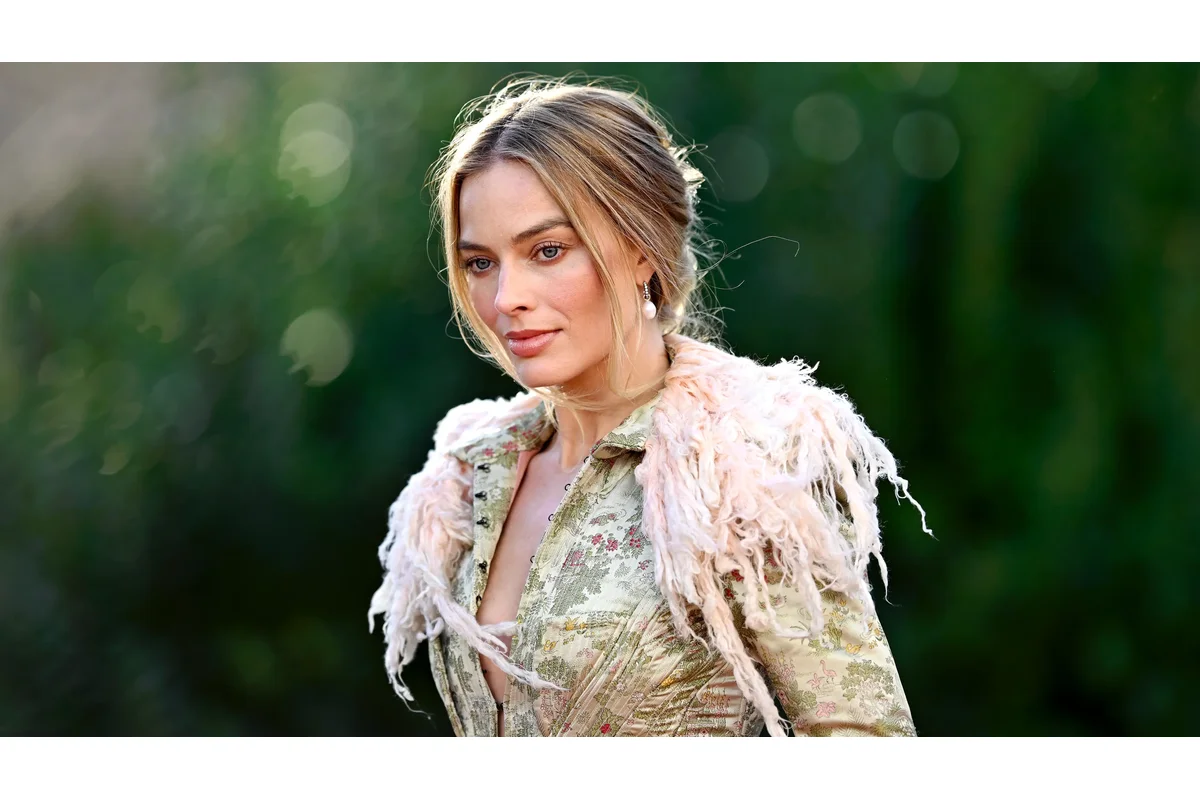
The 2026 film Wuthering Heights, produced by Margot Robbie and her husband Tom Ackerley through LuckyChap Entertainment, presents an unorthodox adaptation of Emily Brontë’s 1847 novel. Written and directed by Emerald Fennell, the movie diverges sharply from the original story, styling itself as “a version” of the classic gothic romance that introduces bold, provocative elements to explore the obsessive, destructive love between Cathy and Heathcliff. This reinvention has sparked outrage among some fans craving fidelity to the source, while others accept the film’s intense and experimental updates.
Margot Robbie Wuthering Heights reveals itself as a deeply emotional and unsettling retelling, containing explicit themes absent in the book, such as BDSM, masturbation, and macabre imagery, intended to evoke the feelings Fennell experienced reading the novel as a teenager. The film’s raw portrayal of love and obsession is designed not only to shock but to move audiences profoundly.
Unsettling Introduction: Cathy’s Early Encounter with Death and Sexuality
Emerald Fennell’s adaptation opens with a strikingly violent and sexualized scene alien to the original novel—young Cathy Earnshaw, portrayed by Charlotte Mellington, witnesses a public hanging where the corpse’s erection catches her attention. This haunting image marks a grim introduction to sexuality, differing drastically from Brontë’s narrative, which starts with Cathy deceased and focuses on older Heathcliff’s story told by the housekeeper Nelly Dean. This new opening immediately sets a darker, more surreal tone and foreshadows the movie’s willingness to push boundaries.
Altered Family Dynamics: Death and Decline Replace Canonical Plotlines
The film reshapes the Earnshaw family background significantly. In the book, Cathy’s brother Hindley is alive, attending university and later struggling with alcoholism after their father’s death, allowing Heathcliff to seize power at Wuthering Heights through manipulation. In Fennell’s version, Hindley is dead, and Cathy’s father, played by Martin Clunes, is depicted as ruined by gambling and alcoholism. Cathy names Heathcliff (Owen Cooper) after her deceased brother, introducing a poignant link absent from Brontë’s text. These changes add a sense of loss and decay much earlier in the story, emphasizing the family’s downfall in a different light and pushing Cathy toward a desperate alliance with the wealthy Edgar Linton (Shazad Latif).
Explicit Sexuality Heightens the Obsession Between Cathy and Heathcliff
Unlike the subtle, suggestive intimacy in Brontë’s novel, the movie features numerous explicit sex scenes between Margot Robbie’s Cathy and Jacob Elordi’s Heathcliff. Yet, the film avoids nudity, focusing on emotional intensity over graphic content. As Fennell explained to USA Today, she prioritizes feeling over explicitness:
“Things that are sexy often take us by surprise. Maybe some people would argue otherwise, but I’m not interested in anything being explicit. I’m interested in making people feel.”
Jacob Elordi affirmed the film’s intimate moments remain faithful to the spirit of the original story:
“Any image that comes from Emerald’s head is inspired by that depravity and love and obsession,”
he said.
“They’re all in the language of what Brontë was driving at with this book, so it was never really a shock or a reach.”
Malicious Intent: Nelly’s Manipulations Expose Bitter Rivalries
In this adaptation, Nelly Dean, played by Hong Chau, acts more vindictively than her literary counterpart. When Cathy declares she cannot fully confide in Nelly due to a lack of profound emotional experience on Nelly’s part, the housekeeper retaliates by deliberately making sure Heathcliff overhears Cathy’s doubts. The film further depicts Nelly burning Heathcliff’s love letters to Cathy after he marries Isabella Linton (Alison Oliver), indicating a calculated interference not shown in the novel, where Nelly is a reluctant but truthful storyteller. This darker take on Nelly colors the relationships with additional layers of spite and sabotage.
Unexpected Exploration of BDSM Among Servants
One of the movie’s more controversial additions involves servants Joseph (Ewan Mitchell) and Zillah (Amy Morgan) engaging in BDSM in a barn, an imaginative element entirely absent in the original novel. This scene inspires Cathy to explore her sexuality in solitude on the moors, where she is secretly watched by Heathcliff. Brontë’s book instead describes Joseph as an old, cantankerous servant, with no sexual connotations attached. This provocative choice underscores the film’s intention to delve into hidden desires and to make physicality a vivid thematic element.
Isabella’s Complicity and Torment in Heathcliff’s Schemes
The film portrays Isabella Linton as more willing to accommodate Heathcliff’s demands than in the book. In Emily Brontë’s story, Isabella soon recognizes Heathcliff’s cruelty and escapes to London after bearing their son, Linton, returning only to entrust her child to Edgar before her death. Conversely, Fennell’s adaptation shows Isabella acquiescing to a disturbing sex life involving a dog collar and remaining present as Heathcliff rushes to Cathy’s sickbed. This shift changes Isabella’s character arc, making her more entangled in Heathcliff’s sadistic control.
Isabella’s Disturbing Doll Ritual
Before marrying Heathcliff, Isabella owns an eerie dollhouse collection, including dolls modeled after herself and Cathy, made with real human hair. In a disturbing and symbolic act, she stages the Cathy doll in a gruesome scene, stabbed through the back. This scene starkly contrasts with the book, where no such imagery exists, adding a psychological horror element that amplifies Isabella’s obsession and jealousy.
The Film’s Ending Omits the Novel’s Next Generation Drama
The movie concludes with Cathy’s death following miscarriage complications, leaving behind the bloody emotional wreckage of Heathcliff’s and Cathy’s tragic love. It excludes the novel’s second half, which explores the fate of the next generation, focusing instead on raw, immediate pain. This echoes the 1939 film adaptation starring Laurence Olivier and Merle Oberon, which also ends with Heathcliff’s death on the moors after urging Cathy’s ghost to haunt him. In contrast, the 2009 ITV miniseries starring Tom Hardy and Charlotte Riley offers a more faithful retelling that extends beyond the original couple’s demise.
Emerald Fennell’s vision for Margot Robbie Wuthering Heights reinvents a literary classic into an intense, sometimes unsettling exploration of passion, power, and destructive love. While its departures from the source have polarized audiences, the film signals a willingness to challenge expectations and explore darker emotional and psychological territories. For those eager to see how far this adaptation will push boundaries, the release promises a film that haunts as much as it fascinates, leaving viewers to debate authenticity versus artistic license for years to come.
