
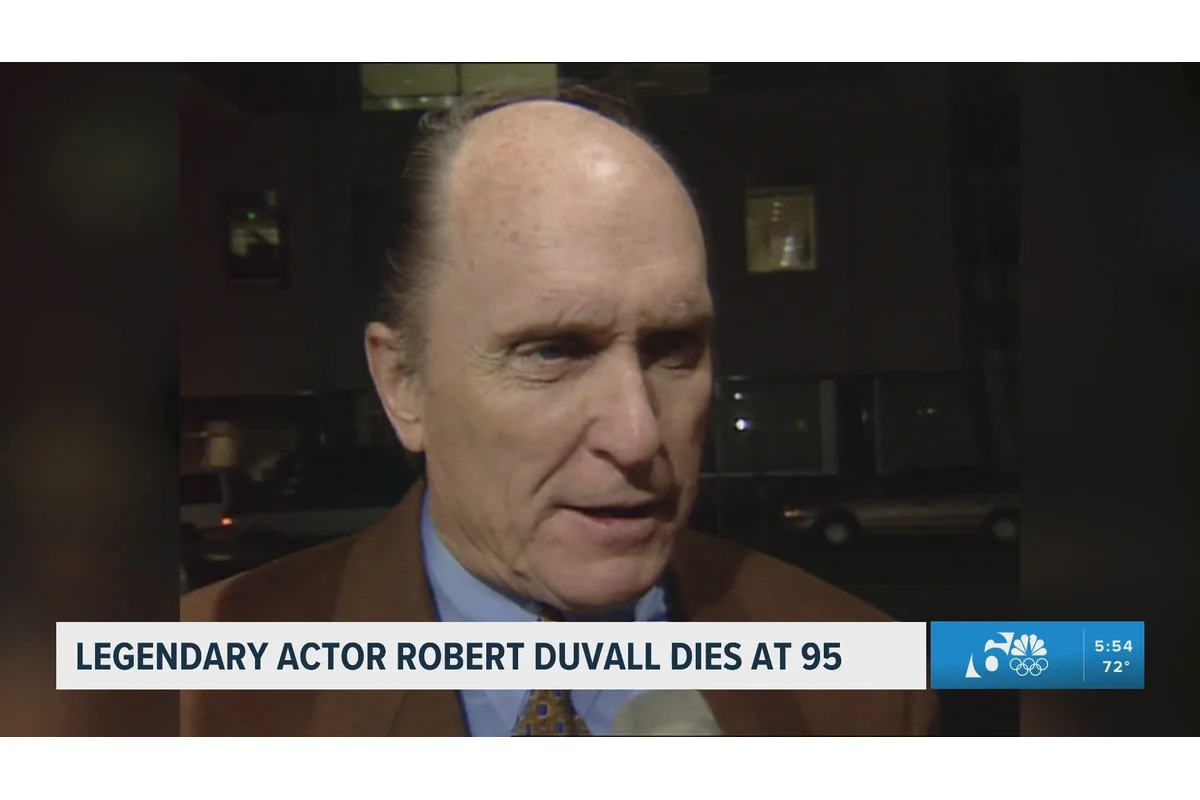
Robert Duvall, one of Hollywood’s most authentic and captivating actors, has passed away, marking the end of a remarkable era in film. His work, especially in Tender Mercies, showcased a natural and understated style that remains rare in today’s entertainment landscape, making the Robert Duvall tribute especially poignant this week.
The Legacy of a Truly Authentic Performer
Robert Duvall’s career was defined by an honest and unpretentious approach to acting, reminiscent of his peer Gene Hackman. His performances exuded a quiet power and sincerity, setting him apart in an industry often driven by spectacle and excess. Duvall’s portrayal in Tender Mercies remains a pinnacle of his craft, reflecting his ability to connect with audiences through subtle emotion and genuine presence.
In a time when Hollywood has largely abandoned understatement, Duvall’s work offers a lasting reminder of the strength found in simplicity. His naturalistic style resonated deeply with viewers and critics alike, securing his place as a true legend of American cinema.
Cultural Reflections Amidst Turbulence
The news of Duvall’s death arrives amid ongoing social and political tensions. Discussions about public safety, political division, and cultural conflicts continue to dominate headlines. For example, the recent unrest in The Bronx exposed frustrations about local leadership and responses to youth violence, highlighting calls for accountability and community involvement.
Stephen Colasacco from The Bronx criticized the absence of social workers during a mall disturbance and urged authorities to hold parents financially responsible for their children’s destructive actions. This perspective reflects broader societal debates about crime, responsibility, and the effectiveness of law enforcement.
Political and Social Struggles Under the Spotlight
Amid the rising political unrest and cultural polarization, voices from various corners express exasperation at growing animosity. Independent commentator Sarah Spain notably described her discomfort around political opponents at public events, a sentiment many see as emblematic of the country’s unyielding divisions.
“You don’t agree with me, I hate you, I’m going to cancel you and I wish you were dead.” – Sarah Spain, former ESPN personality
Others highlight contrasting political behaviors, questioning whether the same levels of protest and hostility would exist if roles were reversed, as noted by an anonymous observer reflecting on the 2020 U.S. election period.
Rob Cerone of Manhattan noted the extreme aversion some feel toward prominent political figures solely based on their associations, further illustrating the entrenched hostility currently defining the national discourse.
Concerns Over Technological Influence and Media Bias
Alongside political and social challenges, there is growing apprehension about the role of artificial intelligence and academic influence in shaping cultural narratives. Paul Bloustein of Cincinnati voiced fears about AI imposing conformity and limiting independent thought, especially if steered by an elite few.
“Time we woke up to lefty AI,” – Miranda Devine, columnist
Such concerns underscore a broader unease regarding how technology might restrict diversity of thought and enforce ideological uniformity in society, stirring anxiety among some older generations about the future.
International Affairs and Leadership Criticism
On the global stage, debates continue regarding the U.S. political leadership’s handling of complex international issues. Criticism of former President Trump’s approach to Russia and Ukraine features prominently, with detractors accusing him of sending unprepared intermediaries to negotiate with Vladimir Putin instead of engaging directly.
Hank DePerro of Manhattan expressed his belief that Trump’s fear of Putin hindered effective diplomacy, labeling the efforts to manage the Ukraine conflict as ineffective and farcical. This sentiment captures broader frustrations with perceived inaction and mishandling of critical foreign policy matters.
Widespread Social Concerns Extend Beyond Gun Violence
Conversations sparked by ongoing mass shootings regularly call for stricter gun laws, yet many argue that focusing solely on firearms overlooks other forms of violence. JoAnn Lee Frank of Clearwater pointed out the lack of similar legislative attention to knife attacks and vehicle-ramming incidents, emphasizing that hate, rather than any one weapon, ultimately drives such tragedies.
This perspective invites deeper reflection on the root causes of violence, suggesting that effective solutions must address underlying societal issues instead of focusing exclusively on instruments of harm.
Remembering Robert Duvall’s Enduring Influence
Robert Duvall’s passing serves as a reminder of a bygone era when acting was defined by authenticity and restraint. His contributions to film embody a commitment to truth and depth, qualities that resonate even amid today’s fractured and often volatile cultural environment.
His legacy stands not only as a tribute to extraordinary talent but also as an emblem of artistic integrity at a time when Hollywood continues to evolve rapidly. As fans and peers mourn his loss, the Robert Duvall tribute reflects the profound impact he had on the craft of acting and the industry at large, inspiring future generations to seek honesty and sincerity in their creative endeavors.
