
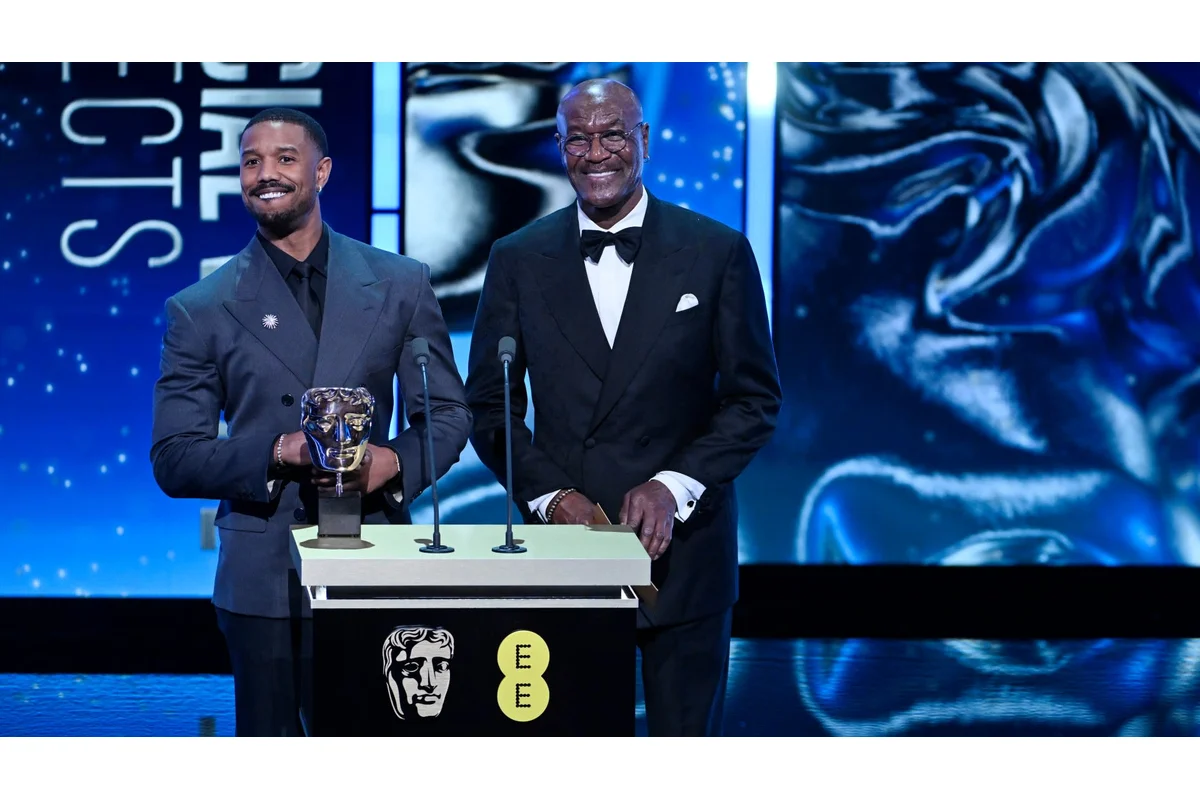
The 2026 BAFTA Film Awards held at London’s Royal Festival Hall were overshadowed by a distressing incident involving John Davidson, a campaigner with Tourette syndrome, who involuntarily shouted a racial slur during the ceremony. The episode occurred while actors Michael B. Jordan and Delroy Lindo were presenting the prize for special visual effects, drawing uncomfortable attention and sparking widespread controversy. This incident brought significant attention to issues of racial sensitivity and disability awareness in high-profile events.
Davidson, who inspired the BAFTA-winning film I Swear, was present to support the film but his involuntary outburst disrupted the event, prompting a cautious and professional response from presenters on stage. An insider who witnessed the event shared details about the reaction of those involved, highlighting how the tension unfolded in real time.
Michael B. Jordan and Delroy Lindo Maintain Composure
According to the insider, when the disruptive shouting began, initial assumptions were that members of the royal family were being heckled. Ahead of the broadcast, guests had been informed that Davidson, who lives with Tourette syndrome, might exhibit uncontrollable language during the event.
“When the shouting first began, my immediate thought was that Prince William and the Princess of Wales were being heckled,”
the insider revealed.
“The first two racial slurs came while Michael B. Jordan and Delroy Lindo were on stage. The pair had walked out in high spirits, but their expressions quickly changed as the shouting began. They handled the disruption professionally, continuing to present the award without acknowledging it.”
The disruption also persisted during Wunmi Mosaku’s acceptance speech. Despite hearing a further racial slur, Mosaku remained focused and did not let the interruption deter her.
“A further slur was heard during Wunmi Mosaku’s acceptance speech. She appeared not to react and continued speaking without letting the interruption distract her. The shouting subsided around the middle of the ceremony.”
Other stage appearances were met with general abusive outbursts like calls to leave or derogatory comments, further unsettling the atmosphere.
Jonte Richardson Resigns from BAFTA Judging Panel
The backlash intensified when Jonte Richardson, a BAFTA judge on the emerging talent panel, chose to step down following the event. In a public statement on LinkedIn, Richardson criticized BAFTA’s response to the incident and the organisation’s longstanding issues with systemic racism.
“I cannot and will not contribute my time, energy and expertise to an organisation that has repeatedly failed to safeguard the dignity of its Black guests, members and the Black creative community.”
Richardson highlighted the presence of exceptional Black talent within this year’s cohort, including the celebrated show Just Act Normal, and expressed disappointment in BAFTA’s inadequate recognition and handling of the harm caused.
“I hope Bafta leadership comprehend the damage they and the BBC have caused, and take the necessary steps to ensure their production staff are inclusive enough to prevent such an issue in the future.”
Official BAFTA Apology Addressing the Incident
BAFTA’s host, Alan Cumming, acknowledged the offensive language during the live ceremony. He clarified that the language was the result of involuntary verbal tics linked to Tourette syndrome and apologized to the audience for any offense caused.
“We apologise if you are offended tonight.”
The organisation issued an unreserved apology specifically to Michael B. Jordan and Delroy Lindo as well as to everyone affected by the incident.
“Michael B. Jordan and Delroy Lindo were on stage at the time, and we apologise unreservedly to them, and to all those impacted.”
BAFTA explained that prior to the event, the audience had been warned about potential strong language arising from Davidson’s condition. The individual had also chosen to leave the auditorium midway, following concerns about the distress caused.
The statement concluded with a commitment to learn from this experience and emphasized the importance of inclusivity in future events, underlining BAFTA’s belief in film as a vital means to foster empathy and understanding.
“We will learn from this and keep inclusion at the core of all we do, maintaining our belief in film and storytelling as a critical conduit for compassion and empathy.”
John Davidson Expresses Regret Over Unintended Impact
John Davidson, honored with an MBE in 2019 for his work raising awareness about Tourette syndrome, expressed his deep remorse for any distress his involuntary tics caused during the ceremony. Diagnosed at age 12, Davidson has dedicated much of his life to expanding understanding of the condition.
“I can only add that I am, and always have been deeply mortified if anyone considers my involuntary tics to be intentional or to carry any meaning.”
He reiterated the involuntary nature of his vocalizations, emphasizing that they do not represent his personal views.
“I chose to leave the auditorium early into the ceremony as I was aware of the distress my tics were causing,”
Davidson explained.
The National Health Service (NHS) describes Tourette syndrome as a neurological condition characterized by sudden, repetitive movements or sounds, including, in rare cases, uncontrollable swearing or use of offensive language.
BBC Issues Apology Over Broadcast Oversight
The BBC took responsibility for failing to censor the racial slur during the televised broadcast of the BAFTA ceremony. Although the original live event ran for three hours, the version aired on BBC One was edited down to two hours, yet the offensive language remained unedited.
“We apologise that this was not edited out prior to broadcast and it will now be removed from the version on BBC iPlayer.”
The broadcaster acknowledged that the offensive language resulted from involuntary Tourette syndrome tics and assured viewers that the slur’s presence on iPlayer would be corrected promptly.
Voices from the Entertainment Industry Respond
Celebrity reactions to the scandal highlighted anger and frustration. Jamie Foxx commented to The Neighborhood Talk, disputing the explanation provided for the incident.
Out of all the words, you could’ve said Tourette’s makes you say that? Unacceptable.
– Jamie Foxx
Actor Wendell Pierce also criticized the response, emphasizing the importance of addressing the insult to Michael B. Jordan and Delroy Lindo with urgency and respect.
It’s infuriating that the first reaction wasn’t complete and full throated apologies to Delroy Lindo and Michael B Jordan. The insult to them takes priority. It doesn’t matter the reasoning for the racist slur.
– Wendell Pierce
Recognition at the 2026 BAFTA Awards
Despite the controversy, the awards ceremony proceeded to honour numerous films and talents. The film One Battle After Another won several major accolades including Best Film, Best Director for Paul Thomas Anderson, and Best Adapted Screenplay.
The special visual effects award went to Avatar: Fire and Ash, while Wunmi Mosaku won Best Supporting Actress for Sinners. Michael B. Jordan, who appeared on stage during the disruption, was nominated for Best Leading Actor for the same film.
Other notable winners included:
- Best Supporting Actor: Sean Penn for One Battle After Another
- Best Children’s and Family Film: Boong
- Best Production Design and Best Make-up & Hair: Frankenstein
- Best Documentary: Mr Nobody Against Putin
- Best British Short Film: This Is Endometriosis
- Best British Short Animation: Two Black Boys in Paradise
- Best Original Screenplay: Sinners by Ryan Coogler
- Outstanding Debut by a British Writer, Director or Producer: My Father’s Shadow by Akinola Davies Jr.
- Best Casting: I Swear
- Best Editing: One Battle After Another
- Best Animated Film: Zootropolis 2
- Best Cinematography: One Battle After Another
- Best Sound: F1
- Best Original Score: Sinners
- Best Costume Design: Frankenstein
- Outstanding British Film: Hamnet
- EE Rising Star Award: Robert Aramayo
- Best Leading Actor: Robert Aramayo for I Swear
- Best Leading Actress: Jessie Buckley for Hamnet
The ceremony celebrated an array of talents and productions across various genres, underscoring the British film industry’s vibrancy despite the event’s difficult moments.
Broader Implications for Inclusion and Representation
The incident at the BAFTAs exposed significant challenges in balancing disability considerations with the urgent need to combat racial discrimination. Michael B. Jordan’s silent reaction during the racial slur highlighted the discomfort such moments cause, especially for Black artists in the spotlight. Jonte Richardson’s resignation illuminated ongoing concerns about the effectiveness of institutions like BAFTA in protecting minority creatives and maintaining dignity for all attendees.
Moving forward, BAFTA and related organisations face pressure to implement more robust sensitivity and inclusivity measures during events. The public and industry figures alike are advocating for clear accountability and proactive approaches to prevent repetition of similar incidents, ensuring respectful environments that celebrate diversity without harm.
As the entertainment world reflects on this controversy, how BAFTA addresses these issues in future ceremonies will likely influence wider conversations about race, disability, and respect within film and television communities worldwide.
