
Robert Duvall established a monumental legacy from the moment he appeared on screen, beginning with a silent yet unforgettable role in the 1962 film To Kill a Mockingbird. Following his death on February 15, 2026, fans revisited his extensive career spanning seventy years, but his debut as Arthur ‘Boo’ Radley remains a defining moment, capturing his profound impact in Hollywood. The portrayal marked an extraordinary start to the Robert Duvall debut legacy.
A Wordless Introduction That Shaped a Career
Set in 1930s Maycomb, Alabama, To Kill a Mockingbird tells the story of Scout and Jem Finch growing up under the watchful eye of their father, Atticus Finch, played by Gregory Peck, who defends Tom Robinson, a Black man falsely charged with a serious crime. The narrative intricately intertwines a courtroom drama with the local myth of Boo Radley, a mysterious and isolated neighbor feared by the children and townsfolk alike.
Contrary to typical Hollywood debuts that rely on dialogue and screen presence, Duvall’s first role demanded he embody a character without uttering a single word. Opting to portray a silent figure like Boo Radley was a significant professional risk, especially for an actor at the start of his career. Duvall embraced this challenge, channeling decades of deep-seated loneliness and trauma into a few brief scenes.
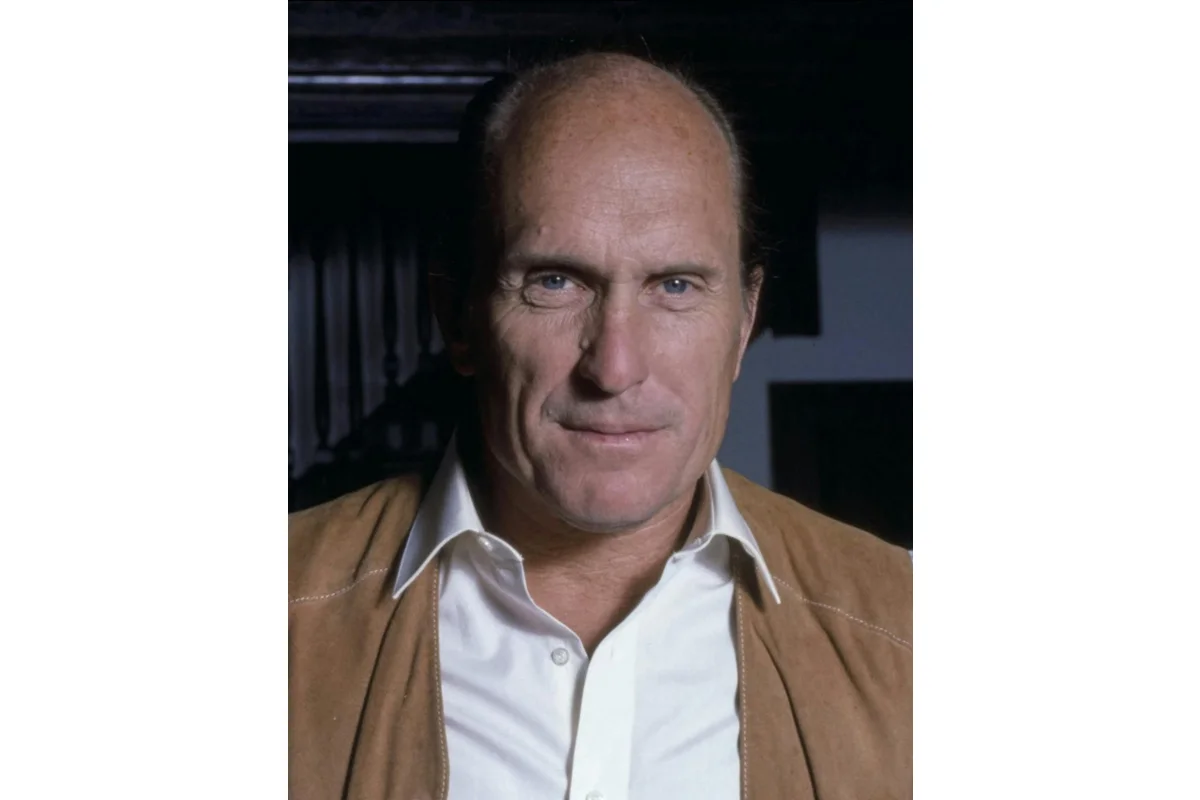
His physical transformation was striking; he dyed his hair a stark blonde and avoided sunlight for six weeks, resulting in pale, almost ghostly skin that enhanced Boo’s reclusive and haunted presence. This intense preparation allowed him to convincingly portray a man who had spent his life imprisoned by fear and isolation, even before filming began.
Director Robert Mulligan carefully maintained the eerie mystique surrounding Boo Radley by keeping Duvall separate from the young actors, Mary Badham and John Megna, who played the Finch children. They were prohibited from interacting off-camera, which heightened the child actors’ genuine sense of fear and curiosity. Badham later admitted she did not know who Duvall was even after meeting him in person, illustrating how completely he had abandoned his identity to become the neighborhood’s ‘boogeyman.’
Every subtle motion—his stiff posture, blank stare, and shallow breathing—carried heavy emotional weight. Duvall’s silent physicality commanded attention and gave life to a character who was as much a shadow as a man, demonstrating early mastery of restrained, powerful storytelling through presence alone.
Boo Radley as a Haunting Presence in the Story
Understanding the brilliance of Duvall’s debut requires looking at how the film’s script uses Boo Radley as a symbol of fear and misunderstanding. For most of the movie, Boo exists as an ominous myth, an outsider shunned by society and trapped within the confines of his decaying home. The neighborhood children imagine him as a dangerous figure, stalking the darkened streets during the Great Depression.
This fear is skillfully transferred to the audience, who are conditioned to dread his presence just as much as the kids playing in the nearby woods and street corners. However, the story gradually dismantles this myth through small, poignant gestures: Boo leaves gifts such as carved soap figures, twine, and a broken pocket watch in the hollow of a tree, revealing a yearning for connection and kindness that contradicts his fearful legend.
When Boo’s brother fills the tree hole with cement, it symbolizes the crushing of those fragile attempts at communication. Boo’s efforts to reach out to the children are thwarted by societal rejection, deepening his isolation and silencing a lonely soul. This narrative builds an emotional reserve, nudging viewers to reconsider their initial judgements and reflect on their own fears of the unknown.
The physical setting amplifies this isolation: Boo’s rundown house looms like a decaying monster on a shadow-covered street, the dark porches resembling jagged teeth under the moonlight. This atmosphere tightens the suspense, pushing the story toward a violent climax.
After a school event, Bob Ewell attacks Scout and Jem in a malevolent, drunken rage. During the struggle, a mysterious figure intervenes, saving the children and fatally wounding Ewell. The identity of the protector is finally revealed in a quiet, intimate scene back at the Finch home, where Duvall’s subtle performance shines brightest.
Scout recounts the attack while Boo stands silently behind her bedroom door, a fragile silhouette using the wooden frame as a barrier between himself and the harsh outside world. When Scout softly greets him with, “Hey, Boo,” Duvall’s trembling smile conveys the powerful relief of being seen as a friend rather than a monster, showcasing his crucial talent for communicating profound emotion without words.
The Beginning of a Legendary Career
Duvall’s understated debut defied conventional Hollywood expectations focused on screen time and memorable monologues designed to capture awards attention. Instead, his quiet performance showcased a rare ability to control the camera’s focus and move audiences through minimalistic expression.
This role became an essential study in the power of restraint. Duvall demonstrated how withholding emotion, rather than overtly expressing it, can be deeply unsettling and compelling. This foundation paved the way for his iconic work alongside stars like Marlon Brando and Gregory Peck, further solidifying his status in cinematic history.
The connection between Boo Radley and later characters such as Tom Hagen in The Godfather is clear: both roles hinge on a cold, calculated stillness that reveals layers underneath. Even in explosive parts like Lt. Col. Kilgore in Apocalypse Now, Duvall insisted on authentic performances, driven by a commitment to exploring the humanity beneath larger-than-life figures.
His instinct for uncovering the emotional truths in complex characters marked his career and influenced generations of filmmakers who regarded his involvement as a mark of serious prestige. Reflecting on this debut during an interview with Jason Fraley in 2016, Duvall said,
“It was a good part to play. You know, the fact that it was a mute guy who helped save those children’s lives at times. It was a wonderful part to be able to play as a debut part in my film career.”
Robert Duvall
Though Duvall built a vast empire of unforgettable characters, his rise began in the shadows with a role defined by silence, mystery, and cautious humanity. His debut legacy endures because director Robert Mulligan and the producers trusted in the subtle power of his silent heroism rather than presenting a conventional star. More than sixty years later, that decision continues to define the profound impact Robert Duvall made on the art of film.
